Reaktionsgleichung

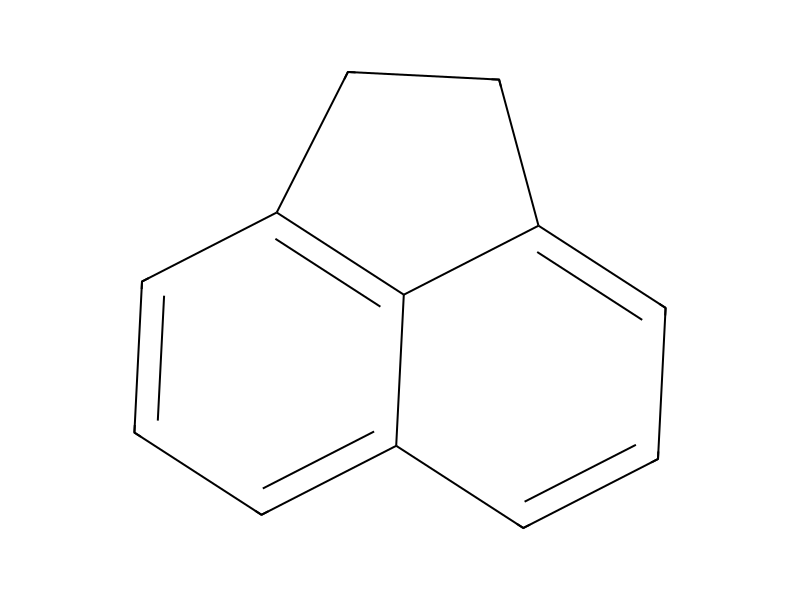
[N+:1]([C:4]1[C:14]2[C:15]3[C:7]([CH2:8][CH2:9][C:10]=3[CH:11]=[CH:12][CH:13]=2)=[CH:6][CH:5]=1)([O-])=O.C1C2=C3C(=CC=C2)C=CC=C3C1.[N+]([O-])(O)=O.[Sn].NN>Cl.[Ni].C(O)C.C(O)(=O)C>[NH2:1][C:4]1[C:14]2[C:15]3[C:7]([CH2:8][CH2:9][C:10]=3[CH:11]=[CH:12][CH:13]=2)=[CH:6][CH:5]=1Komponenten
10
Edukt 5




Produkt 1

Reagenzien, Katalysatoren, Lösungsmittel 4




Versuchsvorschrift
5-Nitroacenaphthene is made by nitrating acenaphthene with nitric acid in the presence of acetic acid according to the method of Rowe and Davies, J. Chem. Soc. 117, 1346 (1920). Standard reduction methods using tin or stannous chloride in hydrochloric acid or by using Raney nickel with ethanol or hydrazine produces 5-aminoacenaphthene.
Quellen und Nachweise
- ORD-Eintrag
- ord-1a06f9ffbc2c46afaf47b657be09d7f6
- Quelldatensatz
- uspto-grants-1979_11
- Patentnummer
- US04174342
Verknüpfte Notizen
Wird geladen…