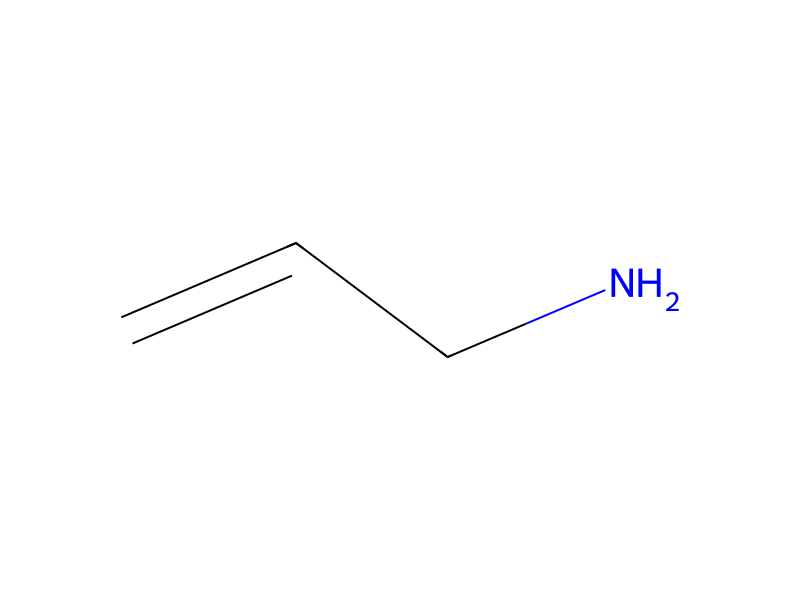
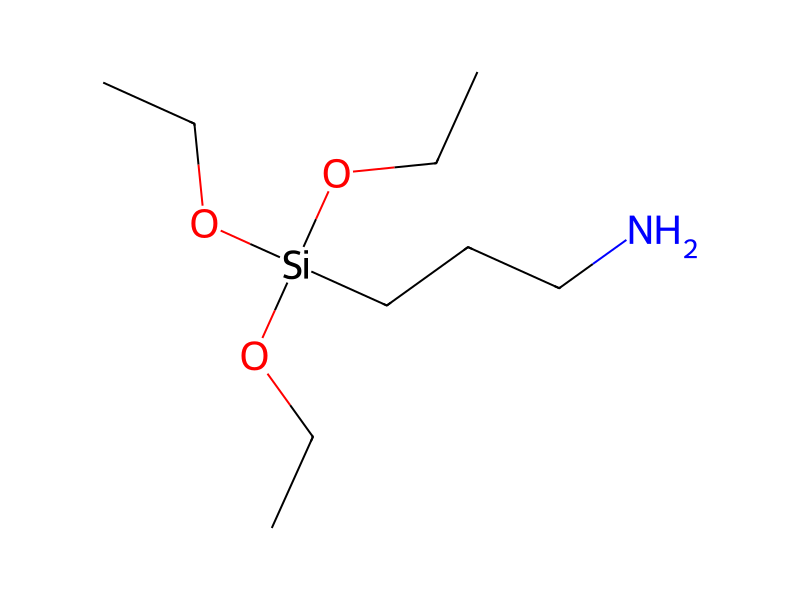
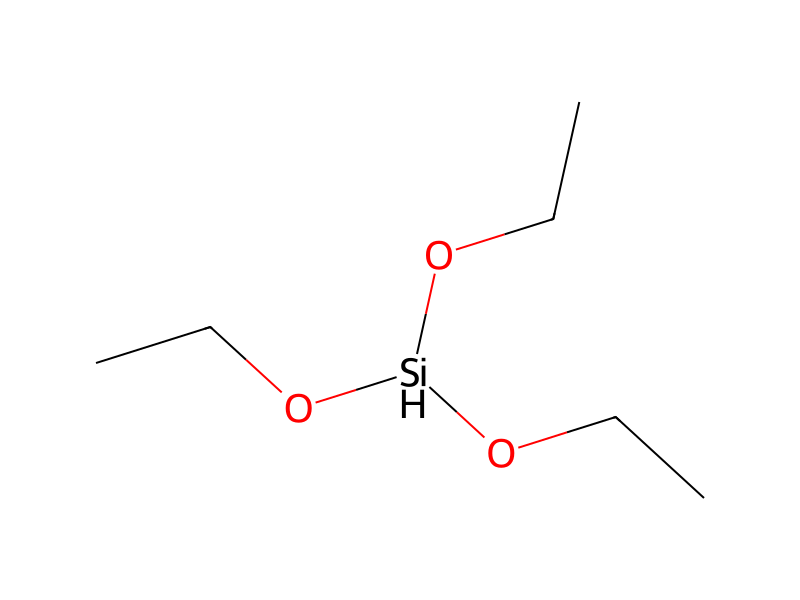
[CH2:1]([NH2:4])[CH:2]=[CH2:3].C(O[SiH](OCC)OCC)C.N[CH2:16][CH2:17][CH2:18][Si:19]([O:26][CH2:27][CH3:28])([O:23][CH2:24][CH3:25])[O:20][CH2:21][CH3:22]>[C-]#[O+].[C-]#[O+].[C-]#[O+].[C-]#[O+].[C-]#[O+].[C-]#[O+].[C-]#[O+].[C-]#[O+].[C-]#[O+].[C-]#[O+].[C-]#[O+].[C-]#[O+].[Rh].[Rh].[Rh].[Rh].C1(C)C=CC=CC=1>[CH2:1]([NH2:4])[CH:2]=[CH2:3].[NH2:4][CH:17]([CH3:16])[CH2:18][Si:19]([O:26][CH2:27][CH3:28])([O:23][CH2:24][CH3:25])[O:20][CH2:21][CH3:22]A three-neck flask equipped with a reflux condenser, stirring rod and thermometer was charged with 14 grams of allylamine (0.25 mole), 41 grams of triethoxy silane (0.25 mole), 0.32 gram of 1,5-cycloctadiene (2.9×10⁻³ mole) and 30 ml. of toluene, and heated in an oil bath maintained at a temperature of 110° C. When the temperature of the mixture reached 85° C., 0.22 gram of tetrarhodium dodecacarbonyl (2.9×10⁻⁴ mole) was added to the mixture as a catalyst. About 60 minutes after the addition of the catalyst, the reaction temperature reached 110° C. At the end of the period the reaction mixture was subjected to gas chromatography analysis. It was found that gamma-aminopropyl triethoxy silane was obtained in a yield of 78% on an allylamine basis, while the yield of beta-aminopropyl triethoxy silane was 5.6% on an allylamine basis.