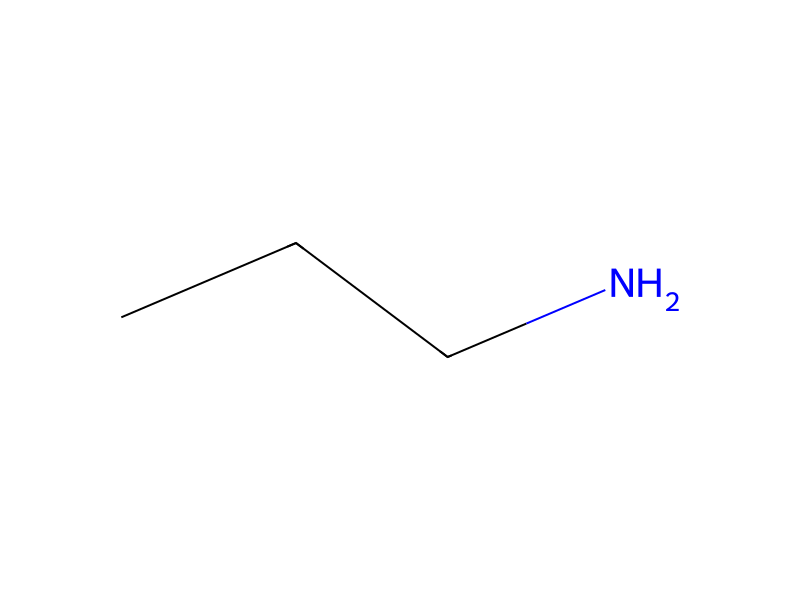
[CH3:1][O:2][C:3]1[CH:12]=[C:11]2[C:6]([CH2:7][CH2:8][C:9](=O)[CH2:10]2)=[CH:5][CH:4]=1.[CH2:14]([NH2:17])[CH2:15][CH3:16].C(O[BH-](OC(=O)C)OC(=O)C)(=O)C.[Na+]>ClCCCl>[CH3:1][O:2][C:3]1[CH:12]=[C:11]2[C:6]([CH2:7][CH2:8][CH:9]([NH:17][CH2:14][CH2:15][CH3:16])[CH2:10]2)=[CH:5][CH:4]=1To a solution of 7-Methoxy-3,4-dihydro-1-H-naphthalen-2-one (5.0 g, 28.4 mmol) and propylamine (2.8 mL, 34 mmol, 1.2 eq) in 1,2-dichloroethane (1 50 mL) under inert atmosphere was added sodium triacetoxyborohydride (15 g, 71 mmol, 2.5 eq) in a single portion. The reaction was allowed to stir at room temperature for 20h then concentrated in-vacuo. The residue was partitioned between 10% aq. KOH (150 mL) and ethyl acetate (75 mL). The organic layer was washed with brine, dried and concentrated. The resulting material was dissolved in diethyl ether (100 mL) and treated with 1M HCl in ether (28.4 ML). The solid was collected and dried under vacuum to afford 6.23 g of (7-methoxy-1,2,3,4-tetrahydro-naphthalen-2-yl-propyl-amine as hydrochloride salt.