Reaktionsgleichung

C[C:2]1[CH:7]=[CH:6][C:5]2[NH:8][C:9]3[C:14]([C:15](=[O:16])[C:4]=2[CH:3]=1)=[CH:13][C:12]1[NH:17][C:18]2[CH:25]=[CH:24][C:23](C)=[CH:22][C:19]=2[C:20](=[O:21])[C:11]=1[CH:10]=3.CC1C=CC(S(NC2C=C(S([O-])(=O)=O)C=C3C=C(S([O-])(=O)=O)/C(/C(=O)C=23)=N/NC2C=C(Cl)C=CC=2OC2C=CC=CC=2)(=O)=O)=CC=1.[Na+].[Na+].N>O>[CH:23]1[CH:22]=[C:19]2[C:20]([C:11]3[C:12]([NH:17][C:18]2=[CH:25][CH:24]=1)=[CH:13][C:14]1[C:15]([C:4]2[C:5]([NH:8][C:9]=1[CH:10]=3)=[CH:6][CH:7]=[CH:2][CH:3]=2)=[O:16])=[O:21]Komponenten
Edukt 3

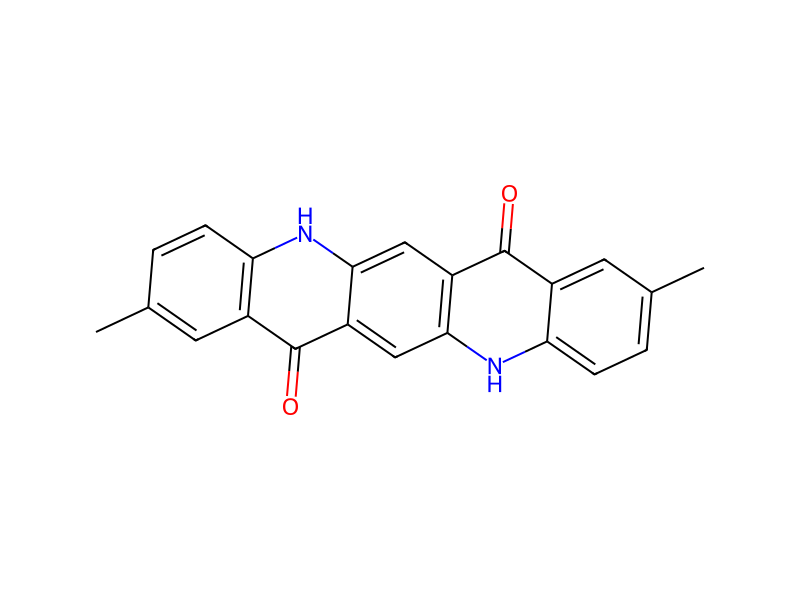

Produkt 1
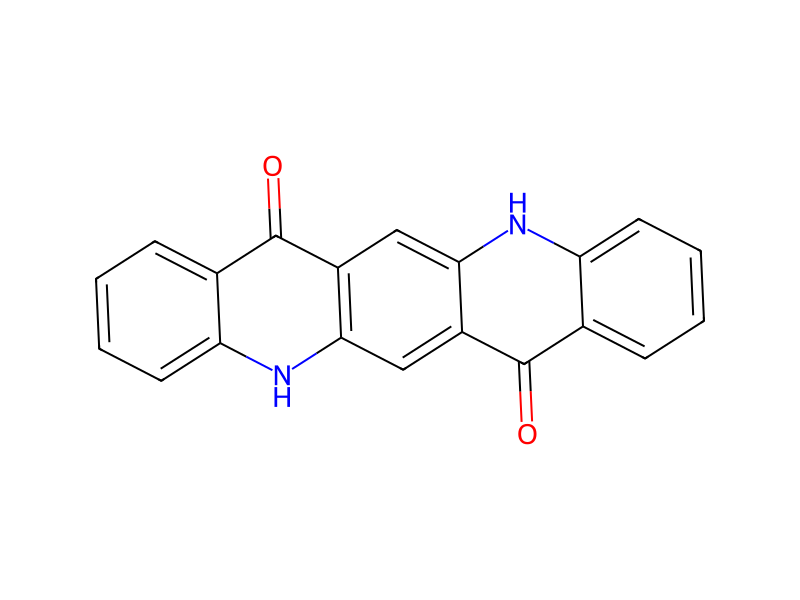
Reagenzien, Katalysatoren, Lösungsmittel 1

Versuchsvorschrift
20 g of C.I. pigment red 122 having an average primary particle diameter of 90 nm (in which the content of metal ions having a valence of at least 2 was 450 ppm), 4 g of a commercially available dye C.I. acid red 249 and 110 g of deionized water were mixed, aqueous ammonia was added so as to adjust the pH of a mixture liquid to 9.0, and the mixture liquid was dispersed with a paint shaker in the presence of zirconia beads as media for approximately 5 hours, to obtain a water-based pigment dispersion. The obtained water-based pigment dispersion had a high viscosity and caused flocculation. Further, the water-based pigment dispersion was diluted so as to have a concentration of 3% by weight, and the diluted water-based pigment dispersion was dropped on No.2 filter paper, to show bleeding of the dye.
Aufarbeitung
- additionwas diluted so as
- additionwas dropped on No.2 filter paper
Quellen und Nachweise
- ORD-Eintrag
- ord-a93018f0c5a346c381a6a0cd5b462802
- Quelldatensatz
- uspto-grants-2003_11
- Patentnummer
- US06648954B2
Verknüpfte Notizen
Wird geladen…