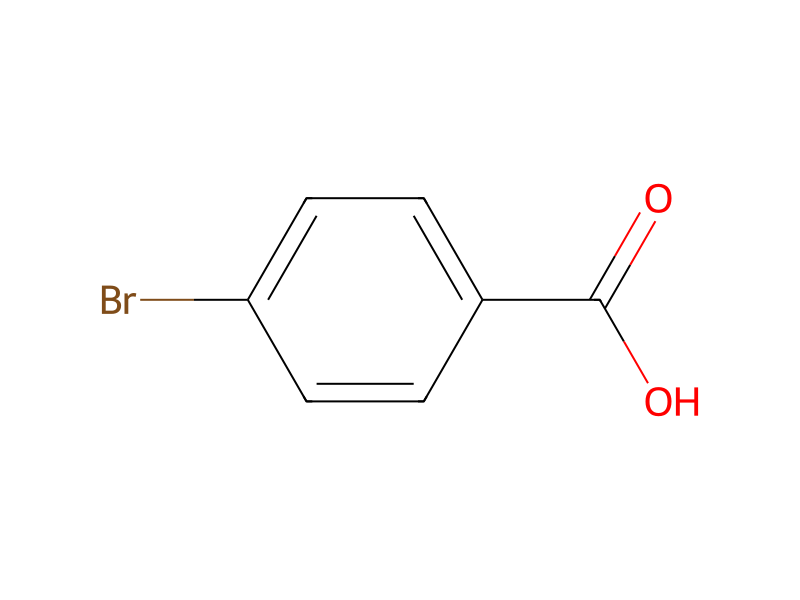
To a solution of mesitylboronic acid (10 9) and 4-bromobenzoic acid (12.9 g) in 1-propanol (150 mL) and DME (200 mL) were added triphenylphosphine (0.128 g), 2M sodium carbonate solution (37 mL) and water (30 mL). To the mixture was added palladium acetate (82 mg) under nitrogen atmosphere. The mixture was heated to reflux overnight. After the heat source was removed, 100 mL of water was added and stirred for 2.5 h while cooling to room temperature. The darkened mixture was diluted with 150 mL of ethyl acetate and the two phases were separated. The organic layer was washed several times with saturated sodium bicarbonate solution until TLC indicated that 4-bromobenzoic acid (Rf=0.55, eluant: CH2Cl2/CH3OH=5) was completely removed. The solution was extracted three times with 200 mL of 1N NaOH solution. To the combined aqueous layers was added about 50 mL of 12 N HCl to pH 3. The resultant precipitate were filtered, washed with water, and dried to give 4-Mesitylbenzoic acid as a white solid (8.81g). Rf=0.75 (eluant: CH2Cl2/CH3OH=5) 1H-NMR (300 MHz, CDCl3): δ1.997 (s,6 H), 2.340 (s,3 H), 6.961 (s,2 H), 7.274 (d,J=8.1 Hz,2 H), 8.177 (d,J=8.1Hz,2 H).