StartseiteMCPWorkbenchSkills
StartseiteWorkbenchBenachrichtigungenMein Bereich
llms.txt · MCP-AnleitungDatenschutz · Nutzungsbedingungen · Supportv1.8.3
  1. Startseite
  2. /Reaktion

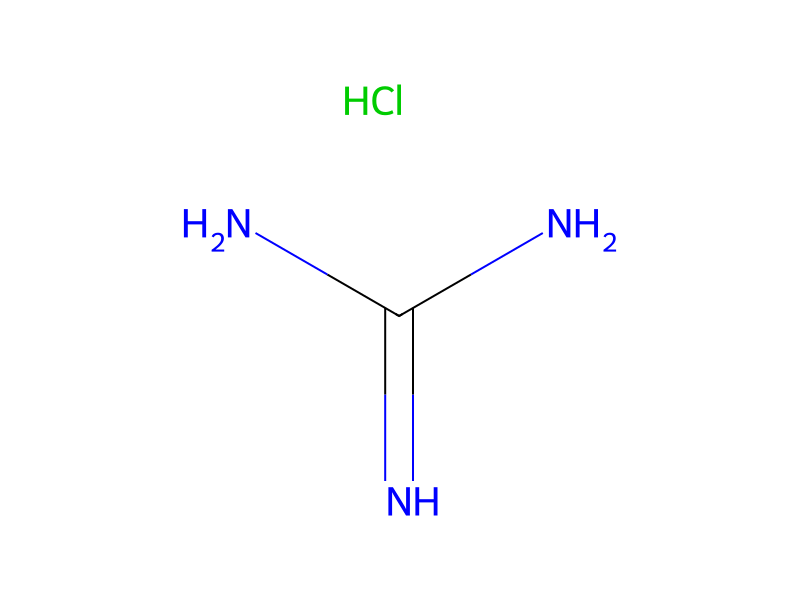
Guanidine Hydrochloride → N-carbamimidoyl-1-isoquinolin-3-ylindole-3-carboxamide;hydrochloride

HRID 492198
Drucken

Reaktionsgleichung

Reaktionsgleichung von HRID 492198
Cl.[NH2:2][C:3]([NH2:5])=[NH:4].C[O-].[Na+].Cl.[Cl:10][C:11]([C:13]1[C:21]2[C:16](=[CH:17][CH:18]=[CH:19][CH:20]=2)[N:15]([C:22]2[N:23]=[CH:24][C:25]3[C:30]([CH:31]=2)=[CH:29][CH:28]=[CH:27][CH:26]=3)[CH:14]=1)=[O:12]>CO.O1CCCC1.ClCCl.ClCCl>[ClH:10].[NH:4]([C:11]([C:13]1[C:21]2[C:16](=[CH:17][CH:18]=[CH:19][CH:20]=2)[N:15]([C:22]2[N:23]=[CH:24][C:25]3[C:30]([CH:31]=2)=[CH:29][CH:28]=[CH:27][CH:26]=3)[CH:14]=1)=[O:12])[C:3]([NH2:5])=[NH:2]
KomponentenReaktionsbedingungenVersuchsvorschriftAufarbeitungQuellen und NachweiseNotizen zur Reaktion

Komponenten

7

Edukt 3

HCID 5742Guanidine HydrochlorideHCID 10942334Sodium MethoxideHCID 865964153-chlorocarbonyl-1-(isoquinol-3-yl)-1H-indole hydrochloride

Produkt 1

HCID 178479498N-carbamimidoyl-1-isoquinolin-3-ylindole-3-carboxamide;hydrochlorideAusbeute 35,2 %

Reagenzien, Katalysatoren, Lösungsmittel 3

HCID 887Methanol
Lösungsmittel
HCID 6344DichloromethaneLösungsmittel
HCID 21919333Tetrahydrofurane dichloromethaneLösungsmittel

Reaktionsbedingungen

Temperatur
22 °C

Versuchsvorschrift

0.974 g (10.2 mmol) of guanidine hydrochloride is added to a solution of 0.55 g (10.2 mmol) of sodium methoxide in 10 cm3 of methanol at a temperature in the region of 22° C. under an argon atmosphere. After stirring at a temperature in the region of 22° C. for 2 hours, the solvent is evaporated off under reduced pressure (2.7 kPa). The residue, placed under an argon atmosphere, is taken up in 20 cm3 of a tetrahydrofuran/dichloromethane (1/1 by volume) mixture and then 0.7 g (2.04 mmol) of 3-chlorocarbonyl-1-(isoquinol-3-yl)-1H-indole hydrochloride, dissolved in 5 cm3 of the same tetrahydrofuran/dichloromethane mixture, is added thereto. After 15 hours at a temperature in the region of 22° C. and then heating at a temperature in the region of 60° C. with stirring for 1 hour, the reaction mixture is concentrated to dryness under reduced pressure (2.7 kPa) to give a residue which is taken up in dichloromethane. The insoluble material is then filtered off and discarded, and the filtrate is concentrated under reduced pressure (2.7 kPa). The residue obtained is purified by flash chromatography [eluent: ethyl acetate/methanol (9/1 by volume)]. After concentrating the fractions under reduced pressure, 0.263 g of 3-guanidinocarbonyl-1-(isoquinol-3-yl)-1H-indole hydrochloride is obtained in the form of a white solid which decomposes at 235° C. Mass spectrum (EI): m/e 329 (M+·), m/e 271. IR spectrum (KBr): 3392, 1692, 1629, 1593, 1538, 1514, 1462, 1227, 1202 and 747 cm−1.

Aufarbeitung

  1. customthe solvent is evaporated off under reduced pressure (2.7 kPa)
  2. additionis added
  3. waitAfter 15 hours at a temperature in the region of 22° C.
  4. temperatureheating at a temperature in the region of 60° C.
  5. stirringwith stirring for 1 hour
  6. concentrationthe reaction mixture is concentrated to dryness under reduced pressure (2.7 kPa)
  7. customto give a residue which
  8. filtrationThe insoluble material is then filtered off
  9. concentrationthe filtrate is concentrated under reduced pressure (2.7 kPa)
  10. customThe residue obtained
  11. customis purified by flash chromatography [eluent: ethyl acetate/methanol (9/1 by volume)]
  12. concentrationAfter concentrating the fractions under reduced pressure

Quellen und Nachweise

ORD-Eintrag
ord-b7e40b8694e14db1831e44e5a6a6637d
Quelldatensatz
uspto-grants-2009_05
DOI
10.6084/m9.figshare.5104873.v1
Patentnummer
US07531663B2

Notizen zur Reaktion

Auf dieser SeiteKomponentenReaktionsbedingungenVersuchsvorschriftAufarbeitungQuellen und NachweiseNotizen zur Reaktion


