StartseiteMCPWorkbenchSkills
StartseiteWorkbenchBenachrichtigungenMein Bereich
llms.txt · MCP-AnleitungDatenschutz · Nutzungsbedingungen · Supportv1.8.1
  1. Startseite
  2. /Reaktion

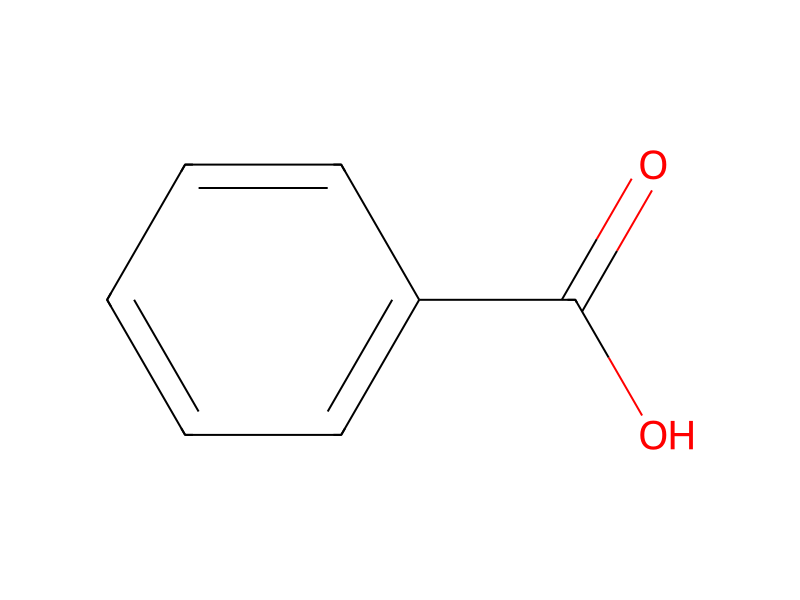
Benzoic Acid → 2-Bromoethyl Benzoate

HRID 493359
Drucken

Reaktionsgleichung

Reaktionsgleichung von HRID 493359
[C:1]([OH:9])(=[O:8])[C:2]1[CH:7]=[CH:6][CH:5]=[CH:4][CH:3]=1.[Br:10][CH2:11][CH2:12]O.C1(N=C=NC2CCCCC2)CCCCC1>ClCCl.CN(C)C1C=CN=CC=1>[C:1]([O:9][CH2:12][CH2:11][Br:10])(=[O:8])[C:2]1[CH:7]=[CH:6][CH:5]=[CH:4][CH:3]=1
KomponentenVersuchsvorschriftAufarbeitungQuellen und NachweiseNotizen zur Reaktion

Komponenten

6

Edukt 3

HCID 243Benzoic AcidHCID 10868DicyclohexylcarbodiimideHCID 108982-Bromoethanol

Produkt 1

HCID 5230902-Bromoethyl BenzoateAusbeute 82 %

Reagenzien, Katalysatoren, Lösungsmittel 2

HCID 142844-(Dimethylamino)pyridineKatalysatorHCID 6344
Dichloromethane
Lösungsmittel
2×

Versuchsvorschrift

To a solution of benzoic acid (2.44 g, 20 mmol) and 2-bromoethan-1-ol (1.42 mL, 20 mmol) in 40 mL of anhydrous dichloromethane, a solution of 1,3-dicyclohexylcarbodiimide (4.12 g, 20 mmol) in dichloromethane was slowly added followed by addition of a catalytic amount of 4-(dimethylamino)pyridine. The resulting mixture was stirred at room temperature for 16 hrs. After filtration, the filtrate was washed with 5% NaHCO3, brine, and dried over Na2SO4. After removing the solvent, chromatography (silica gel, 10% ethyl acetate in hexane) of the residue gave 3.7 g (82%) of the title compound. 1H NMR (400 MHz, CDCl3): δ 3.62 (t, J=6 Hz, 2H), 4.60 (t, J=6 Hz, 2H), 7.42 (m, 2H), 7.54 (m, 2H), 8.04 (m, 2H).

Aufarbeitung

  1. filtrationAfter filtration
  2. washthe filtrate was washed with 5% NaHCO3, brine
  3. dry with materialdried over Na2SO4
  4. customAfter removing the solvent, chromatography (silica gel, 10% ethyl acetate in hexane) of the residue

Quellen und Nachweise

ORD-Eintrag
ord-f56f48b7ef1f4fdd93ac3234588ae168
Quelldatensatz
uspto-grants-2009_05
DOI
10.6084/m9.figshare.5104873.v1
Patentnummer
US07534813B2

Notizen zur Reaktion

Auf dieser SeiteKomponentenVersuchsvorschriftAufarbeitungQuellen und NachweiseNotizen zur Reaktion


