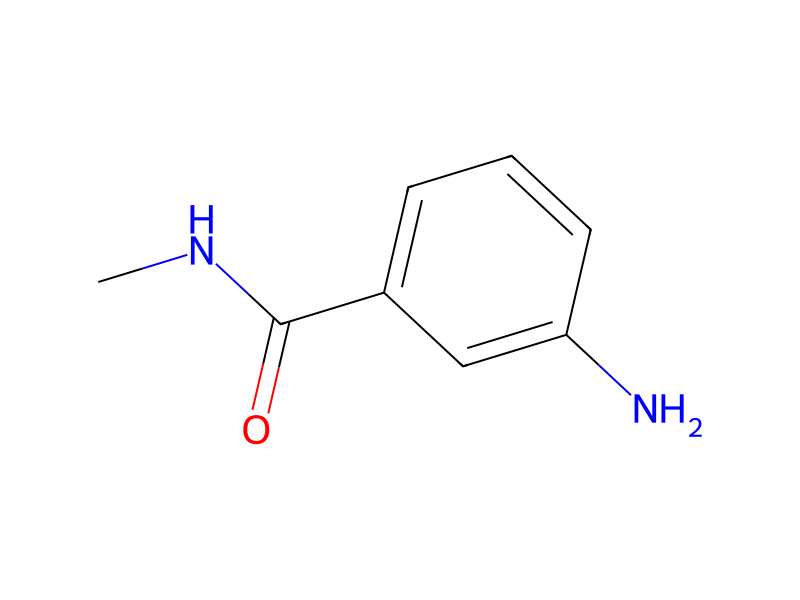
Cl[C:2]1[N:7]=[C:6](Cl)[N:5]=[CH:4][N:3]=1.C(N(C(C)C)C(C)C)C.[NH2:18][C:19]1[CH:20]=[C:21]([CH:26]=[CH:27][CH:28]=1)[C:22]([NH:24][CH3:25])=[O:23].ClC1C=CN=NN=1.[NH2:36][CH2:37][CH2:38][CH2:39][OH:40]>CN(C=O)C>[OH:40][CH2:39][CH2:38][CH2:37][NH:36][C:2]1[N:3]=[CH:4][N:5]=[C:6]([NH:18][C:19]2[CH:20]=[C:21]([CH:26]=[CH:27][CH:28]=2)[C:22]([NH:24][CH3:25])=[O:23])[N:7]=1To a solution of 2,4-dichloro-1,3,5-triazine (0.300 g, 2.000 mmol) in DMF (6670 μL) was added N-ethyl-N-isopropylpropan-2-amine (1048 μL, 6.000 mmol). The reaction vessel was cooled in an ice-water bath prior to the addition of 3-amino-N-methylbenzamide (300 mg, 2.000 mmol). The reaction mixture was stirred for 3 h at 0° C. at which time LC-MS revealed complete conversion to the desired chloro-triazine intermediate. To this yellow solution was added 3-aminopropan-1-ol (150 mg, 2.000 mmol). The reaction mixture was allowed to stir and warm slowly to RT over 18 h. Solids had precipitated out of the solution. The solid was filtered off, washed with water, and very little methanol to obtain 3-(4-(3-hydroxypropylamino)-1,3,5-triazin-2-ylamino)-N-methylbenzamide (516 mg, 1.707 mmol, 85%) as a white solid.