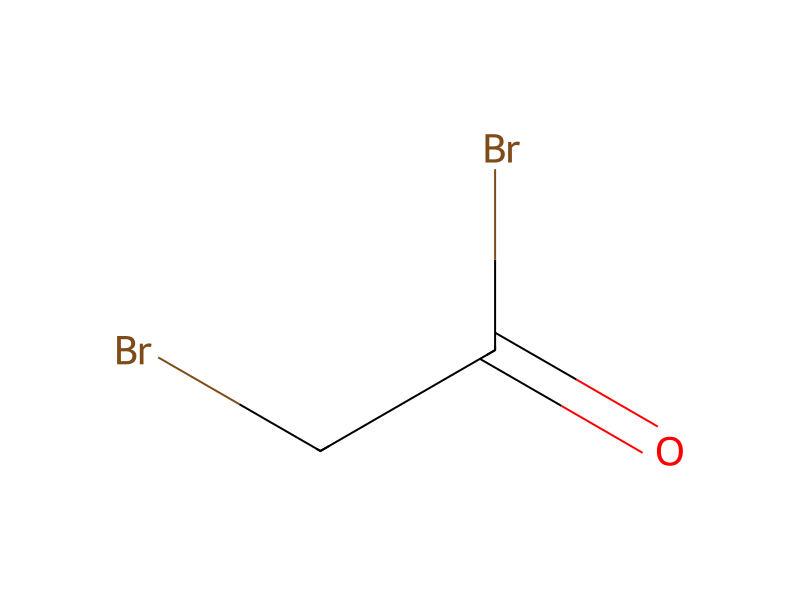
BRAA was prepared by a modification of the method described in Donoghue et al (2000) and WO 01/21628. p-Arsanilic acid (20.6 g, 95 mmol) was added in portions to a solution of sodium carbonate (20 g, 189 mmol) in water (200 mL). When all solids had dissolved, the solution was found to be pH 10, and was chilled at 4° C. for 2 hours. Bromoacetyl bromide (15 mL, 173 mmol) in dry dichloromethane (35 mL) was added in two portions, each addition followed by vigorous shaking for 2 to 3 min. The mixture was allowed to stand for a few minutes, and the lower organic layer was drained off. 4-(N-(Bromoacetyl)amino)benzenearsonic acid (BRAA) was precipitated by acidification of the solution to about pH 2-3 with the dropwise addition of 98% sulfuric acid, collected by vacuum filtration, and dried, giving BRAA as a white solid.