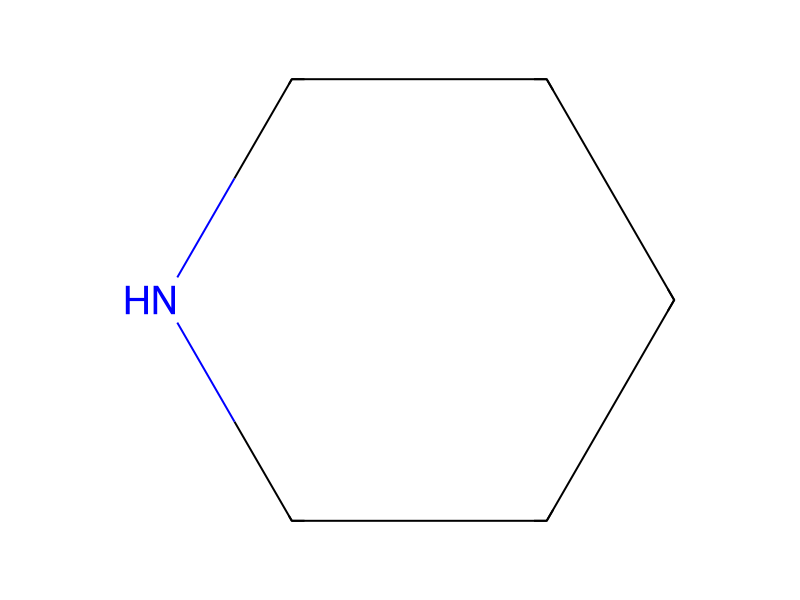
C(O[C@H:5]1[C@@H:10]([N:11]2[CH2:16][CH2:15][CH2:14][CH2:13][CH2:12]2)[CH2:9][C@H:8]2[C@H:17]3[C@H:27]([CH2:28][CH2:29][C@:6]12[CH3:7])[C@:25]1([CH3:26])[C@H](CCC(=O)[CH2:24]1)CC3)(=O)C.[OH2:31]>N1CCCCC1.C(O)=O>[N:11]1([C@H:10]2[CH2:24][C@@:25]3([CH3:26])[C@@H:6]([CH2:29][CH2:28][C@@H:17]4[C@@H:27]3[CH2:28][CH2:29][C@@:6]3([CH3:7])[C@H:8]4[CH2:9][C@H:10]([N:11]4[CH2:16][CH2:15][CH2:14][CH2:13][CH2:12]4)[C@@H:5]3[OH:31])[CH2:8][CH2:9]2)[CH2:16][CH2:15][CH2:14][CH2:13][CH2:12]1A solution of 17β-acetyloxy-16β-(1-piperidinyl)-5α-androstan-2-one (8.24 g) in piperidine (36 ml) and formic acid (12 ml) was heated at reflux temperature under a nitrogen (oxygen-free) atmosphere for 4.5 h. When the solution had cooled to room temperature, water (50 ml) was added to precipitate the product, which was filtered off and washed well with water (300 ml). A solution of the crude product in diethyl ether (60 ml) was washed with water (2×100 ml), dried (MgSO4) and evaporated to dryness. Crytsllisation of the residue from acetone afforded 2β,16β-di-(1-piperidinyl)-5α-androstan-17β-ol (4.17 g), m.p. 176°-181° C.; [α]D +41.3° (c 0.59 in CHCl3).