Reaktionsgleichung

[C:1]([O:4][C:5](=O)[CH3:6])(=[O:3])[CH3:2].[CH2:8](N(CC)CC)[CH3:9].[C:15]([OH:18])(=[O:17])[CH3:16].O1CC1C=C>COCCOCCOC>[C:15]([O:18][CH:6]([CH2:5][O:4][C:1](=[O:3])[CH3:2])[CH:8]=[CH2:9])(=[O:17])[CH3:16]Komponenten
Edukt 4




Produkt 1

Reagenzien, Katalysatoren, Lösungsmittel 1
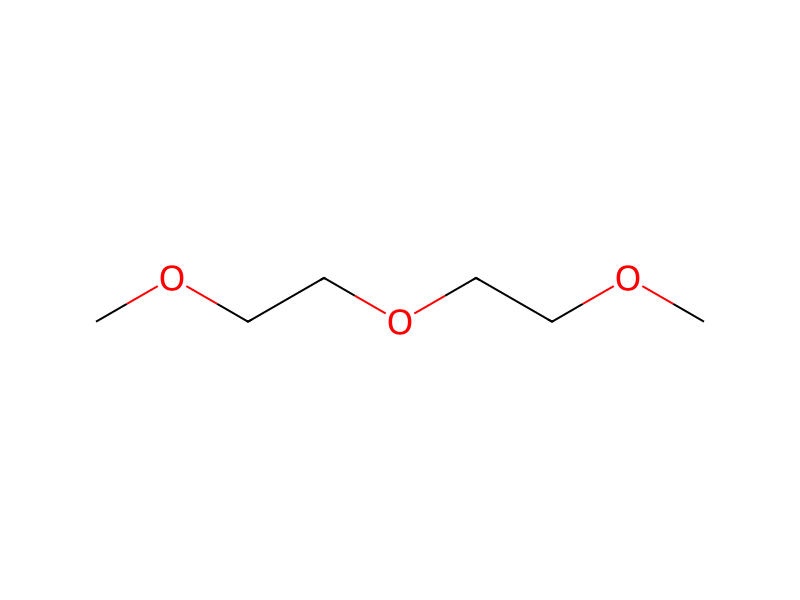
Reaktionsbedingungen
- Temperatur
- 125 °C
Versuchsvorschrift
A 100-mL autoclave was charged with 45.25 g (0.44 mol) acetic anhydride, 1.62 g (0.016 mol) of triethylamine, 1.94 g (0.032 mol) acetic acid and 3.44 g of diglyme. The autoclave was purged with helium twice, then the vessel was pressurized to 6.2 bars (75 psig) with helium followed by agitation. The reaction mixture was heated to 125° C. Then 31.35 mL (0.40 mol) of 3,4-epoxy-1-butene was introduced to the reactor via syringe pump over 10 seconds. A first sample was taken at 1 min, then sequential samples were obtained every 15 min during the course of 2.25 hrs for analysis by GC. GC analysis of the crude mixture after 2.25 hrs revealed a 93% yield of 3,4-diacetoxy-1-butene with a 95% selectivity and 1.9% 3,4-epoxy-1-butene. The reaction was observed to be first order in 3,4-epoxy-1-butene with a first order rate constant of 0.029 min-1 (Table A). This example demonstrates the catalytic effect of a tertiary amine with two molar equivalents of acetic acid as a co-catalyst (Table B).
Aufarbeitung
- customThe autoclave was purged with helium twice
- customsequential samples were obtained every 15 min during the course of 2.25 hrs for analysis by GC
Quellen und Nachweise
- ORD-Eintrag
- ord-70dd7ad6f11f4b0da7d032c3ae8f2484
- Quelldatensatz
- uspto-grants-1997_04
- Patentnummer
- US05623086
Verknüpfte Notizen
Wird geladen…