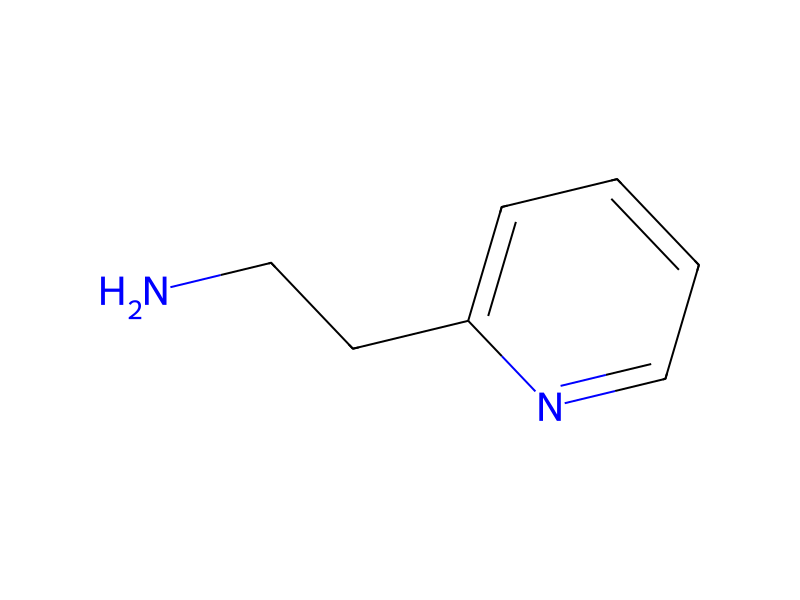
[O:1]1[CH2:6][CH2:5][CH2:4][CH2:3][CH:2]1[O:7][CH2:8][CH2:9][C:10]1[CH:11]=[C:12]([CH:15]=[CH:16][CH:17]=1)[CH:13]=O.[NH2:18][CH2:19][CH2:20][C:21]1[CH:26]=[CH:25][CH:24]=[CH:23][N:22]=1.O>C1(C)C=CC=CC=1.C1(C)C=CC(S(O)(=O)=O)=CC=1>[N:22]1[CH:23]=[CH:24][CH:25]=[CH:26][C:21]=1[CH2:20][CH2:19][NH:18][CH2:13][C:12]1[CH:15]=[CH:16][CH:17]=[C:10]([CH2:9][CH2:8][O:7][CH:2]2[CH2:3][CH2:4][CH2:5][CH2:6][O:1]2)[CH:11]=1To a solution of 3-[2-(tetrahydro-pyran-2-yloxy)-ethyl]-benzaldehyde (Example 50, step A, 6.1 g) and 2-(2-aminoethyl)pyridine (3.18 g, 3.1 ml) in toluene (150 mL) was added p-toluene sulfonic acid (100 mg). The reaction was heated at reflux in a Dean-Stark apparatus for couple of hours. Around 2 mL water were displaced. The mixture was cooled and washed with aqueous bicarbonate and concentrated in vacuo. The residue was taken up in ethanol (100 ml) and cooled. Sodium borohydride (1.0 g) was added slowly and the reaction left 1 hour to warm to room temperature. Water was added (100 mL) and ethanol removed by distillation. The reaction was partitioned between aqueous bicarbonate and ethyl acetate. The organic layers were dried over sodium sulfate and concentrated in vacuo to give yellow oil (6.5 g). The material was used in the next step without further purification.