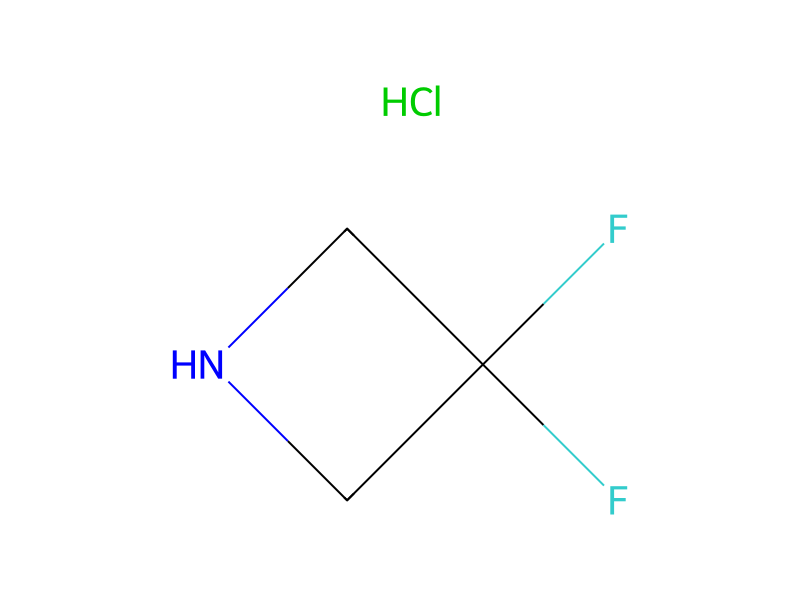
A mixture of 120 mg (0.8 mmol) of the compound from Example 11A, 129 mg (1.0 mmol) of 3,3-difluoroazetidine hydrochloride and 174 μl (129 mg, 1.0 mmol) of N-ethyl-N-(propan-2-yl)propane-2-amine in 3 ml of water is stirred at 100° C. for 16 h. Following the addition of 32 μl (47 mg, 0.4 mmol) of trifluoroacetic acid and 194 mg (0.8 mmol) of the compound from Example 6A, the reaction mixture is stirred at 100° C. for 16 h. The precipitated solid is filtered off and washed first with water and then with diethyl ether. The product is dried under reduced pressure. Yield: 32 mg (11% of theory)