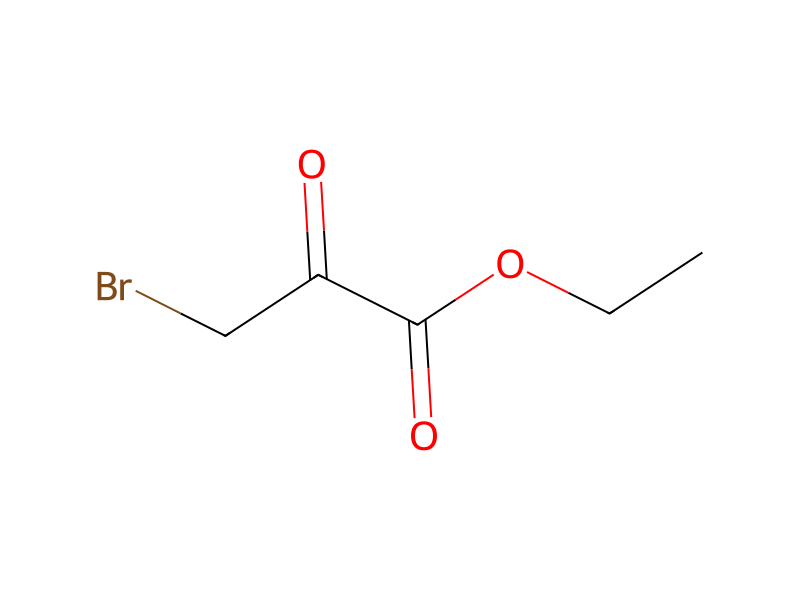
A suspension of 52 g of 2-amino-7-bromo-5-(2-pyridyl)-3H-1,4-benzodiazepine in 1.5 l of tetrahydrofuran was treated in succession with 58 ml of N-ethyldiisopropylamine and 44 ml of ethyl bromopyruvate and the mixture was stirred at 65° C. for 20 min. Then, a further 5.8 ml of N-ethyldiisopropylamine and 44 ml of ethyl bromopyruvate were added and the mixture was stirred at 65° C. for a further 20 min. After cooling in an ice bath 0.5 l of diethyl ether was added and the crystals were filtered off. 49.5 g of N-ethyldiisopropylamine hydrobromide were obtained. The filtrate was evaporated in a vacuum, the residue was taken up in dichloromethane and shaken twice with saturated aqueous sodium hydrogen carbonate solution. The organic phase was dried over sodium sulphate and chromatographed over 2 kg of silica gel. With dichloromethane/ethanol 197:3 and 196:4 there were firstly eluted small amounts of impurities, then with dichloromethane/ethanol 97:3, 95:5 and 94:6 there were isolated a total of 58.2 g of ethyl 3-[2-amino-7-bromo-5-(2-pyridyl)-3H-1,4-benzodiazepin-1-yl]pyruvate. This was dissolved in 11 of acetic acid and stirred at 100° C. for 3.5 h. The solution was then evaporated in a vacuum and the residue was partitioned between dichloromethane and saturated aqueous sodium hydrogen carbonate solution (11 of each). The dichloromethane phase was separated, dried over sodium sulphate and chromatographed over 2 kg of silica gel. 17.2 g of ethyl 8-bromo-6-(2-pyridyl)-4H-imidazo[1,2-a][1,4]benzodiazepine-2-carboxylate were obtained as dark red crystals by elution with ethyl acetate. This was again chromatographed over 2 kg of silica gel. Strongly coloured impurities were eluted with ethyl acetate/dichloromethane 1:1 and 2:1. The desired ethyl 8-bromo-6-(2-pyridyl)-4H-imidazo[1,2-a][1,4]benzodiazepine-2-carboxylate was eluted with ethyl acetate. There were obtained 11.7 g of ethyl 8-bromo-6-(2-pyridyl)-4H-imidazo[1,2-a][1,4]benzodiazepine-2-carboxylate of m.p. 227-230° C.