Reaktionsgleichung

[Cl:1][C:2]1[CH2:6][CH:5]([C:7]([O:9][CH3:10])=[O:8])[N:4]([C:11]2[CH:12]=[N:13][CH:14]=[CH:15][CH:16]=2)[N:3]=1.O.[N+]([O-])([O-])=O.[Ce+4].[NH4+].[NH4+].[N+]([O-])([O-])=O.[N+]([O-])([O-])=O.[N+]([O-])([O-])=O.[N+]([O-])([O-])=O.[N+]([O-])([O-])=O>O1CCCC1>[Cl:1][C:2]1[CH:6]=[C:5]([C:7]([O:9][CH3:10])=[O:8])[N:4]([C:11]2[CH:12]=[N:13][CH:14]=[CH:15][CH:16]=2)[N:3]=1Komponenten
Edukt 3

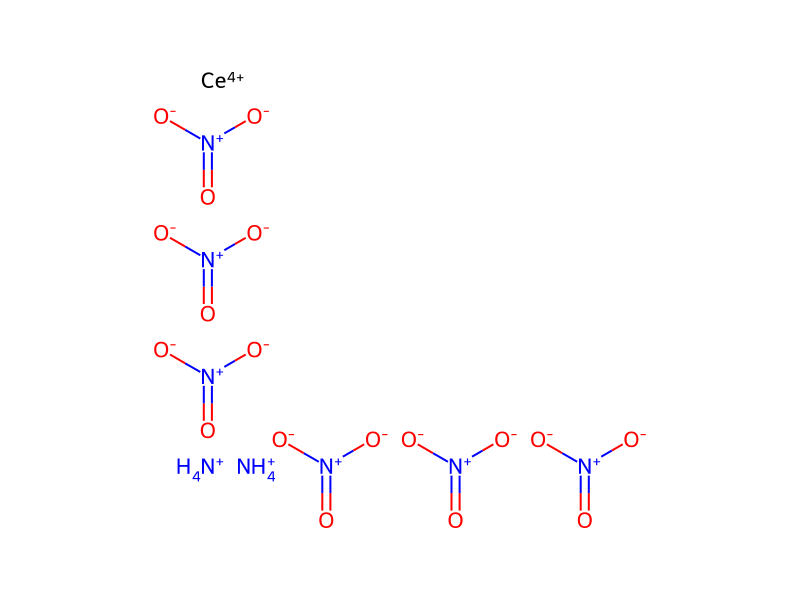

Produkt 1

Reagenzien, Katalysatoren, Lösungsmittel 1

Versuchsvorschrift
Methyl 3-chloro-1-(pyridine-3-yl)-4,5-dihydro-1H-pyrazole-5-carboxylate (2.63 g, 11.0 mmol) was stirred in tetrahydrofuran (50 mL) and water (50 mL) at 0° C. diammonium cerium (IV) nitrate (15.0 g, 27.4 mmol) was added in portions and the reaction was stirred at room temperature for 18 hours. thin layer chromatography analysis indicated that the starting material was consumed. The mixture was extracted with ethyl acetate (2×300 mL) and the organic layers were dried and concentrated. The residue was purified by flash column chromatography using 50-100% ethyl acetate/hexanes as eluent. The pure fractions were concentrated to provide the desired product as a yellow solid (1.50 g, 52%): mp 99-102° C.; 1H NMR (400 MHz, DMSO-d6) δ 9.00 (dd, J=2.5, 0.7 Hz, 1H), 8.83 (dd, J=5.2, 1.5 Hz, 1H), 8.35 (ddd, J=8.3, 2.5, 1.4 Hz, 1H), 7.83 (ddd, J=8.3, 5.2, 0.7 Hz, 1H), 7.35 (s, 1H), 3.78 (s, 3H); 13C NMR (101 MHz, CDCl3) δ 158.34, 149.90, 146.89, 141.39, 136.09, 134.77, 133.30, 123.14, 112.01, 52.53; ESIMS m/z 238 ([M+H]+).
Aufarbeitung
- customwas consumed
- extractionThe mixture was extracted with ethyl acetate (2×300 mL)
- customthe organic layers were dried
- concentrationconcentrated
- customThe residue was purified by flash column chromatography
- concentrationThe pure fractions were concentrated
Quellen und Nachweise
- ORD-Eintrag
- ord-77082f727af942149a1e08917a13e0e7
- Quelldatensatz
- uspto-grants-2016_09
- Patentnummer
- US09434712B2
Verknüpfte Notizen
Wird geladen…