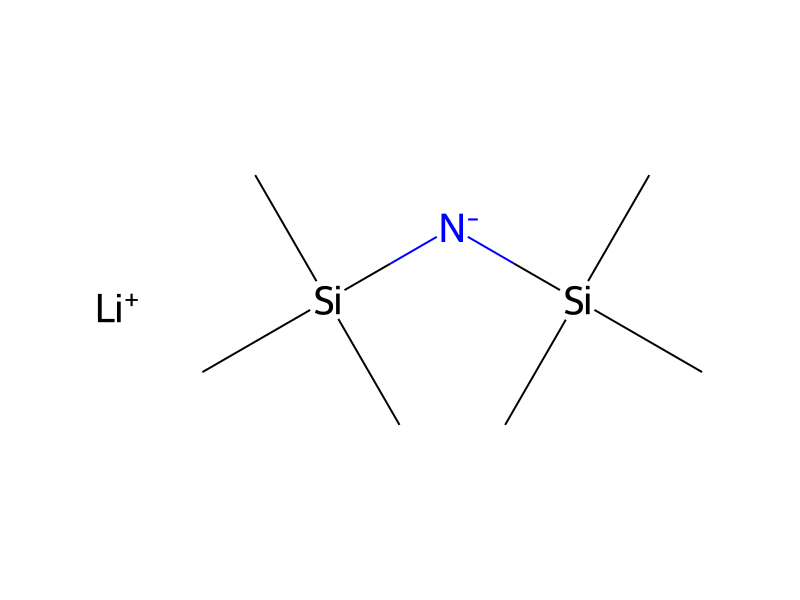
[I:1][C:2]1[CH:7]=[CH:6][C:5]([NH2:8])=[CH:4][CH:3]=1.[Li+].C[Si]([N-][Si](C)(C)C)(C)C.[CH2:19]([O:22][C:23]1[CH:28]=[C:27]([F:29])[C:26]([F:30])=[C:25](F)[C:24]=1[N+:32]([O-:34])=[O:33])[CH:20]=[CH2:21]>C1COCC1>[CH2:19]([O:22][C:23]1[C:24]([N+:32]([O-:34])=[O:33])=[C:25]([NH:8][C:5]2[CH:6]=[CH:7][C:2]([I:1])=[CH:3][CH:4]=2)[C:26]([F:30])=[C:27]([F:29])[CH:28]=1)[CH:20]=[CH2:21]To a solution of 4-iodophenylamine (0.940 g, 4.3 mmol) in THF (50 mL) was dropwise added LHMDS solution (5.6 mL, 5.6 mmol, 1 M in THF) at −78° C. After stirring for 1 h at −78° C., a solution of 1-allyloxy-3,4,5-trifluoro-2-nitro-benzene (1.1 g, 4.7 mmol) in THF (10 mL) was added dropwise into the reaction mixture, which was stirred at −78° C. for 1 h and at room temperature for 16 h. The progress of reaction was monitored by 1H NMR. After completion, the reaction mixture was concentrated under reduced pressure. The residue was dissolved in ethyl acetate, washed with water, dried over anhydrous Na2SO4 and concentrated. The residue obtained was triturated with hexane to yield (3-allyloxy-5,6-difluoro-2-nitro-phenyl)-(4-iodo-phenyl)-amine as an orange solid (1.1 g). 1H-NMR (400 MHz, CDCl3): δ 4.54 (2H, d, J=4.8), 5.24 (1H, s), 5.32 (1H, d, J=10.8), 5.42 (1H, d, J=17.2), 6.06-6.02 (1H, m), 6.45 (2H, d, J=8.4), 6.57-6.62 (1H, m), 7.47 (2H, d, J=8.4).