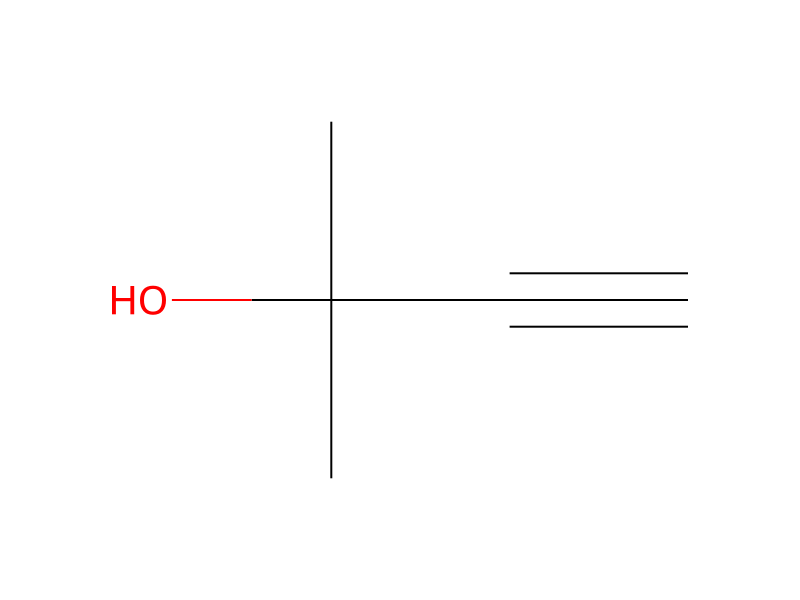
Br[C:2]1[C:3]([F:19])=[CH:4][C:5]2[O:14][CH2:13][CH2:12][C:11]3[S:10][C:9]([C:15]([NH2:17])=[O:16])=[N:8][C:7]=3[C:6]=2[CH:18]=1.[CH3:20][C:21]([OH:25])([C:23]#[CH:24])[CH3:22]>CS(C)=O.C(N(CC)CC)C.O.Cl[Pd](Cl)([P](C1C=CC=CC=1)(C1C=CC=CC=1)C1C=CC=CC=1)[P](C1C=CC=CC=1)(C1C=CC=CC=1)C1C=CC=CC=1>[F:19][C:3]1[C:2]([C:24]#[C:23][C:21]([OH:25])([CH3:22])[CH3:20])=[CH:18][C:6]2[C:7]3[N:8]=[C:9]([C:15]([NH2:17])=[O:16])[S:10][C:11]=3[CH2:12][CH2:13][O:14][C:5]=2[CH:4]=1The title compound was prepared according to a procedure similar to that described in Procedure G. Into a 8-mL sealed tube purged and maintained with an inert atmosphere of nitrogen, was placed a suspension of 9-Bromo-8-fluoro-4,5-dihydro-6-oxa-3-thia-1-aza-benzo[e]azulene-2-carboxylic acid amide (300 mg, 0.87 mmol, 1.00 equiv), 2-methylbut-3-yn-2-ol (260 mg, 3.09 mmol, 3.50 equiv) and Pd(PPh3)2Cl2 (60 mg, 0.09 mmol, 0.10 equiv) in DMSO (1 mL) and triethylamine (1 mL). The final reaction mixture was irradiated with microwave radiation for 1 h at 70° C. The resulting solution was diluted with 20 mL of water. The solids were collected by filtration and washed with 20 mL of ethyl acetate. This resulted in 0.24 g (79%) of 8-Fluoro-9-(3-hydroxy-3-methyl-but-1-ynyl)-4,5-dihydro-6-oxa-3-thia-1-aza-benzo[e]azulene-2-carboxylic acid amide as a off-white solid. LC-MS (ES, m/z): 347[M+H]+; 1H-NMR: (300 MHz, DMSO-d6, ppm) δ 8.652 (d, 1H), 8.460 (s, 1H), 7.860 (s, 1H), 7.007 (d, 1H), 5.497 (s, 1H), 4.391 (t, 2H), 3.414 (t, 2H), 1.491 (s, 6H).
Wird geladen…