StartseiteMCPWorkbenchSkills
StartseiteWorkbenchBenachrichtigungenMein Bereich
llms.txt · MCP-AnleitungDatenschutz · Nutzungsbedingungen · Supportv1.8.3
  1. Startseite
  2. /Reaktion

Morpholine → 5-(Morpholin-4-yl)-1H-pyrrolo[2,3-b]pyridine

HRID 580
Drucken

Reaktionsgleichung

Reaktionsgleichung von HRID 580
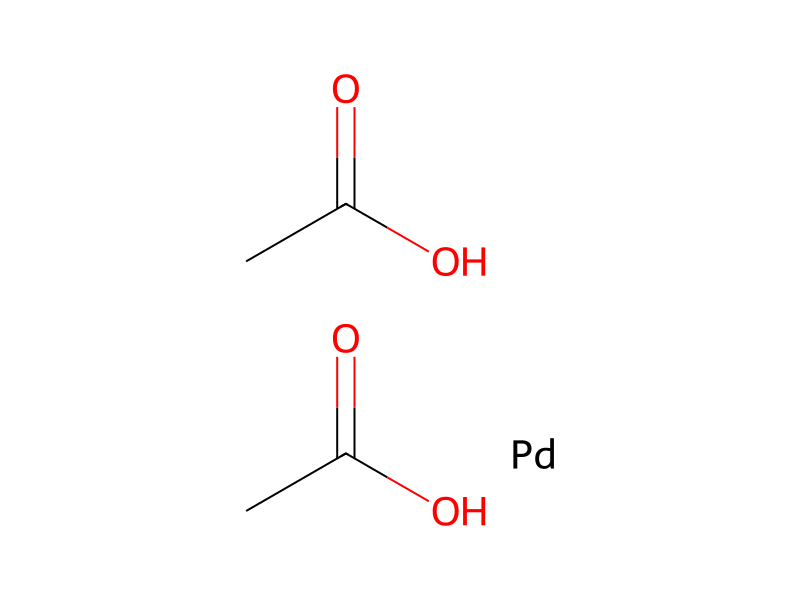
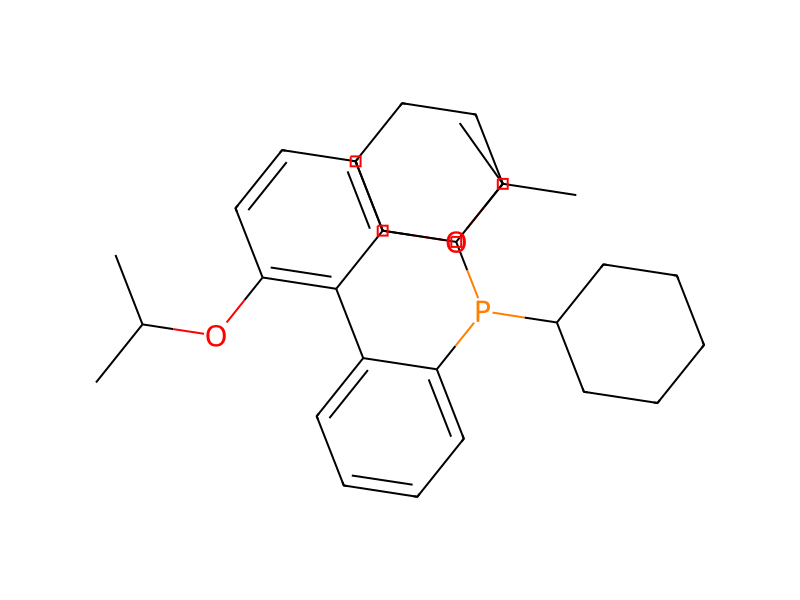
Brc1cnc2[nH]ccc2c1.C1COCCN1>C1COCCO1.CC(=O)O.CC(=O)O.CC(C)(C)[O-].CC(C)Oc1cccc(OC(C)C)c1-c1ccccc1P(C1CCCCC1)C1CCCCC1.[Na+].[Pd]>c1cc2cc(N3CCOCC3)cnc2[nH]1
KomponentenReaktionsbedingungenVersuchsvorschriftQuellen und NachweiseNotizen zur Reaktion

Komponenten

7

Edukt 2

HCID 8083MorpholineHCID 103079325-bromo-1H-pyrrolo[2,3-b]pyridine

Produkt 1

HCID 598119225-(Morpholin-4-yl)-1H-pyrrolo[2,3-b]pyridineAusbeute 64,63 %

Reagenzien, Katalysatoren, Lösungsmittel 4

HCID 23676156Sodium t-butoxideReagenzHCID 4144353Palladium (II) acetateKatalysator
HCID 16217985
2-Dicyclohexylphosphino-2',6'-diisopropoxybiphenyl
Katalysator
HCID 312751,4-DioxaneLösungsmittel

Reaktionsbedingungen

Temperatur
90 °C

Versuchsvorschrift

To a mixture of 5-bromo-1H-pyrrolo[2,3-b]pyridine (5.1 g, 25.88 mmol), morpholine (4.10 mL, 51.77 mmol), sodium 2-methylpropan-2-olate (9.95 g, 103.54 mmol),dicyclohexyl(2',6'-diisopropoxy-[1,1'-biphenyl]-2-yl)phosphine (0.604 g, 1.29 mmol) in degassed dioxane (100 mL) was added diacetoxypalladium (0.581 g, 2.59 mmol) and the reaction mixture was heated under nitrogen at 90 °C for 17 hours, then evaporated and partitioned between DCM (80ml) and saturated aqueous sodium bicarbonate solution (80ml). The aqueous phase was extracted further with DCM (50ml) and the combined organics were evaporated, redissolved in a mixture of methanol and DCM and purified by flash silica chromatography, elution gradient 0 to 10% MeOH in DCM. Pure fractions were evaporated to dryness to afford 4-(1H-pyrrolo[2,3-b]pyridin-5-yl)morpholine (3.40 g, 64.6 %) as a yellow solid.


Quellen und Nachweise

ORD-Eintrag
ord-c34fe67f0c724f1db0a5e6644d227638
Quelldatensatz
750 AstraZeneca ELN dataset
Originallink
Quelle ansehen

Notizen zur Reaktion

Auf dieser SeiteKomponentenReaktionsbedingungenVersuchsvorschriftQuellen und NachweiseNotizen zur Reaktion