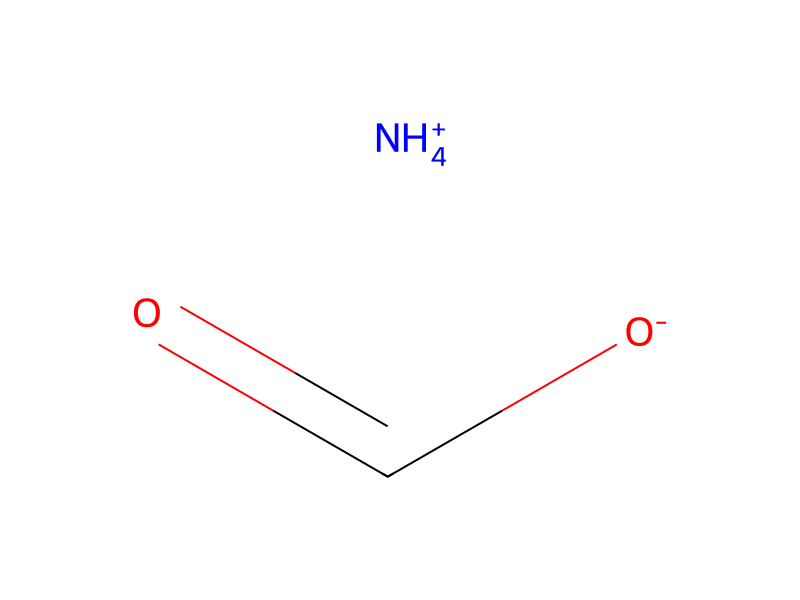
[ClH:1].[F:2][C:3]([F:21])([F:20])[C:4]1[CH:5]=[C:6]([C:14]2[CH2:15][CH2:16][NH:17][CH2:18][CH:19]=2)[CH:7]=[C:8]([C:10]([F:13])([F:12])[F:11])[CH:9]=1.C([O-])=O.[NH4+]>CO.[Pd]>[ClH:1].[F:21][C:3]([F:2])([F:20])[C:4]1[CH:5]=[C:6]([CH:14]2[CH2:19][CH2:18][NH:17][CH2:16][CH2:15]2)[CH:7]=[C:8]([C:10]([F:12])([F:13])[F:11])[CH:9]=1A mixture of 4-(3,5-bis(trifluoromethyl)phenyl)-1,2,3,6-tetrahydropyridine hydrochloride (19, 452 mg, 1.37 mmol), ammonium formate (0.863 g, 13.7 mmol), and 10% Pd/C (0.332 g) in CH3OH (10 mL) was heated at reflux for 7 h. The mixture was cooled to ambient temperature and was filtered over Celite. The filtrate was concentrated and the resulting residue was diluted in CH2Cl2 (8 mL) and CH3OH (2 mL). To this solution was added HCl (2.0 N solution in Et2O, 6 mL). The resulting solids were collected by filtration to give 4-(3,5-bis(trifluoromethyl)phenyl)piperidine hydrochloride (20) as a white solid (376 mg, 82%): 1H NMR (300 MHz, DMSO-d6) δ 9.05-8.58 (m, 2H), 8.03-7.97 (m, 1H), 7.95-7.87 (m, 2H), 3.44-3.29 (m, 2H, overlaps with H2O), 3.19-2.88 (m, 3H), 2.09-1.80 (m, 4H); ESI MS m/z 298 [M+H]+.