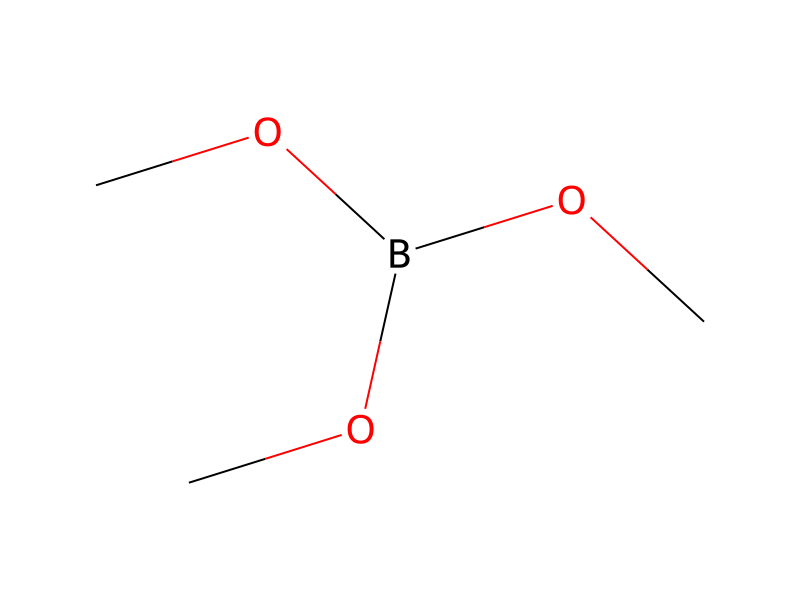
C([Li])CCC.Br[C:7]1[CH:12]=[CH:11][C:10]([C:13]([C:27]2[CH:32]=[CH:31][CH:30]=[CH:29][CH:28]=2)=[C:14]([C:21]2[CH:26]=[CH:25][CH:24]=[CH:23][CH:22]=2)[C:15]2[CH:20]=[CH:19][CH:18]=[CH:17][CH:16]=2)=[CH:9][CH:8]=1.C[O:34][B:35](OC)[O:36]C>C1COCC1>[C:27]1([C:13]([C:10]2[CH:11]=[CH:12][C:7]([B:35]([OH:36])[OH:34])=[CH:8][CH:9]=2)=[C:14]([C:21]2[CH:26]=[CH:25][CH:24]=[CH:23][CH:22]=2)[C:15]2[CH:20]=[CH:19][CH:18]=[CH:17][CH:16]=2)[CH:32]=[CH:31][CH:30]=[CH:29][CH:28]=1Into a 250 mL two-necked round-bottom flask under nitrogen was slowly added n-butyllithium (1.6 M in hexane, 7.5 mL, 12 mmol) and a THF solution (80 mL) of 1-(4-bromophenyl)-1,2,2-triphenylethene (3) (4.11 g, 10 mmol) at −78° C. After stirring for 3 h, 2.4 mL of trimethylborate (20 mmol) was added into the reaction mixture. The mixture was warmed to room temperature and the reaction was terminated by adding hydrochloric acid (2 M, 10 mL) after 12 h. The mixture was then poured into water and extracted with dichloromethane. The organic layer was washed with water and dried over magnesium sulfate. After filtration and solvent evaporation, the residue was purified by silica-gel column chromatography using n-hexane/ethyl acetate as eluent. White solid of 4-(1,2,2-Triphenylvinyl)phenylboronic acid (4) was obtained in 70% yield (2.6 g). 1H NMR (300 MHz, CDCl3), δ (TMS, ppm): 7.88 (d, 2H, J=8.1 Hz), 7.13-7.00 (m, 17H), 4.49 (s, 1H). 13C NMR (75 MHz, CDCl3), δ (TMS, ppm): 148.9, 144.2, 144.1, 144.09, 142.4, 141.4, 135.6, 133.5, 132.0, 131.6, 128.4, 128.3, 127.4, 127.2. HRMS (TOF): m/e 376.2030 (M+, calcd 376.1635).