StartseiteMCPWorkbenchSkills
StartseiteWorkbenchBenachrichtigungenMein Bereich
llms.txt · MCP-AnleitungDatenschutz · Nutzungsbedingungen · Supportv1.8.3
  1. Startseite
  2. /Reaktion

Carbazole → 9-(p-Tolyl)carbazole

HRID 589999
Drucken

Reaktionsgleichung

Reaktionsgleichung von HRID 589999
CC1(P(C(C)(C)C)C(C)(C)C)[C:4](C2C=CC=CC=2)([C:5]2[CH:10]=[CH:9][CH:8]=[CH:7][CH:6]=2)C1.[CH:26]1[C:38]2[NH:37][C:36]3[C:31](=[CH:32][CH:33]=[CH:34][CH:35]=3)[C:30]=2[CH:29]=[CH:28][CH:27]=1.C[Mg]Cl.ClC1C=CC(C)=CC=1.[Cl-].[NH4+]>[CH2-]C=C.[CH2-]C=C.Cl[Pd+].Cl[Pd+].C(P(C(C)(C)C)C1(C)CC1(C1C=CC=CC=1)C1C=CC=CC=1)(C)(C)C.O.C1COCC1>[CH3:4][C:5]1[CH:10]=[CH:9][C:8]([N:37]2[C:36]3[CH:35]=[CH:34][CH:33]=[CH:32][C:31]=3[C:30]3[C:38]2=[CH:26][CH:27]=[CH:28][CH:29]=3)=[CH:7][CH:6]=1
KomponentenVersuchsvorschriftAufarbeitungQuellen und NachweiseNotizen zur Reaktion

Komponenten

10

Edukt 5

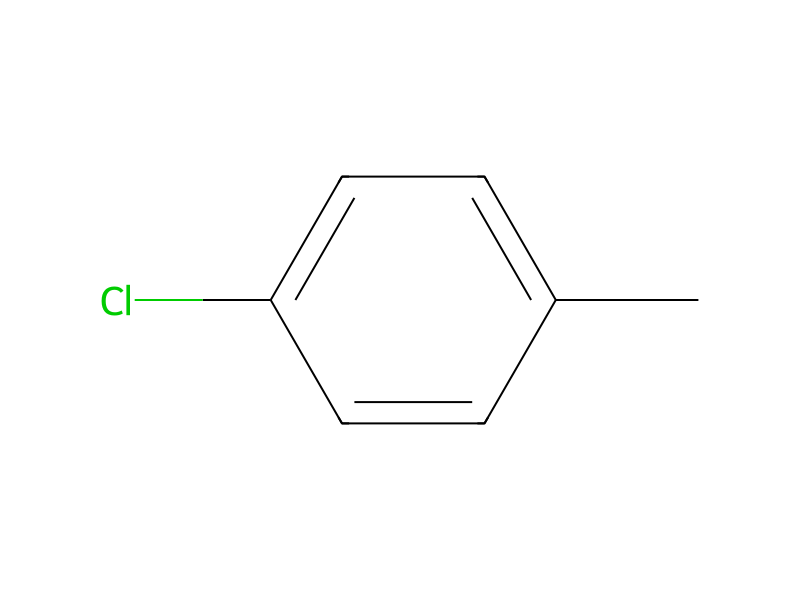
HCID 6854CarbazoleHCID 78104-Chlorotoluene2×HCID 25517Ammonium ChlorideHCID 21909131Di-tert-butyl(1-methyl-2,2-diphenylcyclopropyl)phosphaneHCID 178418332HCID 178418332, Verbindung

Produkt 1

HCID 157986519-(p-Tolyl)carbazole
Ausbeute 98,5 %

Reagenzien, Katalysatoren, Lösungsmittel 4

HCID 61538Palladium, di-mu-chlorobis(eta3-2-propenyl)di-KatalysatorHCID 21909131Di-tert-butyl(1-methyl-2,2-diphenylcyclopropyl)phosphaneKatalysatorHCID 962WaterLösungsmittelHCID 8028TetrahydrofuranLösungsmittel4×

Versuchsvorschrift

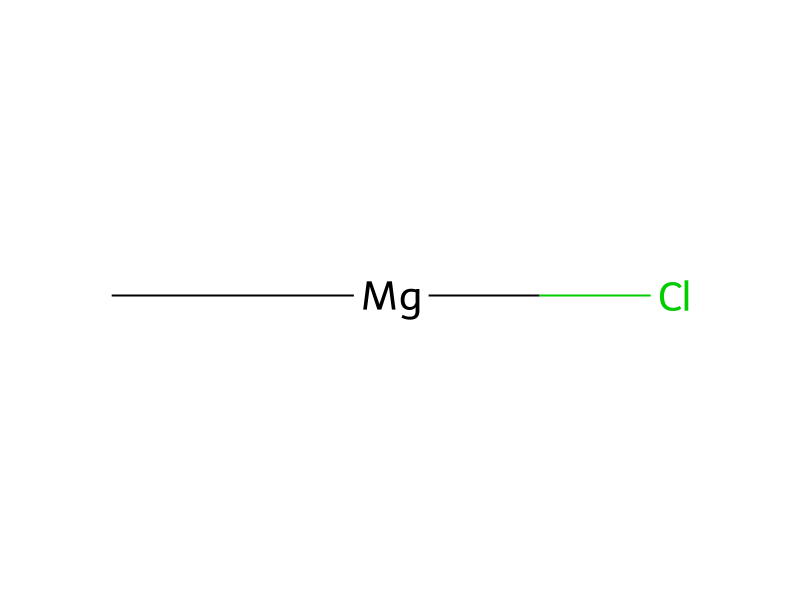
Allylpalladium(II) chloride dimer ([PdCl(π-allyl)]2) (5.8 mg, 0.025 mol %) and di-tert-butyl(2,2-diphenyl-1-methyl-1-cyclopropyl)phosphine (cBRIDP) (22.2 mg, 0.1 mol %) were placed into a 50 mL, two-necked, round bottomed flask equipped a gas inlet, and the flask was evacuated and filled with nitrogen. Subsequently, to the mixture was added dehydrated THF (8.2 mL, 101.0 mmol, 1.6 equivalents), and the mixture was stirred at room temperature for 1 minute to prepare a THF solution of an equivalent mixture of PdCl(π-allyl)(cbridp) and cBRIDP (a catalyst solution) as a pale yellow liquid. Separately, a 200 mL, four-necked, round-bottomed flask equipped with a Teflon® coated magnetic stirring bar, condenser, dropping funnel, thermometer, and a gas inlet was evacuated and filled with nitrogen. Carbazole (10.9 g, 65.0 mmol, 1.03 equivalents) and dehydrated xylenes (66 mL) were charged into the flask, and the mixture was cooled to 5° C. using an ice bath. Subsequently, to the mixture was added a THF solution of methylmagnesium chloride (MeMgCl) (3.22 mol/L, 20.0 mL, 64.4 mmol, 1.02 equivalents) (containing THF in an amount of 17.3 mL (15.4 g, 213.6 mmol, 3.4 equivalents)) dropwise via the dropping funnel over 10 minutes at such a rate that the temperature of the reaction solution was kept at 20° C. or lower, and then the dropping funnel was washed with dehydrated xylenes (11 mL). Subsequently, to the solution were added 4-chlorotoluene (7.5 mL, 63.1 mmol, 1.0 equivalent) and the catalyst solution (8.2 mL) successively, and the solution was stirred for 1 hour under reflux. GC analysis at this point to check progress of the reaction reveals that 4-chlorotoluene (GC retention time: 2.8 minutes) has been completely consumed. After cooling the reaction mixture to room temperature, to the mixture were added water (25 mL) and ammonium chloride (1.7 g, 31.8 mmol, 0.5 equivalents). The aqueous layer was separated off, and the organic layer was concentrated under reduced pressure to give oily residue, which was purified by silica gel column chromatography (eluent: n-hexane/toluene=2/1) to afford 16.0 g of N-(4-methylphenyl)carbazole as a white powder.

Aufarbeitung

  1. customtwo-necked, round bottomed flask equipped a gas inlet
  2. customthe flask was evacuated
  3. additionfilled with nitrogen
  4. customto prepare
  5. customthermometer, and a gas inlet was evacuated
  6. additionfilled with nitrogen
  7. temperaturethe mixture was cooled to 5° C.
  8. customwas kept at 20° C.
  9. washlower, and then the dropping funnel was washed with dehydrated xylenes (11 mL)
  10. temperatureunder reflux
  11. customhas been completely consumed
  12. temperatureAfter cooling the reaction mixture to room temperature
  13. customThe aqueous layer was separated off
  14. concentrationthe organic layer was concentrated under reduced pressure
  15. customto give oily residue, which
  16. customwas purified by silica gel column chromatography (eluent: n-hexane/toluene=2/1)

Quellen und Nachweise

ORD-Eintrag
ord-aeab174a4d5846aeb9a60cdab908e716
Quelldatensatz
uspto-grants-2016_01
DOI
10.6084/m9.figshare.5104873.v1
Patentnummer
US09233922B2

Notizen zur Reaktion

Auf dieser SeiteKomponentenVersuchsvorschriftAufarbeitungQuellen und NachweiseNotizen zur Reaktion