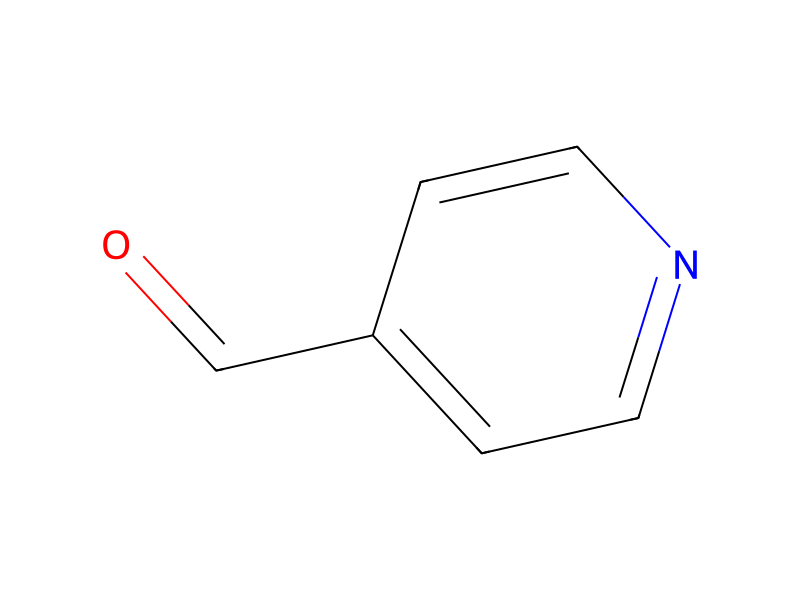
C([Li])CCC.Br[C:7]1[CH:12]=[C:11]([O:13][C:14]([F:17])([F:16])[F:15])[CH:10]=[CH:9][C:8]=1[F:18].[N:19]1[CH:24]=[CH:23][C:22]([CH:25]=[O:26])=[CH:21][CH:20]=1.O>O1CCCC1.C([Mg]Cl)CCC>[F:18][C:8]1[CH:9]=[CH:10][C:11]([O:13][C:14]([F:17])([F:16])[F:15])=[CH:12][C:7]=1[CH:25]([C:22]1[CH:23]=[CH:24][N:19]=[CH:20][CH:21]=1)[OH:26]To a solution in tetrahydrofuran (3 mL) at 0° C. of 2.3M n-butyllithium in hexanes (0.95 mL) and 2M n-butylmagnesium chloride in tetrahydrofuran (0.55 mL) is added a solution of 2-bromo-1-fluoro-4-trifluoromethoxybenzene in tetrahydrofuran (4 mL). After stirring at 0° C. for 20 minutes 4-pyridinecarboxaldehyde (193 μL) is added and the mixture stirred at room temperature for one night. After hydrolysis with water, the aqueous phase is extracted with ethyl acetate. The pooled organic extracts are washed with water, dried over magnesium sulfate and concentrated under reduced pressure. The residue is purified by chromatography over silica gel (gradient heptane/ethyl acetate from 2/1 to 1/1) to give pure (2-fluoro-5-trifluoromethoxyphenyl)pyridin-4-ylmethanol.