Reaktionsgleichung

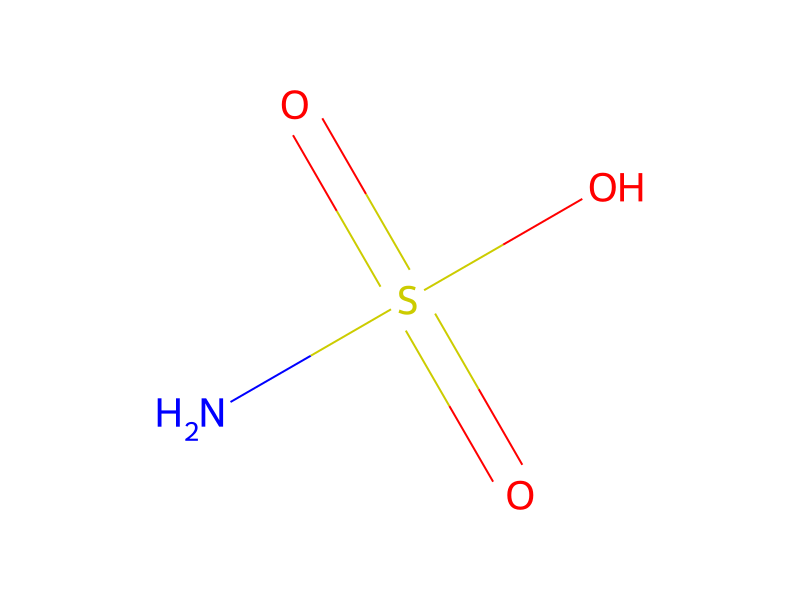
[ClH:1].[Br:2][C:3]1[CH:4]=[C:5]([CH:7]=[CH:8][C:9]=1[CH:10]([CH3:12])[CH3:11])N.N([O-])=O.[Na+]>O.[Cu]Cl.S(N)(=O)(=O)O>[Br:2][C:3]1[CH:4]=[C:5]([Cl:1])[CH:7]=[CH:8][C:9]=1[CH:10]([CH3:12])[CH3:11]Komponenten
Edukt 3



Produkt 1

Reagenzien, Katalysatoren, Lösungsmittel 3


Reaktionsbedingungen
- Temperatur
- 5 °C
Versuchsvorschrift
Hydrochloric acid (152 g, 31% strength, 1.29 mol) was added dropwise to a suspension of 3-bromo-4-isopropylaniline (VII) (100 g, 0.43 mol) and water (150 g) at room temperature. The suspension was subsequently cooled to 5° C. and a solution of sodium nitrite (32.7 g, 0.46 mol) in water (140 g) was added dropwise over a period of 2 hours. After stirring for another 1 hour, amidosulphuric acid (2.5 g, 0.026 mol) was added. Copper(I) chloride (10.8 g, 0.11 mol), hydrochloric acid (202 g, 31%, 1.72 mol) and water (75 g) were placed in a second flask and the diazonium salt generated previously was added dropwise over a period of 30 minutes. After stirring for another 1.5 hours, the mixture was extracted with dichloromethane (250 g), the phases were separated and dichloromethane was distilled off under reduced pressure. The crude product obtained was purified by distillation. 2-Bromo-4-chloro-1-isopropylbenzene (62.6 g, 94.8 GC-% by area. 59% of theory) was obtained as a colourless oil.
Aufarbeitung
- stirringAfter stirring for another 1.5 hours
- extractionthe mixture was extracted with dichloromethane (250 g)
- customthe phases were separated
- distillationdichloromethane was distilled off under reduced pressure
- customThe crude product obtained
- distillationwas purified by distillation
Quellen und Nachweise
- ORD-Eintrag
- ord-75e5646be5c9480fba177cf39bd72a36
- Quelldatensatz
- uspto-grants-2016_09
- Patentnummer
- US09440908B2
Verknüpfte Notizen
Wird geladen…