StartseiteMCPWorkbenchSkills
StartseiteWorkbenchBenachrichtigungenMein Bereich
llms.txt · MCP-AnleitungDatenschutz · Nutzungsbedingungen · Supportv1.8.3
  1. Startseite
  2. /Reaktion

Potassium Phosphate, Tribasic → (E)-methyl 4-(5-(2-ethoxyvinyl)-4-methylthiazol-2-yl)-1-methyl-1H-pyrazole-5-carboxylate

HRID 60145
Drucken

Reaktionsgleichung

Reaktionsgleichung von HRID 60145
[CH2:1]([O:3]/[CH:4]=[CH:5]/B1OC(C)(C)C(C)(C)O1)[CH3:2].P([O-])([O-])([O-])=O.[K+].[K+].[K+].C1(P(C2CCCCC2)C2C=CC=CC=2C2C(OC)=CC=CC=2OC)CCCCC1.Br[C:53]1[S:57][C:56]([C:58]2[CH:59]=[N:60][N:61]([CH3:67])[C:62]=2[C:63]([O:65][CH3:66])=[O:64])=[N:55][C:54]=1[CH3:68].C(=O)([O-])O.[Na+]>C([O-])(=O)C.[Pd+2].C([O-])(=O)C.C(OCC)(=O)C.C(#N)C.O>[CH2:4]([O:3]/[CH:1]=[CH:2]/[C:53]1[S:57][C:56]([C:58]2[CH:59]=[N:60][N:61]([CH3:67])[C:62]=2[C:63]([O:65][CH3:66])=[O:64])=[N:55][C:54]=1[CH3:68])[CH3:5]
KomponentenReaktionsbedingungenVersuchsvorschriftAufarbeitungQuellen und NachweiseNotizen zur Reaktion

Komponenten

10

Edukt 5

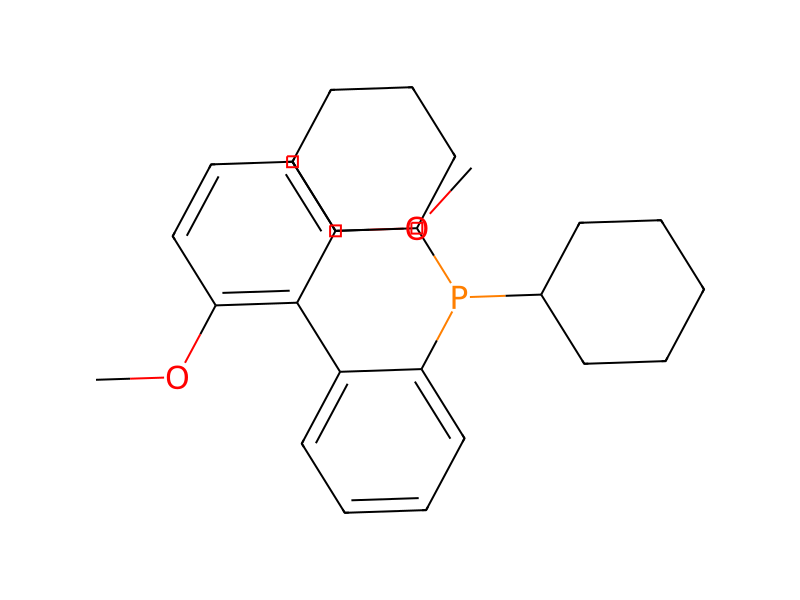
HCID 62657Potassium Phosphate, TribasicHCID 516892Sodium BicarbonateHCID 112698722-Dicyclohexylphosphino-2',6'-dimethoxybiphenylHCID 219739081-Ethoxyethene-2-boronic acid pinacol esterHCID 90383445methyl 4-(5-bromo-4-methylthiazol-2-yl)-1-methyl-1H-pyrazole-5-carboxylate

Produkt 1

HCID 90383511
(E)-methyl 4-(5-(2-ethoxyvinyl)-4-methylthiazol-2-yl)-1-methyl-1H-pyrazole-5-carboxylate
Ausbeute 63,8 %

Reagenzien, Katalysatoren, Lösungsmittel 4

HCID 167845palladium(II) acetateKatalysatorHCID 962WaterLösungsmittelHCID 6342AcetonitrileLösungsmittelHCID 8857Ethyl AcetateLösungsmittel

Reaktionsbedingungen

Temperatur
90 °C

Versuchsvorschrift

(E)-2-(2-ethoxyvinyl)-4,4,5,5-tetramethyl-1,3,2-dioxaborolane (63 mg), palladium acetate (7.1 mg), tripotassium phosphate (67 mg), 2-dicyclohexylphosphino-2′,6′-dimethoxy-1,1′-biphenyl (26 mg), and water (0.35 ml) were added to an acetonitrile (4.0 ml) solution of the methyl 4-(5-bromo-4-methylthiazol-2-yl)-1-methyl-1H-pyrazole-5-carboxylate (50 mg) obtained in (Example 5.11) <Step 1>, and the obtained mixture was then stirred under heating in a nitrogen atmosphere for 2 hours at 90° C. Thereafter, ethyl acetate (50 ml) and a saturated sodium hydrogen carbonate aqueous solution (30 ml) were added to the reaction solution. After extraction of organic layers, water layers were extracted with ethyl acetate (50 ml). The organic layers were combined. The combined organic layer was washed with a saturated saline, and was then dried over anhydrous sodium sulfate. The solvent was distilled away under reduced pressure, and the obtained residue was then purified by silica gel column chromatography (silica gel: eluent; heptane:ethyl acetate=92:8-40:60), so as to obtain the title compound (31 mg) in the form of a yellow solid.

Aufarbeitung

  1. customobtained in (Example 5.11) <Step 1>
  2. extractionAfter extraction of organic layers, water layers
  3. extractionwere extracted with ethyl acetate (50 ml)
  4. washThe combined organic layer was washed with a saturated saline
  5. dry with materialwas then dried over anhydrous sodium sulfate
  6. distillationThe solvent was distilled away under reduced pressure
  7. customthe obtained residue was then purified by silica gel column chromatography (silica gel: eluent; heptane:ethyl acetate=92:8-40:60)

Quellen und Nachweise

ORD-Eintrag
ord-8adc4bd725a3487796553da0eed739c8
Quelldatensatz
uspto-grants-2016_09
DOI
10.6084/m9.figshare.5104873.v1
Patentnummer
US09440970B2

Notizen zur Reaktion

Auf dieser SeiteKomponentenReaktionsbedingungenVersuchsvorschriftAufarbeitungQuellen und NachweiseNotizen zur Reaktion