StartseiteMCPSkillsWorkbenchOpenChem
StartseiteWorkbenchBenachrichtigungenMein Bereich
llms.txt · skill.md · MCP-AnleitungDatenschutz · Nutzungsbedingungen · Supportv1.8.4
  1. Startseite
  2. /Reaktion

Dicyclohexylcarbodiimide → Boc-D-Cha-Pro-OH

HRID 613813
Drucken

Reaktionsgleichung

[NH:1]([C:13]([O:15][C:16]([CH3:19])([CH3:18])[CH3:17])=[O:14])[C@@H:2]([C:10]([OH:12])=O)[CH2:3][CH:4]1[CH2:9][CH2:8][CH2:7][CH2:6][CH2:5]1.ON1C(=O)CCC1=O.C1(N=C=NC2CCCCC2)CCCCC1.[NH:43]1[CH2:50][CH2:49][CH2:48][C@H:44]1[C:45]([OH:47])=[O:46].C(N(CC)C(C)C)(C)C>ClCCl>[NH:1]([C:13]([O:15][C:16]([CH3:19])([CH3:18])[CH3:17])=[O:14])[C@@H:2]([C:10]([N:43]1[CH2:50][CH2:49][CH2:48][C@H:44]1[C:45]([OH:47])=[O:46])=[O:12])[CH2:3][CH:4]1[CH2:5][CH2:6][CH2:7][CH2:8][CH2:9]1
KomponentenReaktionsbedingungenVersuchsvorschriftAufarbeitungQuellen und NachweiseNotizen zur Reaktion

Komponenten

7

Edukt 5

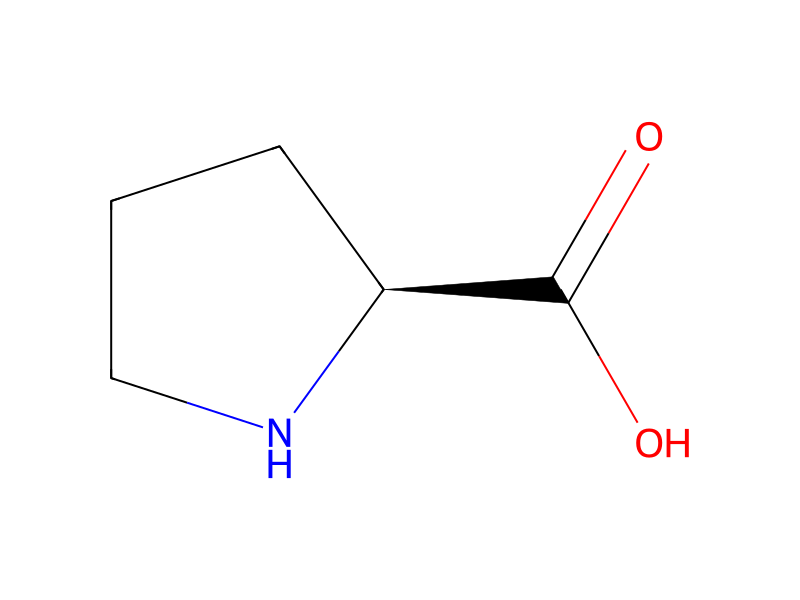
HCID 10868DicyclohexylcarbodiimideHCID 80170N-HydroxysuccinimideHCID 81531DiisopropylethylamineHCID 145742L-ProlineHCID 2755927(2R)-2-{[(tert-butoxy)carbonyl]amino}-3-cyclohexylpropanoic acid

Produkt 1

HCID 10642798Boc-D-Cha-Pro-OH
Ausbeute 73,5 %

Reagenzien, Katalysatoren, Lösungsmittel 1

HCID 6344DichloromethaneLösungsmittel2×

Reaktionsbedingungen

Temperatur
0 °C

Versuchsvorschrift

A solution of Boc-D-Cha-OH (50.4 g, 185 mmol) in dichloromethane (360 mL) was cooled to 0° C. and N-hydroxysuccinimide (22.3 g, 194 mmol) was added. Then 1,3-dicyclohexylcarbodiimide (39.0 g, 189 mmol) was added in two portions as a solution in dichloromethane (90 mL). After stirring for 3 h at 0° C., L-Pro-OH (27.6 g, 240 mmol) and N,N-diisopropylethylamine (30.9 g, 239 mmol) were added. After stirring an additional 3 h between 0° C. and 10° C., the mixture was filtered over diatomaceous earth. The filter cake was rinsed with dichloromethane (100 mL); then the combine filtrates were concentrated in vacuo. The residual oil was partitioned between ethyl acetate (100 mL) and 0.625M aqueous NaHCO3 (320 mL). The layers were separated, and the organic phase was washed with 0.625M aq. NaHCO3 (80 mL). The combined bicarbonate extracts were then washed with ethyl acetate (100 mL). The aqueous phase was then stirred with ethyl acetate (300 mL) and acidified with 12N HCl (approximately 37 mL). The layers were separated and the acidic aqueous phase was extracted with ethyl acetate (100 mL). The combined ethyl acetate extracts were concentrated in vacuo. The residue was slurried with a minimal amount of ethyl acetate, filtered, washed again with ethyl acetate and dried to give 50.1 g (73%) of white powder.


Aufarbeitung

  1. stirringAfter stirring an additional 3 h between 0° C. and 10° C.
  2. filtrationthe mixture was filtered over diatomaceous earth
  3. washThe filter cake was rinsed with dichloromethane (100 mL)
  4. concentrationthen the combine filtrates were concentrated in vacuo
  5. customThe residual oil was partitioned between ethyl acetate (100 mL) and 0.625M aqueous NaHCO3 (320 mL)
  6. customThe layers were separated
  7. washthe organic phase was washed with 0.625M aq. NaHCO3 (80 mL)
  8. washThe combined bicarbonate extracts were then washed with ethyl acetate (100 mL)
  9. stirringThe aqueous phase was then stirred with ethyl acetate (300 mL)
  10. customThe layers were separated
  11. extractionthe acidic aqueous phase was extracted with ethyl acetate (100 mL)
  12. concentrationThe combined ethyl acetate extracts were concentrated in vacuo
  13. filtrationfiltered
  14. washwashed again with ethyl acetate
  15. customdried

Quellen und Nachweise

ORD-Eintrag
ord-52377325040c477383b54a0d01294529
Quelldatensatz
uspto-grants-1999_12
DOI
10.6084/m9.figshare.5104873.v1
Patentnummer
US06008367

Notizen zur Reaktion

Auf dieser SeiteKomponentenReaktionsbedingungenVersuchsvorschriftAufarbeitungQuellen und NachweiseNotizen zur Reaktion