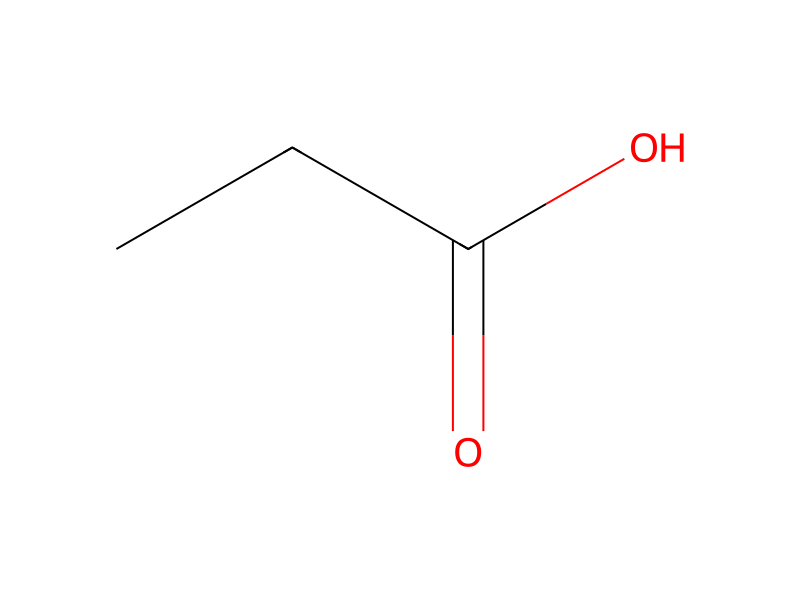
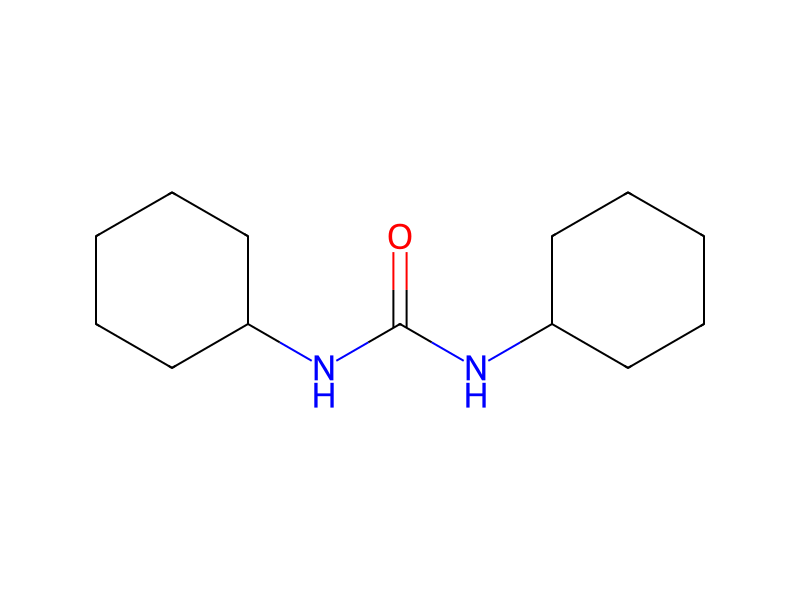
C1(N=C=NC2CCCCC2)CCCCC1.[OH:16][C:17]1[C:26]2[C:21](=[C:22]([C:27]([F:30])([F:29])[F:28])[CH:23]=[CH:24][CH:25]=2)[N:20]=[C:19]([CH:31]([OH:34])[CH2:32][CH3:33])[C:18]=1[C:35]([NH:37][C:38]1[S:39][CH:40]=[CH:41][N:42]=1)=[O:36].[C:43](O)(=[O:46])[CH2:44][CH3:45].C(NC1CCCCC1)(NC1CCCCC1)=O>C(Cl)Cl.CN(C)C1C=CN=CC=1>[OH:16][C:17]1[C:26]2[C:21](=[C:22]([C:27]([F:29])([F:28])[F:30])[CH:23]=[CH:24][CH:25]=2)[N:20]=[C:19]([CH:31]([O:34][C:43](=[O:46])[CH2:44][CH3:45])[CH2:32][CH3:33])[C:18]=1[C:35]([NH:37][C:38]1[S:39][CH:40]=[CH:41][N:42]=1)=[O:36]1.24 g of dicyclohexylcarbodiimide were added to a suspension of 2 g of 4-hydroxy-2-(1-hydroxypropyl)-N-(2-thiazolyl)-8 trifluoromethyl-3-quinoline carboxamide [prepared as in Step C of Example 10 of Belgian Patent No. 896,941]and 0.4 ml of propionic acid in 20 ml of methylene chloride After stirring for 5 minutes, 0.30 g of 4-dimethylamino-pyridine were added and the mixture stood for an hour with stirring at ambient temperature The dicyclohexylurea formed was filtered off and the organic phase was washed with N hydrochloric acid, then with an aqueous solution of sodium bicarbonate, then with water, followed by drying and concentrating to dryness under reduced pressure The residue was taken up in 15 ml of ether, filtered, dried under reduced pressure to obtain 2.2 g of 4-hydroxy-2-[1-(1-oxopropoxy)-propyl]-N-(2-thiazolyl)-8-trifluoromethyl-3-quinoline carboxamide melting at 216° C. which was identical to that obtained in Example 2.