StartseiteMCPWorkbenchSkills
StartseiteWorkbenchBenachrichtigungenMein Bereich
llms.txt · MCP-AnleitungDatenschutz · Nutzungsbedingungen · Supportv1.8.0
  1. Startseite
  2. /Reaktion

Sodium Carbonate → HCID 145857603, Verbindung

HRID 723210
Notizen
Druckvorschau

Reaktionsgleichung

Reaktionsgleichung von HRID 723210
Br[C:2]1[CH:7]=[CH:6][C:5]([NH:8][CH3:9])=[CH:4][C:3]=1[CH3:10].C1(P(C2CCCCC2)C2C=CC=CC=2C2C=CC=CC=2)CCCCC1.B([O-])[O-].[C:39]([O:43][C:44](=[O:65])[NH:45][C:46]([C:48]1[S:49][C:50]([S:63][CH3:64])=[C:51]([S:53]([C:56]2[CH:61]=[CH:60][CH:59]=[C:58](Br)[CH:57]=2)(=[O:55])=[O:54])[CH:52]=1)=[NH:47])([CH3:42])([CH3:41])[CH3:40].C([O-])([O-])=O.[Na+].[Na+]>O1CCOCC1.C(O)C.C1(C)C=CC=CC=1.C([O-])(=O)C.[Pd+2].C([O-])(=O)C.C1C=CC([P]([Pd]([P](C2C=CC=CC=2)(C2C=CC=CC=2)C2C=CC=CC=2)([P](C2C=CC=CC=2)(C2C=CC=CC=2)C2C=CC=CC=2)[P](C2C=CC=CC=2)(C2C=CC=CC=2)C2C=CC=CC=2)(C2C=CC=CC=2)C2C=CC=CC=2)=CC=1>[C:39]([O:43][C:44](=[O:65])[NH:45][C:46](=[NH:47])[C:48]1[S:49][C:50]([S:63][CH3:64])=[C:51]([S:53]([C:56]2[CH:61]=[C:60]([C:2]3[CH:7]=[CH:6][C:5]([NH:8][CH3:9])=[CH:4][C:3]=3[CH3:10])[CH:59]=[CH:58][CH:57]=2)(=[O:55])=[O:54])[CH:52]=1)([CH3:42])([CH3:40])[CH3:41]
KomponentenVersuchsvorschriftAufarbeitungQuellen und NachweiseNotizen zur Reaktion

Komponenten

11

Edukt 5

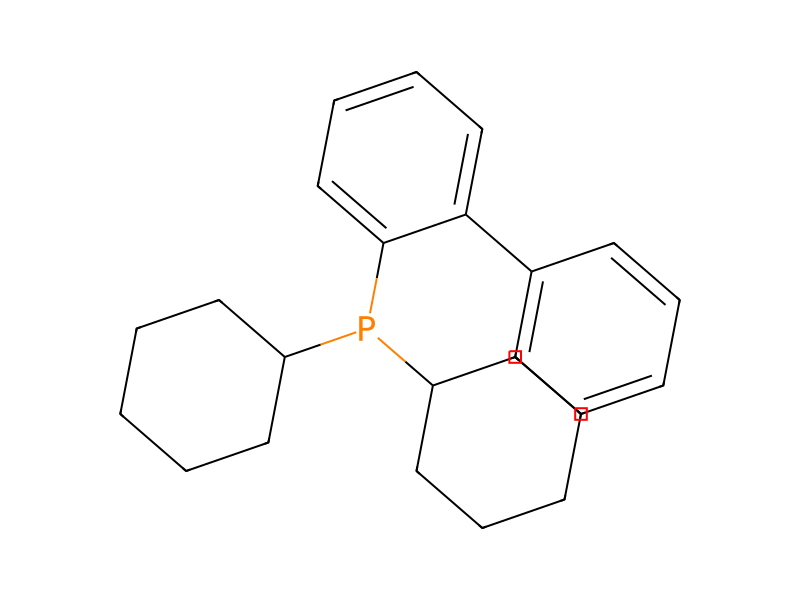
HCID 10340Sodium CarbonateHCID 27342162-(Dicyclohexylphosphino)biphenylHCID 218865734-Bromo-n,3-dimethylanilineHCID 145857672tert-butyl N-[4-(3-bromophenyl)sulfonyl-5-methylsulfanylthiophene-2-carboximidoyl]carbamateHCID 178514824HCID 178514824, Verbindung

Produkt 1

HCID 145857603
HCID 145857603, Verbindung
Ausbeute 62 %

Reagenzien, Katalysatoren, Lösungsmittel 5

HCID 167845palladium(II) acetateKatalysatorHCID 178418397HCID 178418397, VerbindungKatalysatorHCID 702EthanolLösungsmittelHCID 1140TolueneLösungsmittelHCID 312751,4-DioxaneLösungsmittel

Versuchsvorschrift

The procedure in Example 294: step e was followed using (4-bromo-3-methyl-phenyl)-methyl-amine ((Example 262: step a) 600 mg, 3 mmol), palladium acetate (34 mg, 0.15 mmol), and 2-(dicyclohexylphosphino)biphenyl (210 mg, 0.6 mmol) in dioxane (20 mL). Analogous workup yielded the crude pinacolboronate ester (720 mg, 98%) which was used without further purification. Following the procedure in Example 294: step f the crude boronate (540 mg, 2.18 mmol) was reacted with {[4-(3-bromo-benzenesulfonyl)-5-methylsulfanyl-thiophen-2-yl]-imino-methyl}-carbamic acid tert-butyl ester ((Example 27: step c) 715 mg, 1.46 mmol), aq Na2CO3 (2M, 4.4 mL, 8.8 mL), and Pd(PPh3)4 (407 mg, 0.37 mmol) in ethanol (4.4 mL) and toluene (8.8 mL). Analogous workup and SiO2 flash column chromatography yielded the title compound (482 mg, 62%) as a yellow glass. 1H-NMR (CDCl3): δ 8.0 (s, 1H), 7.95 (m, 1H), 7.90 (m, 1H), 7.55 (m, 1H), 7.51 (m, 1H), 7.05 (m, 1H), 6.53 (m, 2H), 2.9 (s, 3H), 2.56 (s, 3H), 2.56 (s, 3H), 2.22 (s, 3H), 1.52 (s, 9H).


Aufarbeitung

  1. customAnalogous workup yielded the crude pinacolboronate ester (720 mg, 98%) which
  2. customwas used without further purification

Quellen und Nachweise

ORD-Eintrag
ord-e3136a465a554e88b2c0457020c44b98
Quelldatensatz
uspto-grants-2006_11
DOI
10.6084/m9.figshare.5104873.v1
Patentnummer
US07138530B2

Notizen zur Reaktion

Wird geladen…

Auf dieser SeiteKomponentenVersuchsvorschriftAufarbeitungQuellen und NachweiseNotizen zur Reaktion