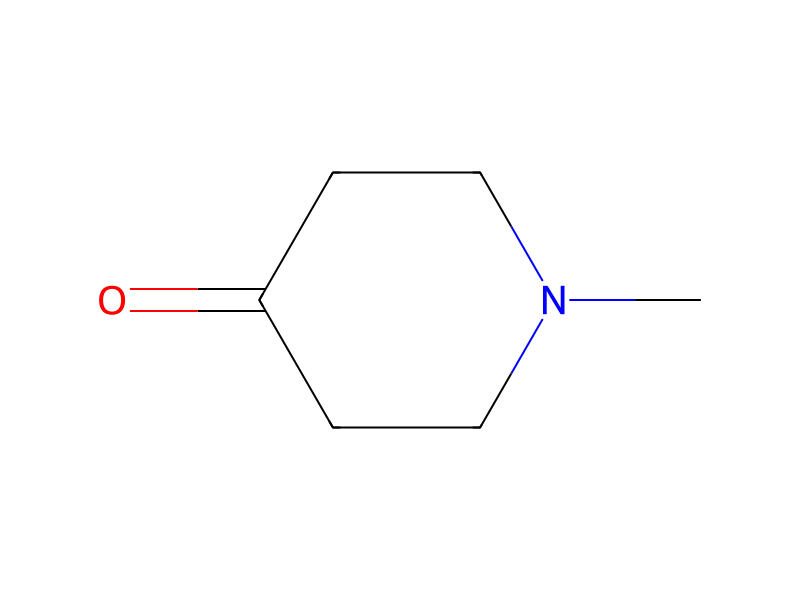
[OH-].[K+].[NH2:3][C:4]1[CH:5]=[C:6]2[C:10](=[CH:11][CH:12]=1)[NH:9][CH:8]=[CH:7]2.[CH3:13][N:14]1[CH2:19][CH2:18][C:17](=O)[CH2:16][CH2:15]1>CO.O>[NH2:3][C:4]1[CH:5]=[C:6]2[C:10](=[CH:11][CH:12]=1)[NH:9][CH:8]=[C:7]2[C:17]1[CH2:18][CH2:19][N:14]([CH3:13])[CH2:15][CH:16]=1To a solution of 1.29 gm (20 mMol) potassium hydroxide in 10 mL methanol were added 1.32 gm (10 mMol) 5-amino-1H-indole followed by 2.46 mL (20 mMol) 1-methyl-4-piperidone. The reaction mixture was then heated to reflux for 18 hours. The reaction mixture was cooled to ambient, diluted with 20 ml water and the precipitate collected by filtration. The solid was recrystallized from ethyl acetate:methanol to give 1.11 gm (48.9%) 5-amino-3-(1-methyl-1,2,3,6-tetrahydropyr-idin-4-yl)-1H-indole as a tan solid (m.p.=200°-203° C.). The tan solid was subjected to flash chromatography, eluting with 100:20:0.5 dichloromethane:methanol:ammonium hydroxide, to give 0.99 gm 5-amino-3-(1-methyl-1,2,3,6-tetrahydropyridin-4-yl)-1H-indole as a cream colored solid (m.p.=212°-215° C. (ethyl acetate:methanol)).