StartseiteMCPWorkbenchSkills
StartseiteWorkbenchBenachrichtigungenMein Bereich
llms.txt · MCP-AnleitungDatenschutz · Nutzungsbedingungen · Supportv1.8.3
  1. Startseite
  2. /Reaktion

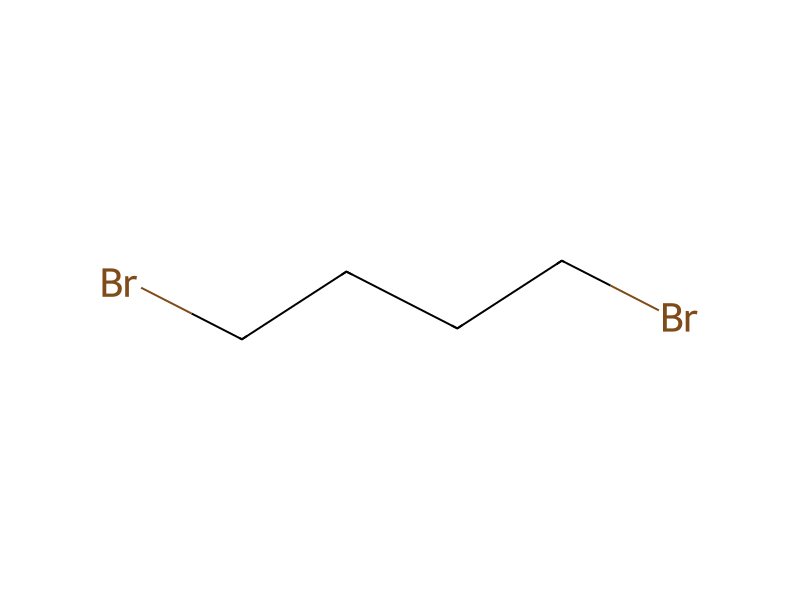
1,4-Dibromobutane → Butyl 1-(4-bromo-butyl)-cyclopentanecarboxylate

HRID 750777
Drucken

Reaktionsgleichung

Reaktionsgleichung von HRID 750777
[CH:1]1([C:6]([O:8][CH2:9][CH2:10][CH2:11][CH3:12])=[O:7])[CH2:5][CH2:4][CH2:3][CH2:2]1.[Br:13][CH2:14][CH2:15][CH2:16][CH2:17]Br.[Li+].CC([N-]C(C)C)C>C1COCC1>[Br:13][CH2:14][CH2:15][CH2:16][CH2:17][C:1]1([C:6]([O:8][CH2:9][CH2:10][CH2:11][CH3:12])=[O:7])[CH2:5][CH2:4][CH2:3][CH2:2]1
KomponentenVersuchsvorschriftAufarbeitungQuellen und NachweiseNotizen zur Reaktion

Komponenten

5

Edukt 3

HCID 80561,4-DibromobutaneHCID 550335Butyl cyclopentanecarboxylateHCID 2724682Lithium diisopropylamide

Produkt 1

HCID 21932063Butyl 1-(4-bromo-butyl)-cyclopentanecarboxylateAusbeute 49 %

Reagenzien, Katalysatoren, Lösungsmittel 1

HCID 8028TetrahydrofuranLösungsmittel2×

Versuchsvorschrift

Under a N2 atmosphere at −60° C., a solution of butyl cyclopentanecarboxylate (prepared according to Payne, G. B.; Smith, C. W., J. Org. Chem., 1957, 22, 1680-1682, 80.0 g, 0.42 mol) and 1,4-dibromobutane (183.3 g, 0.84 mol) in dry THF (700 mL) was added drop wise to a mixture of LDA (2M in THF/heptane/ethylbenzene, 250 mL, 0.50 mol) and dry THF (250 mL) in 1.5 h. After that, the reaction mixture was allowed to slowly reach rt during 3.5 h. Then, the reaction mixture was poured into ice-cold saturated aqueous NH4Cl (1 L). The organic layer was decanted and concentrated in vacuo to a smaller volume. The aqueous layer was extracted with Et2O (3×250 mL). The combined organic layers were washed with saturated aqueous NH4Cl (250 mL) and brine (2×250 mL), dried (Na2SO4) and evaporated in vacuo. The remaining residue was purified by fractional distillation to give butyl 1-(4-bromo-butyl)-cyclopentanecarboxylate (62.8 g, 49%) as a light yellow liquid. bp: T=116-117° C. (p=0.040-0.051 Torr). 1H NMR (CDCl3): δ=4.07 (t, J=6.6 Hz, 2H), 3.38 (t, J=6.8 Hz, 2H), 2.16-2.10 (m, 2H), 1.83 (quintet, J=7.1 Hz, 2H), 1.65-1.59 (m, 8H), 1.50-1.31 (m, 6H), 0.94 (t, J=7.2 Hz, 3H). 13C NMR (CDCl3): δ=177.6, 64.1, 53.9, 38.2, 36.0 (2×), 33.3, 33.0, 30.6, 24.8 (2×), 24.6, 19.1, 13.6. HRMS calcd for C14H25BrO2 (M+): 304.1038, found: 304.1042.

Aufarbeitung

  1. customThe organic layer was decanted
  2. concentrationconcentrated in vacuo to a smaller volume
  3. extractionThe aqueous layer was extracted with Et2O (3×250 mL)
  4. washThe combined organic layers were washed with saturated aqueous NH4Cl (250 mL) and brine (2×250 mL)
  5. dry with materialdried (Na2SO4)
  6. customevaporated in vacuo
  7. distillationThe remaining residue was purified by fractional distillation

Quellen und Nachweise

ORD-Eintrag
ord-60b3536818db4ab8851d7e076dd332aa
Quelldatensatz
uspto-grants-2008_07
DOI
10.6084/m9.figshare.5104873.v1
Patentnummer
US07405226B2

Notizen zur Reaktion

Auf dieser SeiteKomponentenVersuchsvorschriftAufarbeitungQuellen und NachweiseNotizen zur Reaktion
