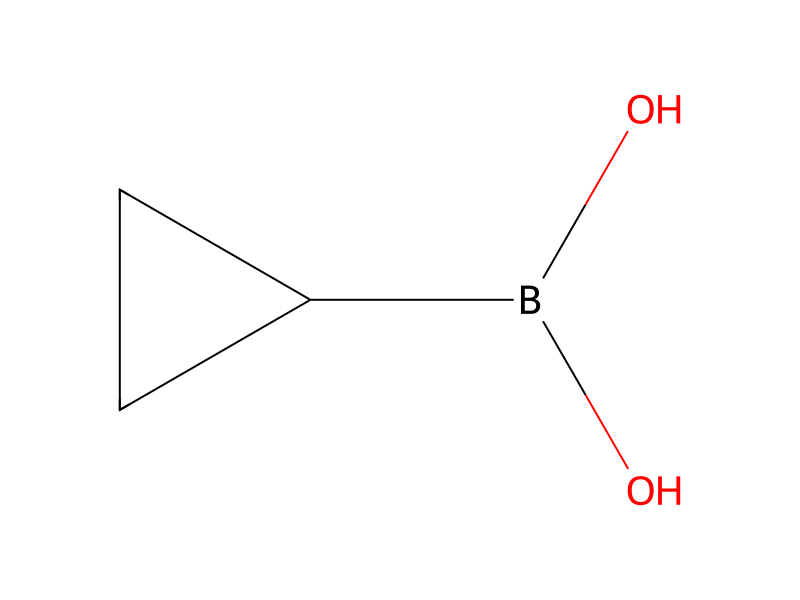
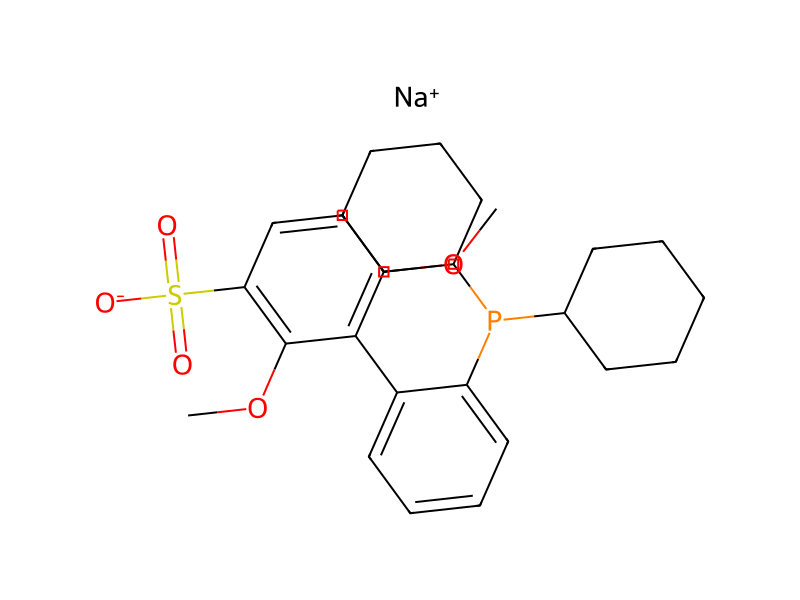
Br[C:2]1[C:10]2[C:5](=[CH:6][CH:7]=[CH:8][C:9]=2[N+:11]([O-:13])=[O:12])[N:4]([CH2:14][C:15]2[S:16][C:17]([CH3:20])=[N:18][N:19]=2)[N:3]=1.[CH:21]1(B(O)O)[CH2:23][CH2:22]1.C(=O)([O-])[O-].[K+].[K+].C1(P(C2CCCCC2)C2C=CC=CC=2C2C(OC)=CC=C(S([O-])(=O)=O)C=2OC)CCCCC1.[Na+]>O.C([O-])(=O)C.[Pd+2].C([O-])(=O)C.O1CCOCC1>[CH:21]1([C:2]2[C:10]3[C:5](=[CH:6][CH:7]=[CH:8][C:9]=3[N+:11]([O-:13])=[O:12])[N:4]([CH2:14][C:15]3[S:16][C:17]([CH3:20])=[N:18][N:19]=3)[N:3]=2)[CH2:23][CH2:22]1A 10 mL round bottom flask equipped with a reflux condenser and a nitrogen line was charged with 2-((3-bromo-4-nitro-1H-indazol-1-yl)methyl)-5-methyl-1,3,4-thiadiazole (195 mg, 0.551 mmol), cyclopropylboronic acid (104 mg, 1.21 mmol), palladium acetate (7 mg, 0.031 mmol), potassium carbonate (258 mg, 1.87 mmol), and sodium 2′-(dicyclohexylphosphino)-2,6-dimethoxybiphenyl-3-sulfonate (32 mg, 0.062 mmol). To the flask was added a 1,4-dioxane:water mixture (5:1; 2.4 mL) and the flask was evacuated and refilled with nitrogen three times. The reaction mixture was heated at reflux for 8 hours followed by stirring for 16 hours at ambient temperature. The cooled reaction mixture was diluted with excess water and extracted multiple times with DCM and EtOAc. The combined organic extracts were dried over anhydrous sodium sulfate and concentrated under reduced pressure. The residue was subjected to preparative thin-layer chromatography (silica, 5% MeOH-DCM as eluent) to afford the desired product (27 mg) as a solid.