StartseiteMCPWorkbenchSkills
StartseiteWorkbenchBenachrichtigungenMein Bereich
llms.txt · MCP-AnleitungDatenschutz · Nutzungsbedingungen · Supportv1.8.0
  1. Startseite
  2. /Reaktion

Hydrochloric Acid → 4-(10-Phenylanthracen-9-yl)benzeneboronic acid

HRID 80289
Notizen
Druckvorschau

Reaktionsgleichung

Reaktionsgleichung von HRID 80289
Br[C:2]1[CH:7]=[CH:6][C:5]([C:8]2[C:9]3[C:14]([C:15]([C:22]4[CH:27]=[CH:26][CH:25]=[CH:24][CH:23]=4)=[C:16]4[C:21]=2[CH:20]=[CH:19][CH:18]=[CH:17]4)=[CH:13][CH:12]=[CH:11][CH:10]=3)=[CH:4][CH:3]=1.C([Li])CCC.[B:33]([O:38]C)(OC)[O:34]C.Cl>O1CCCC1>[C:5]1([C:8]2[C:9]3[C:14](=[CH:13][CH:12]=[CH:11][CH:10]=3)[C:15]([C:22]3[CH:23]=[CH:24][C:25]([B:33]([OH:38])[OH:34])=[CH:26][CH:27]=3)=[C:16]3[C:21]=2[CH:20]=[CH:19][CH:18]=[CH:17]3)[CH:6]=[CH:7][CH:2]=[CH:3][CH:4]=1
KomponentenReaktionsbedingungenVersuchsvorschriftAufarbeitungQuellen und NachweiseNotizen zur Reaktion

Komponenten

6

Edukt 4

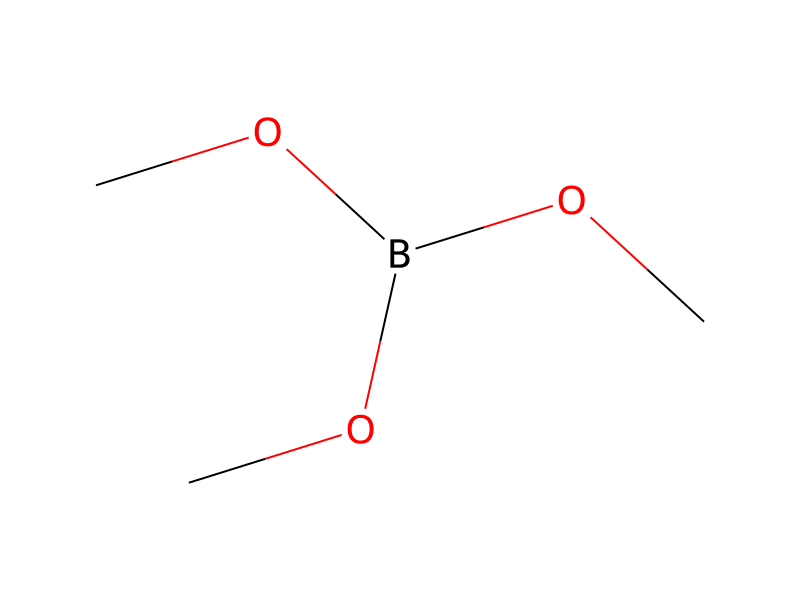
HCID 313Hydrochloric AcidHCID 8470Trimethyl borateHCID 221382759-(4-Bromophenyl)-10-phenylanthraceneHCID 178418339Butyllithium

Produkt 1

HCID 235741214-(10-Phenylanthracen-9-yl)benzeneboronic acidAusbeute 84 %

Reagenzien, Katalysatoren, Lösungsmittel 1

HCID 8028
Tetrahydrofuran
Lösungsmittel

Reaktionsbedingungen

Temperatur
-78 °C

Versuchsvorschrift

In a 500 mL three-neck flask were added 20 g (49 mmol) of 9-(4-bromophenyl)-10-phenylanthracene obtained by the above Steps 1(1) to 1(4) of Synthesis Example 3 and 300 mL of tetrahydrofuran (abbr.: THF), and the mixture was stirred under a nitrogen stream at −78° C. Then, 34 mL (54 mmol) of n-butyllithium (1.6 mol/L hexane solution) was dropped, and this mixture was stirred for 2 hours at the same temperature. After the stirring, 13 mL (110 mmol) of trimethyl borate was added to this solution, and the mixture was stirred for 24 hours at room temperature. After the stirring, this mixture was brought back to room temperature, 200 mL of (1.0 mol/L) hydrochloric acid was added therein, and this mixture was stirred for 1 hour. After that, the organic layer thereof was washed with water and separated into the organic layer and the aqueous layer, and the obtained aqueous layer was extracted with ethyl acetate. After this extracted solution was washed together with the organic layer with saturated saline, magnesium sulfate was added therein for drying. The mixture was subjected to suction filtration, and the obtained filtrate was concentrated to obtain a solid. The obtained solid was recrystallized from a mixed solvent of chloroform and hexane, whereby 15 g of a white powdered solid of 4-(10-phenyl-9-anthryl)phenylboronic acid, which was the object of the synthesis, was obtained in a yield of 84% (synthesis scheme (X-5)).


Aufarbeitung

  1. stirringthis mixture was stirred for 2 hours at the same temperature
  2. stirringthe mixture was stirred for 24 hours at room temperature
  3. customwas brought back to room temperature
  4. stirringthis mixture was stirred for 1 hour
  5. washAfter that, the organic layer thereof was washed with water
  6. customseparated into the organic layer
  7. extractionthe aqueous layer, and the obtained aqueous layer was extracted with ethyl acetate
  8. washAfter this extracted solution was washed together with the organic layer with saturated saline, magnesium sulfate
  9. additionwas added
  10. customfor drying
  11. filtrationThe mixture was subjected to suction filtration
  12. concentrationthe obtained filtrate was concentrated
  13. customto obtain a solid
  14. customThe obtained solid was recrystallized from a mixed solvent of chloroform and hexane, whereby 15 g of a white powdered solid of 4-(10-phenyl-9-anthryl)phenylboronic acid, which
  15. customthe object of the synthesis
  16. customwas obtained in a yield of 84% (synthesis scheme (X-5))

Quellen und Nachweise

ORD-Eintrag
ord-2a4f564afd924000b679727bd1158149
Quelldatensatz
uspto-grants-2014_09
DOI
10.6084/m9.figshare.5104873.v1
Patentnummer
US08845926B2

Notizen zur Reaktion

Wird geladen…

Auf dieser SeiteKomponentenReaktionsbedingungenVersuchsvorschriftAufarbeitungQuellen und NachweiseNotizen zur Reaktion