Reaktionsgleichung

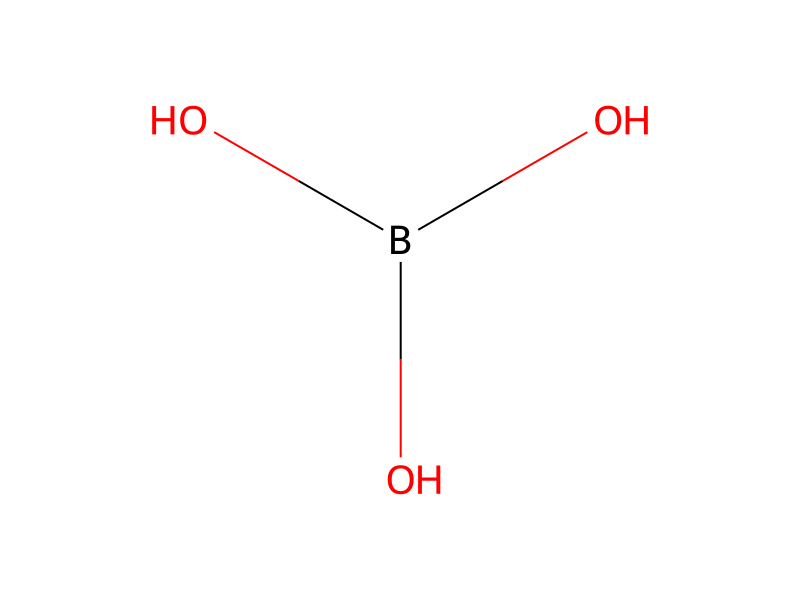
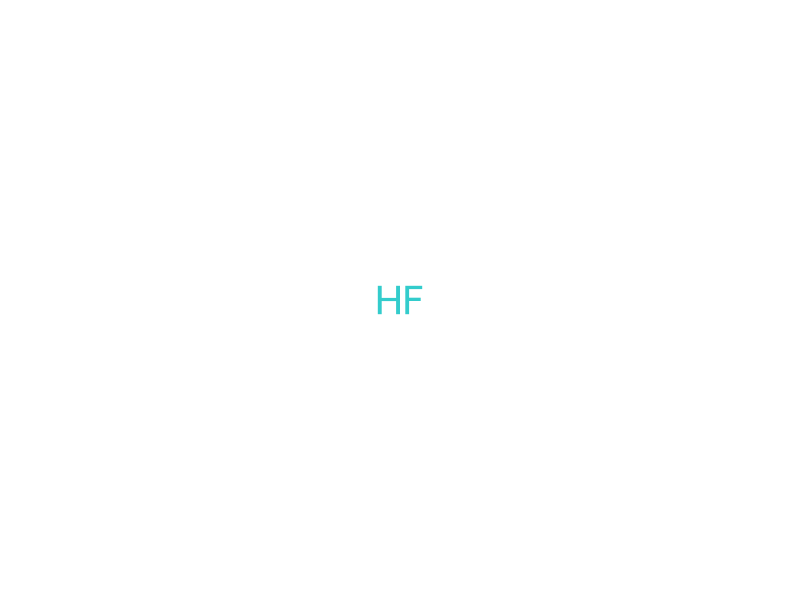
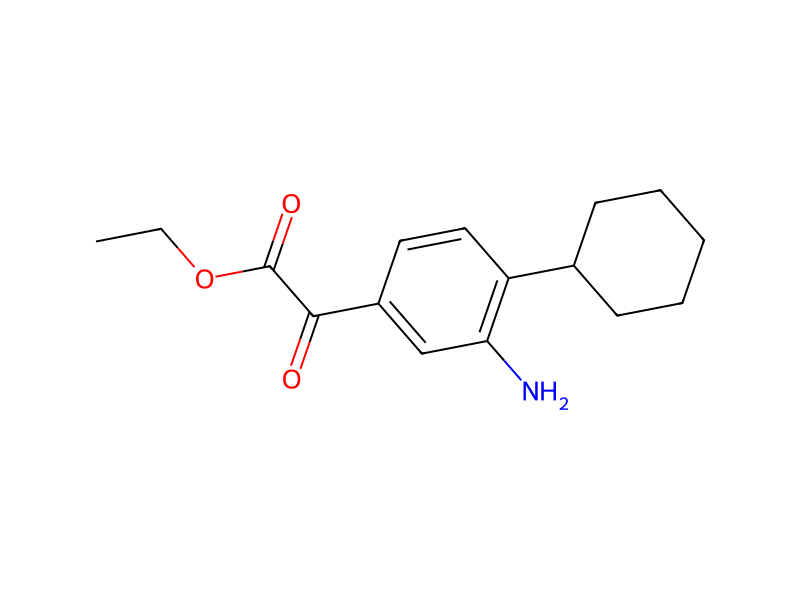
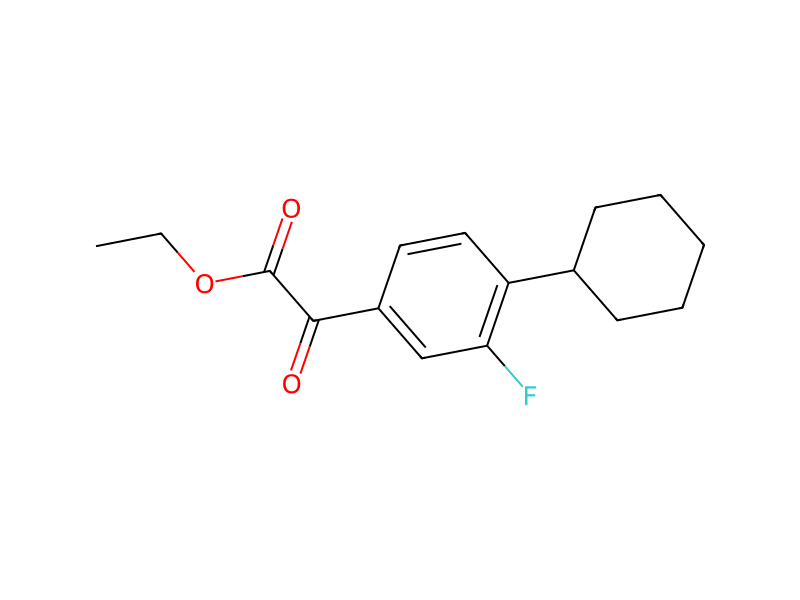
N[C:2]1[CH:3]=[C:4]([C:14](=[O:20])[C:15]([O:17][CH2:18][CH3:19])=[O:16])[CH:5]=[CH:6][C:7]=1[CH:8]1[CH2:13][CH2:12][CH2:11][CH2:10][CH2:9]1.Cl.N([O-])=O.[Na+].B(O)(O)O.[FH:30]>O>[F:30][C:2]1[CH:3]=[C:4]([C:14](=[O:20])[C:15]([O:17][CH2:18][CH3:19])=[O:16])[CH:5]=[CH:6][C:7]=1[CH:8]1[CH2:13][CH2:12][CH2:11][CH2:10][CH2:9]1Komponenten



Reaktionsbedingungen
- Temperatur
- 0 °C
Versuchsvorschrift
To 44.2 g. (0.15 moles) of ethyl 3-amino-4-cyclohexylphenylglyoxylate is added at 0° C 44 ml. of 1.5 moles of concentrated hydrochloric acid. The reaction mixture is maintained at 0° C and the diazonium salt is prepared with 23.2 g. (0.32 moles) of 95% sodium nitrite in 80 ml. of water. To this mixture is rapidly added a solution of 10.4 g. (0.17 moles) of boric acid dissolved in 22 g. (0.66 moles) of 60% hydrofluoric acid. The reaction mixture is then stirred for 1/2 hour and filtered, washed with 3 × 25 ml. of water, 2 × 25 ml. of methanol and 25 ml. of ether. The residual cake is then treated in vacuo. The treated cake is then placed in a distilling flask and heated to permit spontaneous decomposition. After the decomposition, the residue is then fractionally distilled to obtain ethyl 3-fluoro-4-cyclohexylphenylglyoxylate.
Aufarbeitung
- additionTo this mixture is rapidly added a solution of 10.4 g
- filtrationfiltered
- washwashed with 3 × 25 ml
- additionThe residual cake is then treated in vacuo
- customThe treated cake is then placed in a distilling flask
- temperatureheated
- distillationAfter the decomposition, the residue is then fractionally distilled
Quellen und Nachweise
- ORD-Eintrag
- ord-7f401b64c86b498a938349ce52a35892
- Quelldatensatz
- uspto-grants-1978_06
- Patentnummer
- US04094995
Verknüpfte Notizen
Wird geladen…