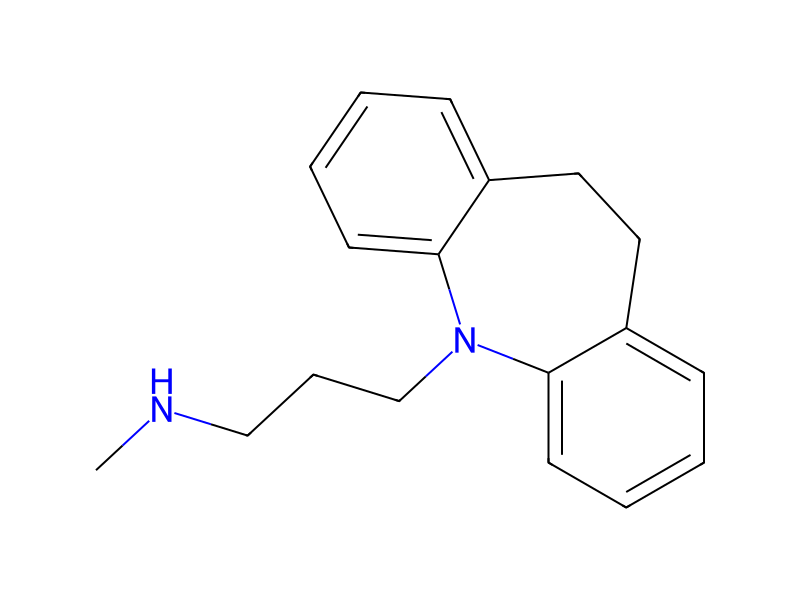
Desipramine → {2-[3-(10,11-Dihydro-dibenzo[b,f]azepin-5-yl)-propylamino]-ethyl]-carbamic Acid tert-butyl Ester
Reaktionsgleichung

[CH3:1][NH:2][CH2:3][CH2:4][CH2:5][N:6]1[C:16]2[CH:17]=[CH:18][CH:19]=[CH:20][C:15]=2[CH2:14][CH2:13][C:12]2[CH:11]=[CH:10][CH:9]=[CH:8][C:7]1=2.C(=O)([O-])[O-].[K+].[K+].[C:27]([NH:34][CH2:35]CBr)([O:29][C:30]([CH3:33])([CH3:32])[CH3:31])=[O:28].[I-].[Na+]>C1OCCOCCOCCOCCOCCOC1.CN(C)C=O.CC(C)=O>[C:30]([O:29][C:27](=[O:28])[NH:34][CH2:35][CH2:1][NH:2][CH2:3][CH2:4][CH2:5][N:6]1[C:7]2[CH:8]=[CH:9][CH:10]=[CH:11][C:12]=2[CH2:13][CH2:14][C:15]2[CH:20]=[CH:19][CH:18]=[CH:17][C:16]1=2)([CH3:33])([CH3:32])[CH3:31]Komponenten
8