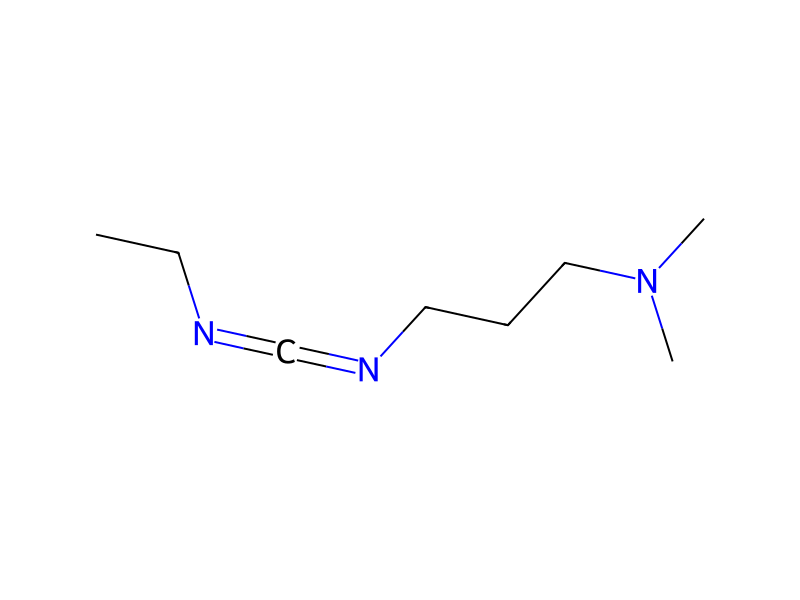
[OH:1][PH:2]([CH2:4][CH:5]([CH2:13][CH2:14][C:15]([O:17][C:18]([CH3:21])([CH3:20])[CH3:19])=[O:16])[C:6]([O:8][C:9]([CH3:12])([CH3:11])[CH3:10])=[O:7])=[O:3].[C:22](O)([CH3:25])([CH3:24])[CH3:23].C(N=C=NCCCN(C)C)C.O>ClCCl.CN(C)C1C=CN=CC=1>[C:22]([O:3][PH:2]([CH2:4][CH:5]([CH2:13][CH2:14][C:15]([O:17][C:18]([CH3:21])([CH3:20])[CH3:19])=[O:16])[C:6]([O:8][C:9]([CH3:10])([CH3:11])[CH3:12])=[O:7])=[O:1])([CH3:25])([CH3:24])[CH3:23]To a solution of di-tert-butyl 2-[(hydroxyphosphinyl)methyl]pentane-1,5-dioate (315 g, 0.977 mol) in dichloromethane (1000 ml) cooled in an ice bath and under nitrogen were added tert-butanol (123.1 g, 1.66 mol), 4-dimethylaminopyridine (1 g, 8.2 mmol), and 1-ethyl-3-(3-dimethylaminopropyl)carbodiimide (281 g, 1.47 mol). The reaction was allowed to stir overnight. Water was added to the reaction mixture and the dichloromethane layer was retained and dried, and the solvent was removed under reduced pressure. The resulting residue was purified by column chromatography and the desired product was eluted with 1:1 to 2:3 hexane/ethyl acetate. The fractions containing product were concentrated under reduced pressure leaving a clear oil (260 g, 70%). 1H NMR (CDCl3): δ1.4 (m, 27H), 1.8 (m, 1H), 1.9 (m, 2H), 2.1 (m, 1H), 2.3 (m, 2H), 2.7-2.8 (m, 1H), 6.7 & 8.0 (d, 1H, the P—H).