Diethyl (ethoxymethylene)malonate → Diethyl 2-((4-bromophenylamino)methylene)malonate
Reaktionsgleichung

[Br:1][C:2]1[CH:8]=[CH:7][C:5]([NH2:6])=[CH:4][CH:3]=1.[CH2:9]([O:11][C:12](=[O:23])[C:13](=[CH:19]OCC)[C:14]([O:16][CH2:17][CH3:18])=[O:15])[CH3:10]>C(O)C>[CH2:9]([O:11][C:12](=[O:23])[C:13](=[CH:19][NH:6][C:5]1[CH:7]=[CH:8][C:2]([Br:1])=[CH:3][CH:4]=1)[C:14]([O:16][CH2:17][CH3:18])=[O:15])[CH3:10]Komponenten
4
Edukt 2

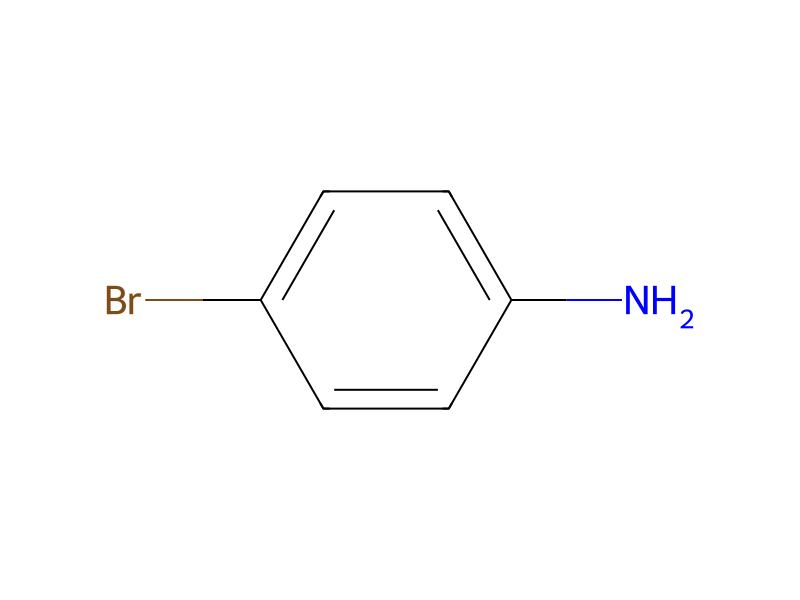
Produkt 1

Reagenzien, Katalysatoren, Lösungsmittel 1

Reaktionsbedingungen
- Temperatur
- 90 °C
Versuchsvorschrift
A mixture of 4-bromoaniline (100 g, 563.9 mmol) and 2-ethoxymethylene-malonic acid diethyl ester (126.9 g, 575 mmol) was heated to 90° C. Then, the resulting brown mixture was stirred for 5 h. After cooling to room temperature, the reaction mixture was diluted with ethanol (˜200 mL) and cooled down in an ice-water bath to afford a hard solid. This mixture was then heated to break down the hard solid and also to remove most of the impurities. After cooling the suspension in the refrigerator, the solids were collected by filtration and washed with cold ethanol. After drying in air, 168 g (87% yield) of 2-[(4-bromo-phenylamino)-methylene]-malonic acid diethyl ester was isolated as a white solid: mp 100-102° C. (lit. 100-101° C.).
Aufarbeitung
- temperatureAfter cooling to room temperature
- temperaturecooled down in an ice-water bath
- customto afford a hard solid
- temperatureThis mixture was then heated
- customalso to remove most of the impurities
- temperatureAfter cooling the suspension in the refrigerator
- filtrationthe solids were collected by filtration
- washwashed with cold ethanol
- customAfter drying in air
Quellen und Nachweise
- ORD-Eintrag
- ord-e0720eccc841487daf6259ef0aea610e
- Quelldatensatz
- uspto-grants-2007_08
- Patentnummer
- US07253285B2
Notizen zur Reaktion
Wird geladen…