StartseiteMCPWorkbenchSkills
StartseiteWorkbenchBenachrichtigungenMein Bereich
llms.txt · MCP-AnleitungDatenschutz · Nutzungsbedingungen · Supportv1.8.3
  1. Startseite
  2. /Reaktion

Hydrochloric Acid → 6-(4-Propylphenyl)-2-naphthol

HRID 857604
Drucken

Reaktionsgleichung

Reaktionsgleichung von HRID 857604
Br[C:2]1[CH:7]=[CH:6][C:5]([CH2:8][CH2:9][CH3:10])=[CH:4][CH:3]=1.B(OC)(OC)OC.Cl.Br[C:20]1[CH:21]=[C:22]2[C:27](=[CH:28][CH:29]=1)[CH:26]=[C:25]([OH:30])[CH:24]=[CH:23]2.C(=O)([O-])[O-].[K+].[K+]>C1(C)C=CC=CC=1.C(O)C.O.C1C=CC([P]([Pd]([P](C2C=CC=CC=2)(C2C=CC=CC=2)C2C=CC=CC=2)([P](C2C=CC=CC=2)(C2C=CC=CC=2)C2C=CC=CC=2)[P](C2C=CC=CC=2)(C2C=CC=CC=2)C2C=CC=CC=2)(C2C=CC=CC=2)C2C=CC=CC=2)=CC=1>[CH2:8]([C:5]1[CH:6]=[CH:7][C:2]([C:20]2[CH:21]=[C:22]3[C:27](=[CH:28][CH:29]=2)[CH:26]=[C:25]([OH:30])[CH:24]=[CH:23]3)=[CH:3][CH:4]=1)[CH2:9][CH3:10]
KomponentenReaktionsbedingungenVersuchsvorschriftAufarbeitungQuellen und NachweiseNotizen zur Reaktion

Komponenten

10

Edukt 5

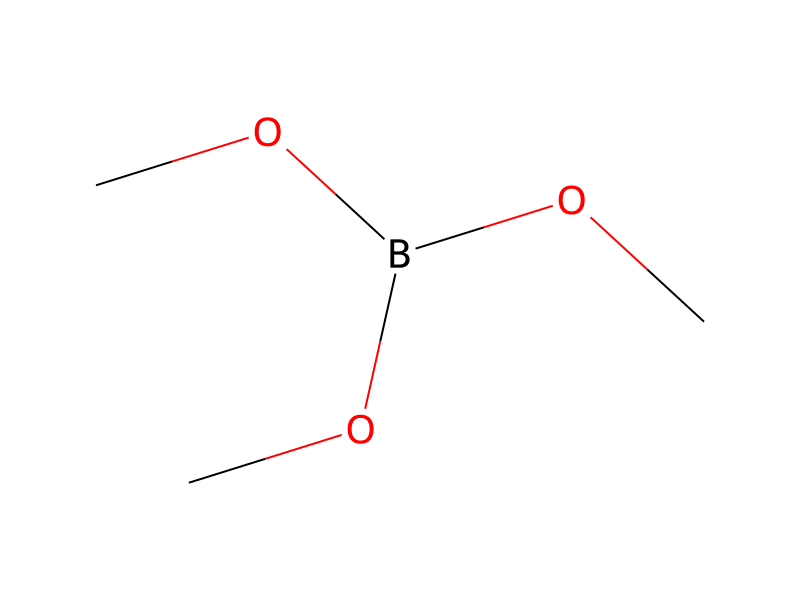
HCID 313Hydrochloric Acid2×HCID 8470Trimethyl borateHCID 11430Potassium CarbonateHCID 271446-Bromo-2-naphthalenolHCID 1363741-Bromo-4-propylbenzene

Produkt 1

HCID 218700396-(4-Propylphenyl)-2-naphthol

Reagenzien, Katalysatoren, Lösungsmittel

4
HCID 178418397HCID 178418397, VerbindungKatalysatorHCID 702EthanolLösungsmittelHCID 962WaterLösungsmittel2×HCID 1140TolueneLösungsmittel2×

Reaktionsbedingungen

Temperatur
75 °C

Versuchsvorschrift

3.4 g of 4-propylphenylboric acid (obtained by reacting a Grignard reagent prepared from 1-bromo-4-propylbenzene with trimethyl borate, and then subjecting the product to hydrolysis with hydrochloric acid) and 25.5 g of 6-bromo-2-naphthol were dissolved in a mixture of 92 ml of toluene, 46 ml of ethanol and 92 ml of water. To the solution were then added 25.5 g of potassium carbonate and 1.3 g of tetrakis(triphenylphosphine)palladium (0). The reaction mixture was then stirred at a temperature of 75° C. for 7 hours. To the reaction solution were then added water and toluene. To the reaction solution was then added diluted hydrochloric acid until the aqueous phase became weakly acidic. The reaction solution was then extracted with toluene. The material thus extracted and the organic phase were together washed with water and then with saturated brine, and then dried over anhydrous sodium sulfate. The solvent was then distilled off under reduced pressure to obtain 41.4 g of 6-(4-propylphenyl)naphthalene-2-ol. 12.7 g of 6-(4-propylphenyl)naphthalene-2-ol was then dissolved in 50 ml of dichloromethane. To the solution was then added 13.1 g of N-fluoro-5-trifluoromethoxypyridinium-2-sulfonate. The reaction mixture was then stirred at room temperature for 18hours. The reaction mixture was post-treated in the same manner as mentioned above to obtain an oily matter which was then purified through silica gel column chromatography (hexane/ethyl acetate=9/1) to obtain 10 g of 1-fluoro-6-(4-propylphenyl)naphthalene-2-ol. The product was converted to S-ethyl dithiocarbonate which was then trifluoromethoxylated in the same manner as in Example 1 to obtain 2.3 g of the titled 1-fluoro-2-trifluoromethoxy-6-(4-propylphenyl)naphthalene.


Aufarbeitung

  1. extractionThe reaction solution was then extracted with toluene
  2. extractionThe material thus extracted
  3. washthe organic phase were together washed with water
  4. dry with materialwith saturated brine, and then dried over anhydrous sodium sulfate
  5. distillationThe solvent was then distilled off under reduced pressure

Quellen und Nachweise

ORD-Eintrag
ord-0a1b83b556704a5b92725bb2c2dc44d5
Quelldatensatz
uspto-grants-2006_12
DOI
10.6084/m9.figshare.5104873.v1
Patentnummer
US07145047B2

Notizen zur Reaktion

Auf dieser SeiteKomponentenReaktionsbedingungenVersuchsvorschriftAufarbeitungQuellen und NachweiseNotizen zur Reaktion