Reaktionsgleichung
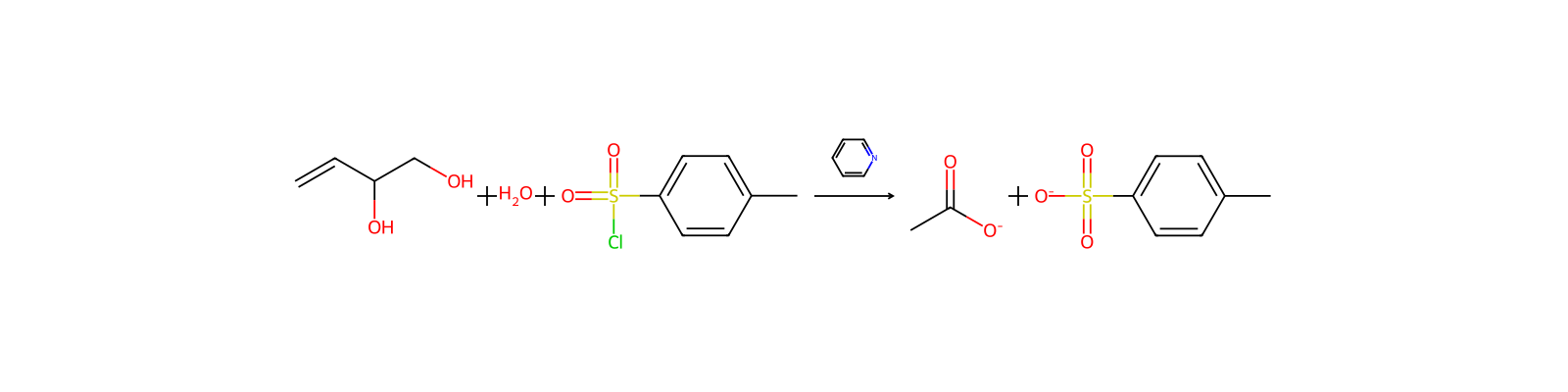
[OH:1]C[CH:3]([OH:6])[CH:4]=C.O.[C:8]1([CH3:18])[CH:13]=[CH:12][C:11]([S:14](Cl)(=[O:16])=[O:15])=[CH:10][CH:9]=1>N1C=CC=CC=1>[C:3]([O-:6])(=[O:15])[CH3:4].[CH3:18][C:8]1[CH:13]=[CH:12][C:11]([S:14]([O-:1])(=[O:16])=[O:15])=[CH:10][CH:9]=1Komponenten
6
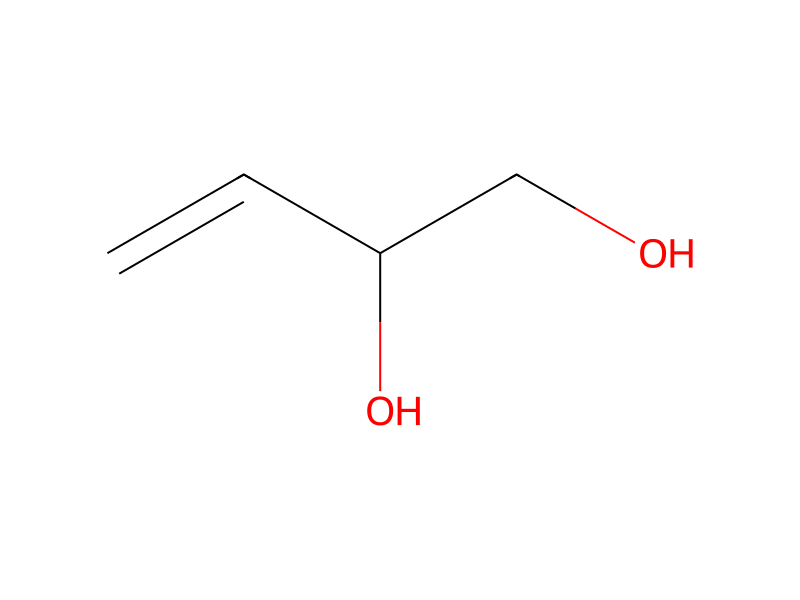
Edukt 3


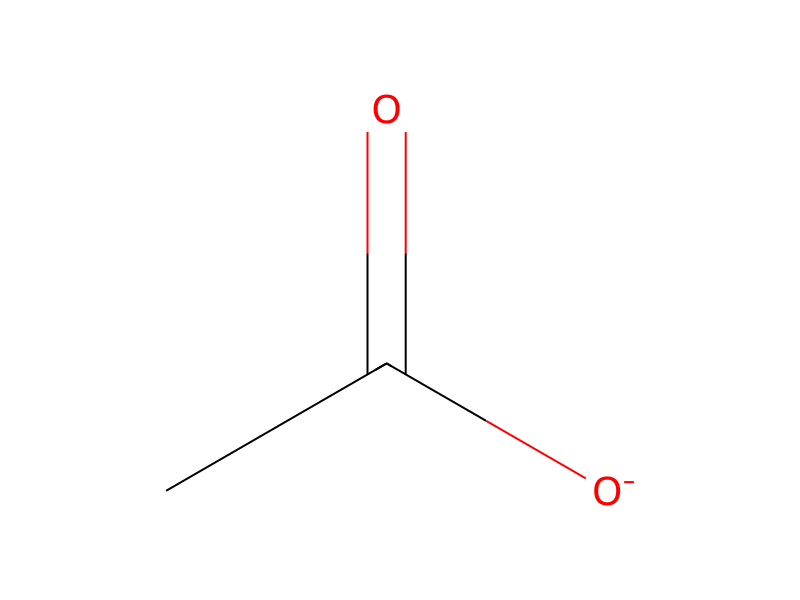
Produkt 2

Reagenzien, Katalysatoren, Lösungsmittel 1

Versuchsvorschrift
The racemic acetate substrate was prepared by one of two methods. The diol route began with racemic 1,2-dihydroxy-3-butene which could be prepared by reacting EpB with water under neutral conditions or with acid catalysis. The diol was treated with p-toluenesulfonyl chloride (p-TsCl) in pyridine at 4° C. to afford the desired monotosylate contaminated with about 10% of the corresponding ditosylate. The monotosylate could be selectively crystallized to afford pure monotosylate in 61% yield. Hydroxytosylate was acetylated under normal conditions (Ac20, Et3N, CH2C12) to provide the acetoxy-tosylate (the desired racemic acetate) in 93% yield. The diol route is illustrated as follows: ##STR3##
Aufarbeitung
- customcould be prepared
Quellen und Nachweise
- ORD-Eintrag
- ord-3662bb7299724c8fb768ba863230b39b
- Quelldatensatz
- uspto-grants-1992_06
- Patentnummer
- US05126267
Verknüpfte Notizen
Wird geladen…