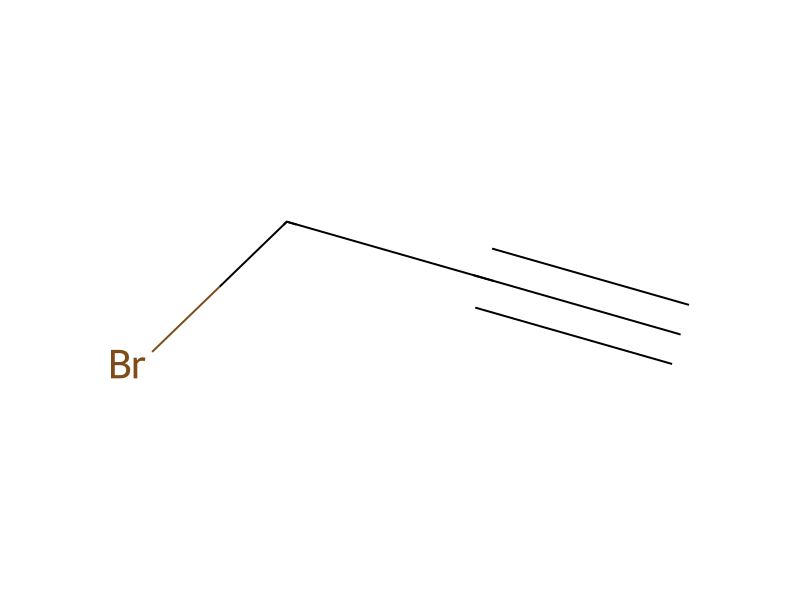
300 cm3 of dry tetrahydrofuran (THF) and 267 cm3 of 1.47 M solution of butyl-lithium in hexane were introduced into a 1 liter three-necked flask, which was kept under a nitrogen atmosphere. 40 g of anhydrous diisopropylamine and then 25.6 g (0.2 mole) of cyclohexylcarboxylic acid, dissolved in 50 cm3 of THF, were added to the mixture, which had been cooled to -20° C. The mixture was heated at 60° C. for 2 hours. 23.6 g of propargyl bromide were then added to the solution which had been cooled to -70° C. When the mixture had warmed to ambient temperature, it was concentrated under reduced pressure and the resulting product was taken up in water. The aqueous solution was washed with hexane and then treated with dilute hydrochloric acid. The expected 1-propargyl-1-cyclohexyl-carboxylic acid, which was in the form of a colourless liquid, was extracted with ether and then distilled in vacuo.