Reaktionsgleichung

C(=O)([O-])[O-:2].[Li+].[Li+].[Li].[O-2:8].[O-2].[O-2].[O-2].[Co+2:12].[Co+3].[Co+3].[V+5:15].[Co]>>[O-2:2].[O-2:8].[O-2:2].[O-2:2].[Co+2:12].[Co+3:12].[Co+3:12].[V:15].[Co:12]Komponenten



Versuchsvorschrift
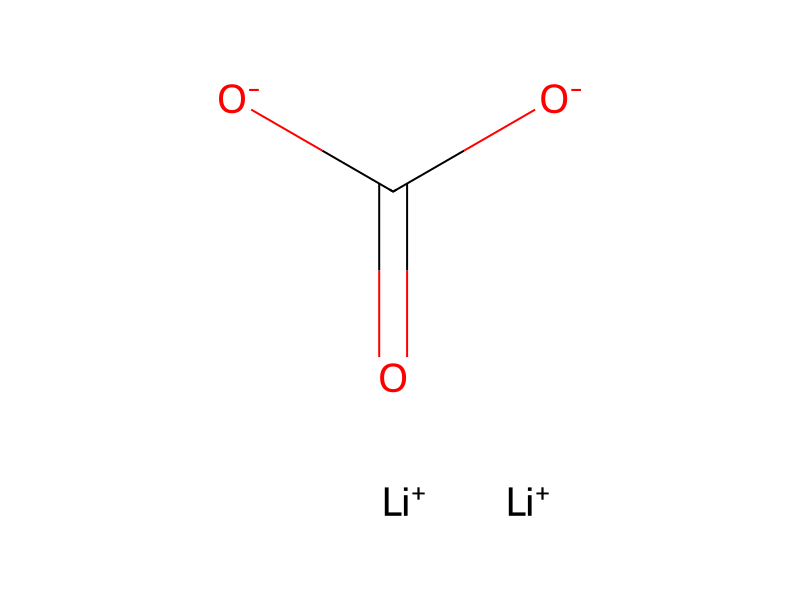
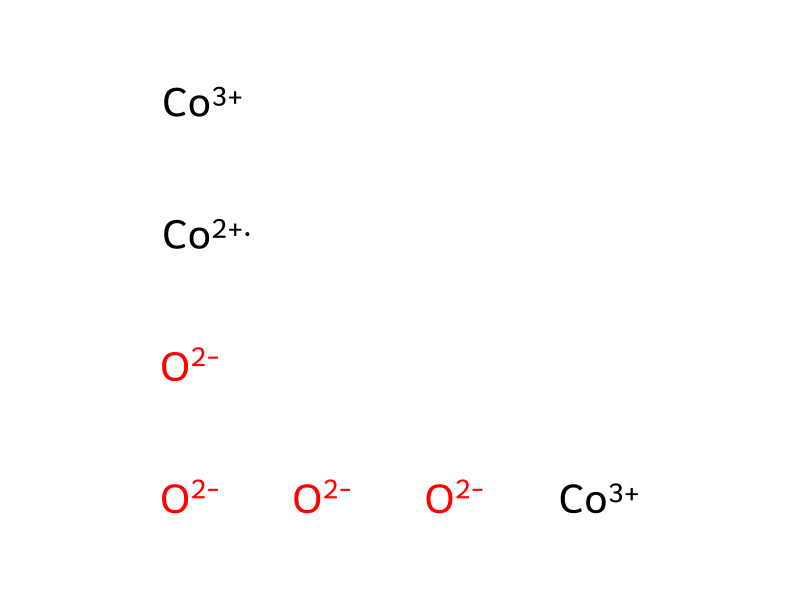
For the starting material, lithium carbonate (Li2CO3) was used as a lithium source, and (Cu0.999V0 001)3O4 which was a composite of tricobalt tetraoxide and vanadium (V) was used as a cobalt source. The composite of tricobalt tetraoxide and vanadium was obtained such that cobalt dissolved in an acid solution and vanadium were precipitated as a composite hydroxide and then were calcined at 300° C. Next, the lithium carbonate and the composite of tricobalt tetraoxide and vanadium were weighed out such that the molar ratio of Li to (Co+V) was 1, and there was then added MgF2 such that the fluorine content in the total amount of positive electrode active material was 0.01 mass %, and then the mixture was mixed. Subsequently, the mixture was calcined in an air atmosphere to obtain a calcined product of LiCo0.999V0 001O2 of a hexagonal crystal system containing fluorine and magnesium, and then the calcined product was ground in a mortar to an average particle size of 10 μm, thereby obtaining a positive electrode active material.
Quellen und Nachweise
- ORD-Eintrag
- ord-824df667e5044fb4b5461148b5c49453
- Quelldatensatz
- uspto-grants-2005_07
- Patentnummer
- US06919144B2
Verknüpfte Notizen
Wird geladen…