Reaktionsgleichung

[C:1]([O:6][CH3:7])(=[O:5])[C:2]([CH3:4])=[CH2:3].[C-]#N.[K+].[CH2:11]1[O:13][CH:12]1CO>C1(NC2C=CC(C3C=CC(NC4C=CC=CC=4)=CC=3)=CC=2)C=CC=CC=1>[C:1]([O:6][CH2:7][CH:12]1[O:13][CH2:11]1)(=[O:5])[C:2]([CH3:4])=[CH2:3]Komponenten
Edukt 3


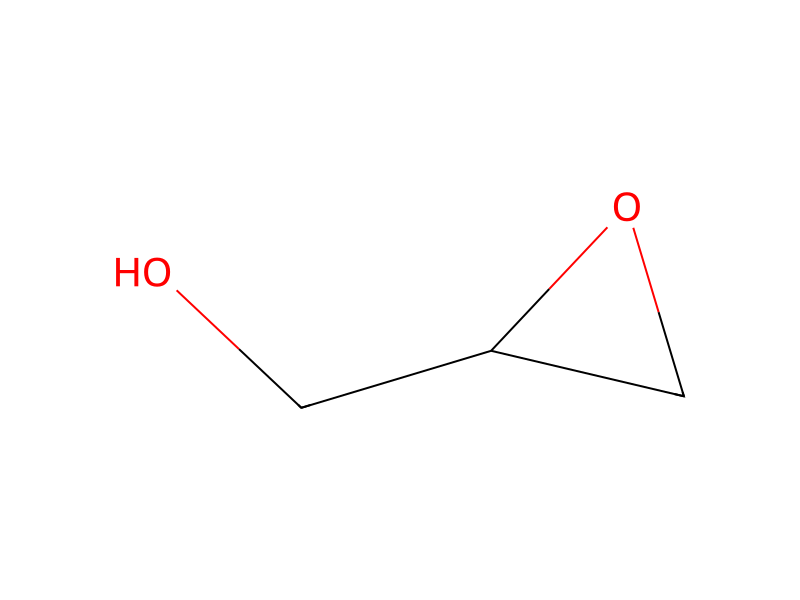
Produkt 1
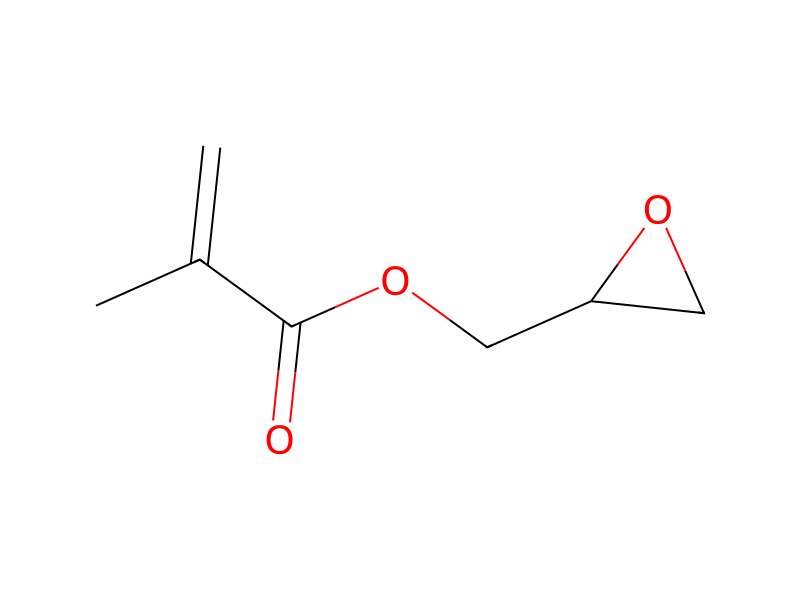
Reagenzien, Katalysatoren, Lösungsmittel 1

Versuchsvorschrift
400 grams (4 moles) of methyl methacrylate, 4.74 (73 millimoles) grams of KCN and 0.118 gram (250 ppm) of N,N'-diphenylbenzidine in a 1 liter round bottom flask were heated to 90° to 100° C. with passage of air therethrough. Within one further hour there were charged 74 grams (1 mole) of glycidol and thereby the methyl methacrylate-methanol azeotrope withdrawn from the column head via a 1 meter Vigreux column at about 65° C. After 2.5 hours, the reaction was ended, which was shown by the increase of the head temperature. The sump was filtered free of potassium cyanide and washed with a little methyl methacrylate. After distilling off the methyl methacrylate there remained behind 132 grams of glycidyl methacrylate (93% yield). The product can be worked up by distillation for further purification (B.P.10, 71°-75° C.).
Aufarbeitung
- customthe methyl methacrylate-methanol azeotrope withdrawn from the column head via a 1 meter Vigreux column at about 65° C
- temperatureincrease of the head temperature
- filtrationThe sump was filtered free of potassium cyanide
- washwashed with a little methyl methacrylate
- distillationAfter distilling off the methyl methacrylate
Quellen und Nachweise
- ORD-Eintrag
- ord-36028acbb2d1470988e9d384426173e2
- Quelldatensatz
- uspto-grants-1980_10
- Patentnummer
- US04228084
Verknüpfte Notizen
Wird geladen…