StartseiteMCPWorkbenchSkills
StartseiteWorkbenchBenachrichtigungenMein Bereich
llms.txt · MCP-AnleitungDatenschutz · Nutzungsbedingungen · Supportv1.8.3
  1. Startseite
  2. /Reaktion

Acetonitrile → 1-Bromo-7-(4-fluoro-phenoxy)-4-hydroxy-isoquinoline-3-carboxylic acid butyl ester

HRID 908734
Drucken

Reaktionsgleichung

Reaktionsgleichung von HRID 908734
[CH2:1]([O:5][C:6]([C:8]1[N:9]=[C:10](O)[C:11]2[C:16]([C:17]=1[OH:18])=[CH:15][CH:14]=[C:13]([O:19][C:20]1[CH:25]=[CH:24][C:23]([F:26])=[CH:22][CH:21]=1)[CH:12]=2)=[O:7])[CH2:2][CH2:3][CH3:4].P(Br)(Br)([Br:30])=O.CC#N.C([O-])(O)=O.[Na+]>C(Cl)Cl.O>[CH2:1]([O:5][C:6]([C:8]1[N:9]=[C:10]([Br:30])[C:11]2[C:16]([C:17]=1[OH:18])=[CH:15][CH:14]=[C:13]([O:19][C:20]1[CH:25]=[CH:24][C:23]([F:26])=[CH:22][CH:21]=1)[CH:12]=2)=[O:7])[CH2:2][CH2:3][CH3:4]
KomponentenVersuchsvorschriftAufarbeitungQuellen und NachweiseNotizen zur Reaktion

Komponenten

7

Edukt 4

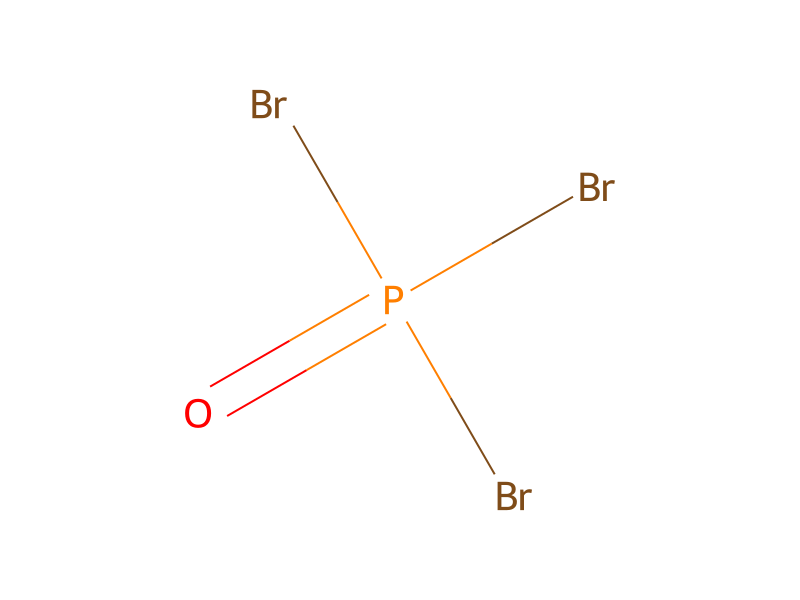
HCID 6342AcetonitrileHCID 24613Phosphorus oxybromideHCID 516892Sodium BicarbonateHCID 178450858HCID 178450858, Verbindung

Produkt 1

HCID 865954681-Bromo-7-(4-fluoro-phenoxy)-4-hydroxy-isoquinoline-3-carboxylic acid butyl esterAusbeute 68 %

Reagenzien, Katalysatoren, Lösungsmittel 2

HCID 962WaterLösungsmittel
HCID 6344DichloromethaneLösungsmittel

Versuchsvorschrift

A mixture of 7-(4-Fluoro-phenoxy)-1,4-dihydroxy-isoquinoline-3-carboxylic acid butyl ester (14.33 g, 38.6 mmol), POBr3 (44.7 g, 154.4 mmol) and anhydrous methyl cyanide (290 ml) was refluxed gently with stirring for 75 min before NaHCO3 (100.8 g, 1.2 mol) was added in small portions with stirring. Subsequently, water (200 ml) was added slowly with stirring and the mixture was stirred vigorously for 1 h at ambient temperature before it was concentrated in vacuo to ca. ½ of its volume. Then water (200 ml) was added and the mixture was extracted with EtOAc (1×400 ml, 1×200 ml). The combined organic phases were dried over MgSO4 and evaporated in vacuo to give a tan solid. The tan solid was dissolved in CH2Cl2 and purified by filtration through a plug of silica gel. In vacuo concentration of the resulting CH2Cl2 solution yielded the title compound (11.4 g); 1H NMR (CDCl3) δ=11.89 (s, 1H), 8.36 (d, 1H), 7.57 (d, 1H), 7.44 to 7.50 (m, 1H), 7.08 to 7.16 (m, 4H), 4.47 (t, 2H), 1.78 to 1.93 (m, 2H), 1.38 to 1.58 (m, 2H), 0.99 (t, 3H).

Aufarbeitung

  1. temperaturewas refluxed gently
  2. additionwas added in small portions
  3. stirringwith stirring
  4. stirringthe mixture was stirred vigorously for 1 h at ambient temperature before it
  5. concentrationwas concentrated in vacuo to ca. ½ of its volume
  6. additionThen water (200 ml) was added
  7. extractionthe mixture was extracted with EtOAc (1×400 ml, 1×200 ml)
  8. dry with materialThe combined organic phases were dried over MgSO4
  9. customevaporated in vacuo
  10. customto give a tan solid
  11. filtrationpurified by filtration through a plug of silica gel

Quellen und Nachweise

ORD-Eintrag
ord-61048cb58427492fae5834553f68b0fc
Quelldatensatz
uspto-grants-2011_09
DOI
10.6084/m9.figshare.5104873.v1
Patentnummer
US08017625B2

Notizen zur Reaktion

Auf dieser SeiteKomponentenVersuchsvorschriftAufarbeitungQuellen und NachweiseNotizen zur Reaktion