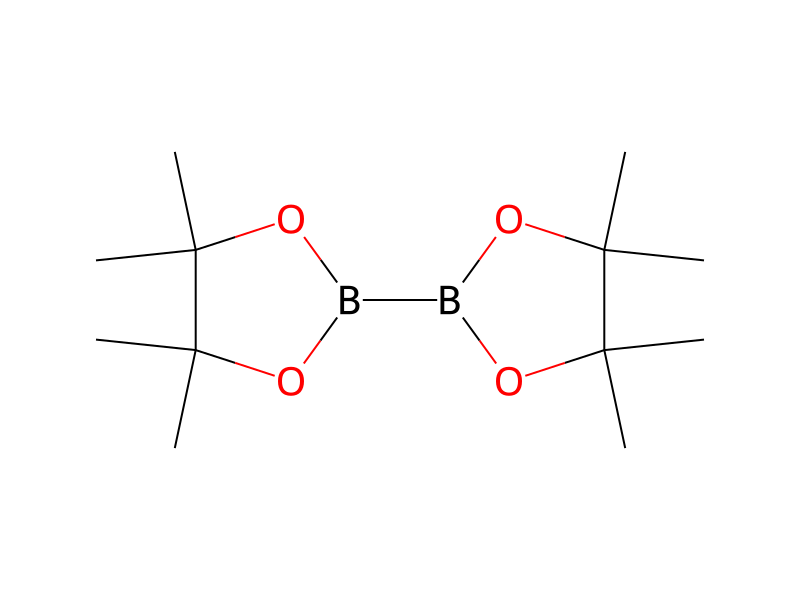
Cl[C:2]1[C:3](=[O:8])[NH:4][N:5]=[CH:6][CH:7]=1.[B:9]1(B2OC(C)(C)C(C)(C)O2)[O:13]C(C)(C)C(C)(C)[O:10]1.CC([O-])=O.[K+]>C1C=CC(/C=C/C(/C=C/C2C=CC=CC=2)=O)=CC=1.C1C=CC(/C=C/C(/C=C/C2C=CC=CC=2)=O)=CC=1.C1C=CC(/C=C/C(/C=C/C2C=CC=CC=2)=O)=CC=1.[Pd].[Pd].C1(P(C2CCCCC2)C2C=CC=CC=2C2C(C(C)C)=CC(C(C)C)=CC=2C(C)C)CCCCC1>[O:8]=[C:3]1[C:2]([B:9]([OH:13])[OH:10])=[CH:7][CH:6]=[N:5][NH:4]1step b—A microwave vial was charged with 75 (0.400 g, 3 mmol), bis-(pinacolato)diboron (0.934 g, 4 mmol), dicyclohexyl[2′,4′,6′-tris(1-methylethyl)[1,1′-biphenyl]-2-yl]-phosphine (X-Phos, 0.058 g, 0.12 mmol), Pd2(dba)3 (0.056 g, 0.061 mmol) and KOAc (0.902 g, 9 mmol) and the flask was evacuated and back-filled with Ar and sealed. Dioxane (6 mL) was added and the reaction heated at 110° C. overnight. The reaction mixture was cooled to RT and extracted with EtOAc (120 mL). The organic extract was washed sequentially with H2O (10 mL) and brine (10 mL), dried (Na2SO4), filtered and evaporated. The crude product was triturated with Et2O to afford 0.217 g of 78.