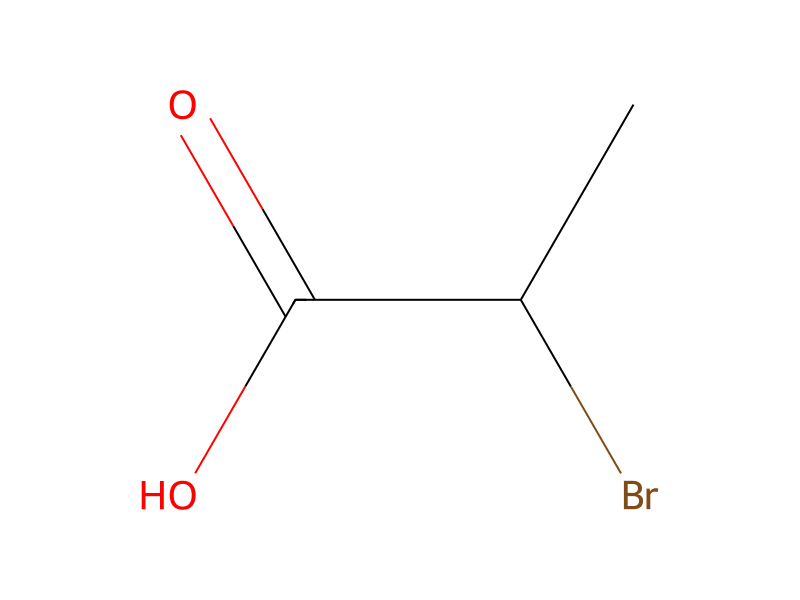
20.0 g (0.13 moles) of 2-bromopropionic acid were stirred with 14.1 g (0.13 moles) of benzyl alcohol in dry methylene chloride at 5°-10° C., before 0.16 g (1.3e-3 moles) of 4-dimethylaminopyridine (DMAP) were added. The temperature was raised to ~15° C. before a solution of dicyclohexylcarbodiimide (DCC) (26.7 g, 0.13 moles) in dry methylene chloride was added dropwise. The solution was added at a rate as to not increase the reaction temperature above 35° C. After the imide addition was complete, the reaction proceeded at 25° C. for several hours or until infrared spectroscopy analysis indicated the absence of a carboxylic acid stretch at 1730 cm-1. Upon completion, the reaction mixture was filtered under vacuum to remove the dicyclohexyl urea (DCU) byproduct and the filtrate was extracted once with water, once with 5% acetic acid solution (to remove DMAP) and again with water. The organic layer was dried over anhydrous magnesium sulfate before being filtered and concentrated under reduced pressure. Yield was 25 g (72%) of a mixture of Benzyl-2-bromopropionate and Benzyl-2-chloropropionate.