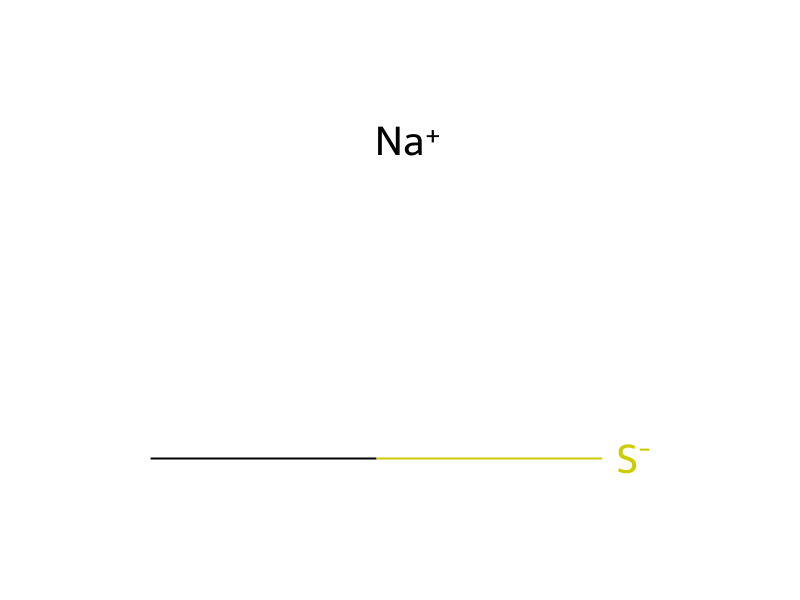
N-Chlorosuccinimide (7.3 g) was added, portionwise, to a solution of 2-oxopropanal 1-oxime (4.8 g) in dimethylformamide (30 ml). The reaction was heated to 50° and hydrochloric acid gas bubbled through to initiate the reaction. The mixture was then stirred at room temperature for an hour. Poured into water, extracted with ether and the extracts worked up to give crude 1-chloro--oxopropanal 1-oxime. This (1.5 g) in dimethylformamide (25 ml) was then reacted with sodium methanethiolate (0.86 g). After 5 hours at below 5°, the mixture was poured into water and extracted with ether and the extracts worked up to give crude 1-methylthio-oxopropanal 1-oxime. This (1.0 g) was then reacted with 2,6-dichloro-4-trifluoromethylphenylhydrazine (1.84 g), in a similar to that described in Example 1, to give 2-(2,6-dichloro-4-trifluoromethylphenylhydrazono)-methylthiopropanal-1-oxime. This (1.4 g) was then reacted with acetic anhydride, in a similar manner to Example 5, to give 2-(2,6-dichloro-4-trifluoromethyl-phenylhydrazono)-1-methylthiopropanal 1-acetyloxime. This (1.4 g) was then stirred with a mixture of caesium carbonate (1.1 g) and tetrahydrofuran (40 ml) at room temperature for 2 hours. Solvent was removed and the residue worked up to give compound 3.