Ketene → Trifluoromethanesulfonic anhydride
HRID 992756
Reaktionsgleichung

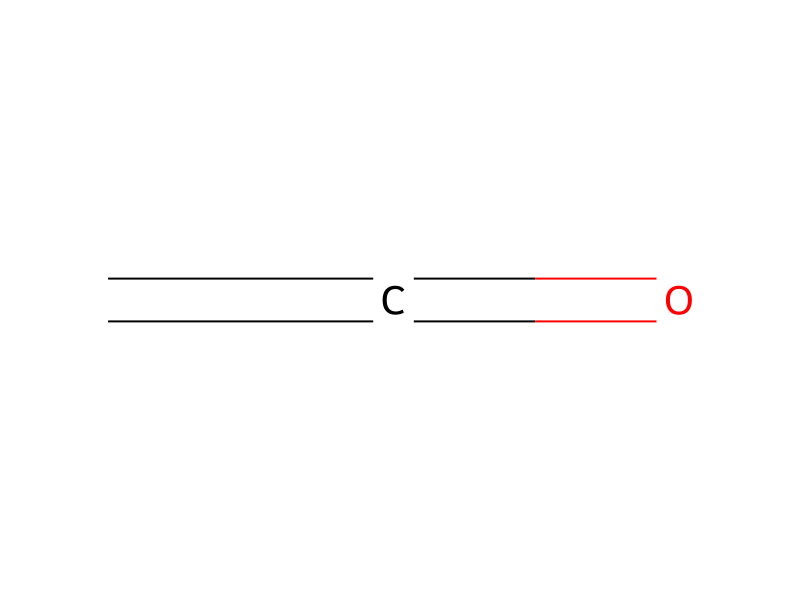
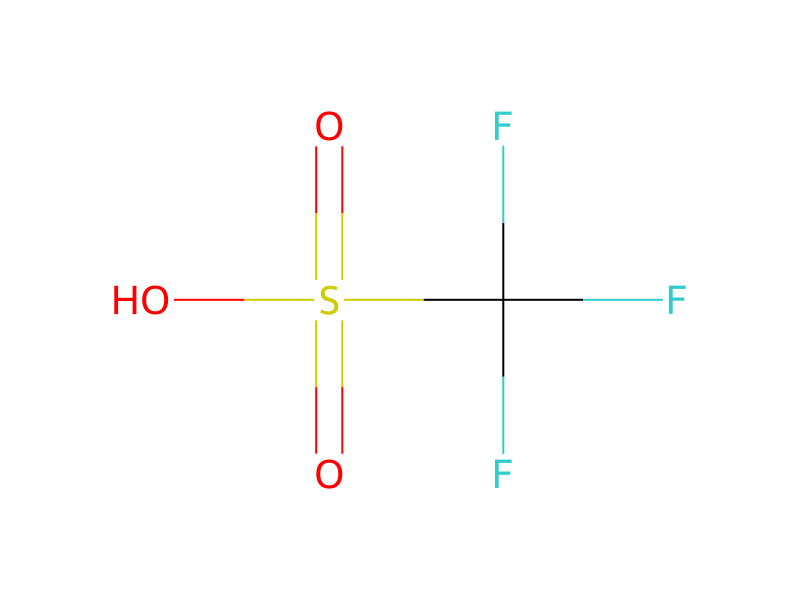
C=C=O.[OH:4][S:5]([C:8]([F:11])([F:10])[F:9])(=[O:7])=[O:6].[O:12](C(=O)C)[S:13]([C:16]([F:19])([F:18])[F:17])(=O)=[O:14].O(C(=O)C(C)C)S(C(F)(F)F)(=O)=O>>[S:5]([O:4][S:13]([C:16]([F:19])([F:18])[F:17])(=[O:14])=[O:12])([C:8]([F:11])([F:10])[F:9])(=[O:7])=[O:6]Komponenten
5


Versuchsvorschrift
The process of the present invention may be operated in a batch, continuous or semi-continuous manner. For example, the process may be carried out by first reacting a ketene and triflic acid in a reaction vessel equipped with a distillation column. This vessel containing the mixed anhydride then may be heated to effect reactive distillation of the contents of the reaction vessel and recover triflic anhydride from the upper section of the distillation column. The process for the coproduction of triflic anhydride and a carboxylic acid anhydride, e.g., acetic or isobutyric anhydride, preferably is carried out in a continuous or semi-continuous manner comprising the steps of: (1) introducing a ketene reactant such as ketene or dimethylketene and triflic acid to a reaction vessel wherein the ketene reactant and triflic acid react to form a product comprising a mixed anhydride, e.g., acetyl triflate or isobutyryl triflate; (2) removing product from the reaction vessel and introducing it into the mid-section of a reactive distillation column wherein the mixed anhydride disproportionates to form triflic anhydride and a carboxylic anhydride, e.g. acetic or isobutyric anhydride; (3) removing triflic anhydride from the upper section of the reactive distillation column; and (4) removing a carboxylic anhydride from the lower section of the reactive distillation column.