
Completing data — usually done within a minute
Basic information
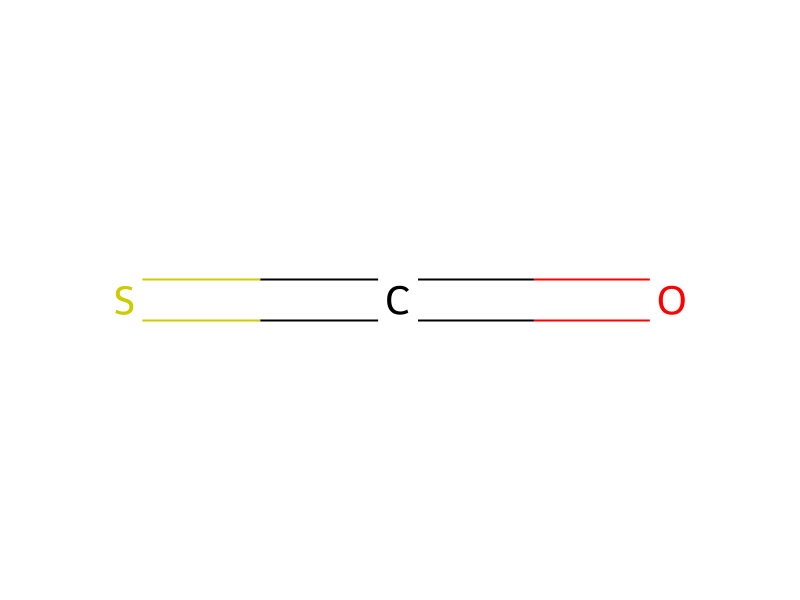
- Standard SMILES
O=C=S- InChIKey
JJWKPURADFRFRB-UHFFFAOYSA-N- Molecular formula
- COS
- Average molar mass
- 60.077 g/mol
- Monoisotopic mass
- 59.96698562
Names & identifiers
- Preferred name
- Carbonyl sulfide
- IUPAC
- Sulfanylidenemethanone
- English name
- Carbonyl sulfide
- Molecular formula
- COS
- Molecular weight
- 60.07
Names & synonyms
COSCARBON OXYSULFIDECarbon oxide sulfidethioforminOxothioxocarbonoxycarbonsulfideThioxo-methanoneOxomethanethioneCarbonyl sulfideCarbonyl sulphide
Database identifiers
- CAS
463-58-1- PubChem CID
- 10039
- DTXSID
DTXSID6023949- ChEBI
CHEBI:16573- UNII
- 871UI0ET21
- EC Number
- 207-340-0
- Nikkaji
- J2.591G
Properties
Physicochemical properties
- Melting point
- 138 °C · −138 °C(lit.)
- Boiling point
- 50 °C · −50 °C(lit.)
- Density
- 1.274 · 1.274; 2.4849
- vapor density
- 2.1 · 2.1 (20 °C, vs air)
- vapor pressure
- 9034 mm · 9034 mm Hg ( 21 °C)
- refractive index
- 1.3785 · n 1.3785
- solubility
- 2 O, · soluble in H2O, ethanol
- form
- gas
- color
- colorless
- Odor Threshold
- 0.055 ppm · 0.055ppm
- explosive limit
- 11.9 · 11.9-29%
- Water Solubility
- 100 mL · mL/100mL H2O: 133.3 (0°C), 56.1 (20°C), 40.3 (30°C) [LAN05]; slowly decomposes in H2O [COT88]; soluble alcohol [HAW93]
- Specific Heat Capacity
- 0.69 J/ · Cp(gas): 0.69 J/(g·K), at 25℃
- Henry's Law Constant
- 2 · 2.0×10-4 mol/(m3Pa) at 25℃, Burkholder et al. (2019)
- Stability
- Stable. Corrosive to common metals when moisture is present. Reacts vigorously with oxidants. Flammable. Suck-back into cylinder may cause rupture.
- InChI
- 1S/COS/c2-1-3
- InChIKey
- JJWKPURADFRFRB-UHFFFAOYSA-N
- SMILES
- O=C=S
- EWG's Food Scores
- 2 · 2
- FDA UNII
- 871 UI0ET21 · 871UI0ET21
- EPA Substance Registry System
- Carbonyl sulfide (463-58-1)
- Toxicological Profile|ATSDR
- CARBONYL SULFIDE|Toxicological Profile|ATSDR
- UNSPSC Code
- 12142100 · 12142100
- Symbol(GHS)
- 2 · GHS02,GHS04,GHS06
- Signal word
- Danger
- Hazard statements
- 221 · H221-H280-H315-H319-H330-H335
- Precautionary statements
- 210 · P210-P302+P352-P304+P340+P310-P305+P351+P338-P403+P233-P410+P403
- target organs
- Respiratory system
- PPE
- Eyeshields, Faceshields, Gloves, multi-purpose combination respirator cartridge (US)
- Hazard Codes
- F,Xn
- Risk Statements
- 11 · 11-20-36/37/38
- Safety Statements
- 16 · 16-26-38
- RIDADR
- 2204 · UN 2204
- WGK Germany
- 3 · 3
- RTECS
- 6400000 · FG6400000
- TSCA
- TSCA listed
- HazardClass
- 2.3 · 2.3
- Storage Class
- 2 A · 2A - Gases
- Hazard Classifications
- 2 InhalationEye · Acute Tox. 2 InhalationEye Irrit. 2Flam. Gas 1BPress. Gas Liquefied gasSkin Irrit. 2STOT SE 3
- Hazardous Substances Data
- 463 · 463-58-1(Hazardous Substances Data)
- Toxicity
- 50 i.p · LD50 i.p. in rats: 22.5 mg/kg; LC50 by inhalation (mg/m3): 2940 in mice (35 min); 2650 in rats (4 h) (Bartholomaeus, Haritos)
Safety & regulation
Safety data
- PPE
- Eyeshields, Faceshields, Gloves, multi-purpose combination respirator cartridge (US)
- wgk
- 3
- tsca
- TSCA listed
- rtecs
- FG6400000
- ridadr
- UN 2204
- Toxicity
- LD50 i.p. in rats: 22.5 mg/kg; LC50 by inhalation (mg/m3): 2940 in mice (35 min); 2650 in rats (4 h) (Bartholomaeus, Haritos)
- risk_code
- 11-20-36/37/38
- Signal word
- Danger
- Symbol(GHS)
- GHS02,GHS04,GHS06
- hazard_code
- F,Xn
- safety_code
- 16-26-38
- hazard_class
- 2.3
- Storage Class
- 2A - Gases
- target organs
- Respiratory system
- Hazard statements
- H221-H280-H315-H319-H330-H335
- Hazard Classifications
- Acute Tox. 2 InhalationEye Irrit. 2Flam. Gas 1BPress. Gas Liquefied gasSkin Irrit. 2STOT SE 3
- Precautionary statements
- P210-P302+P352-P304+P340+P310-P305+P351+P338-P403+P233-P410+P403
- Hazardous Substances Data
- 463-58-1(Hazardous Substances Data)
Chemistry & industry
Applications
DescriptionCarbonyl oxysulfide is a colorless gas or coldliquid. Molecular weight=60.07. Boiling point=250℃.Flammable limits: LEL=12%; UEL=29%. HazardIdentification (based on NFPA-704 M Rating System):Health 3, Flammability 4, Reactivity 1.
OccurrenceCarbonyl sulfide, COS, is now recognized as a component of the atmosphere at a tropospheric concentration of approximately 500 parts per trillion by volume, corresponding to a global burden of about 2.4 million tons. It is, therefore, a significant sulfur species in the atmosphere. It is possible that the HO• radicalinitiated oxidation of COS and carbon disulfide (CS2) would yield 8-12 million tons as S in atmospheric sulfur dioxide per year. Though this is a small yield compared to pollution sources, the HO•-initiated process could account for much of the SO2 burden in the remote troposphere. Both COS and CS2 are oxidized in the atmosphere by reactions initiated by the hydroxyl radical. The initial reactions are HO• + COS ® CO2 + HS• (11.10.1) HO• + CS2 ® COS + HS• (11.10.2) These reactions with hydroxyl radical initiate oxidation processes that occur through a series of atmospheric chemical reactions. The sulfur-containing products that are initially formed as shown by Reactions 11.10.1 and 11.10.2 undergo further reactions to sulfur dioxide and, eventually, to sulfate species.
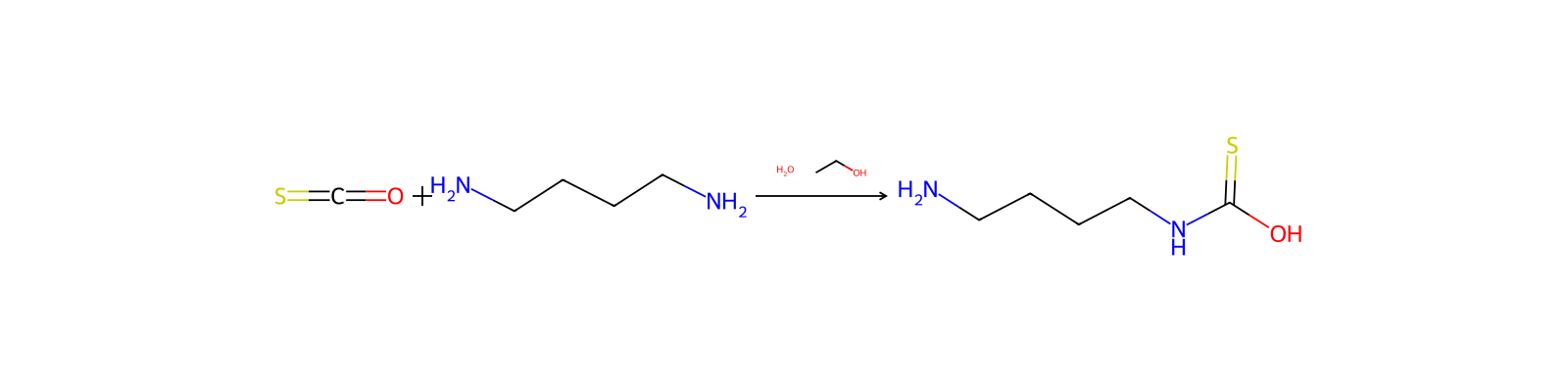
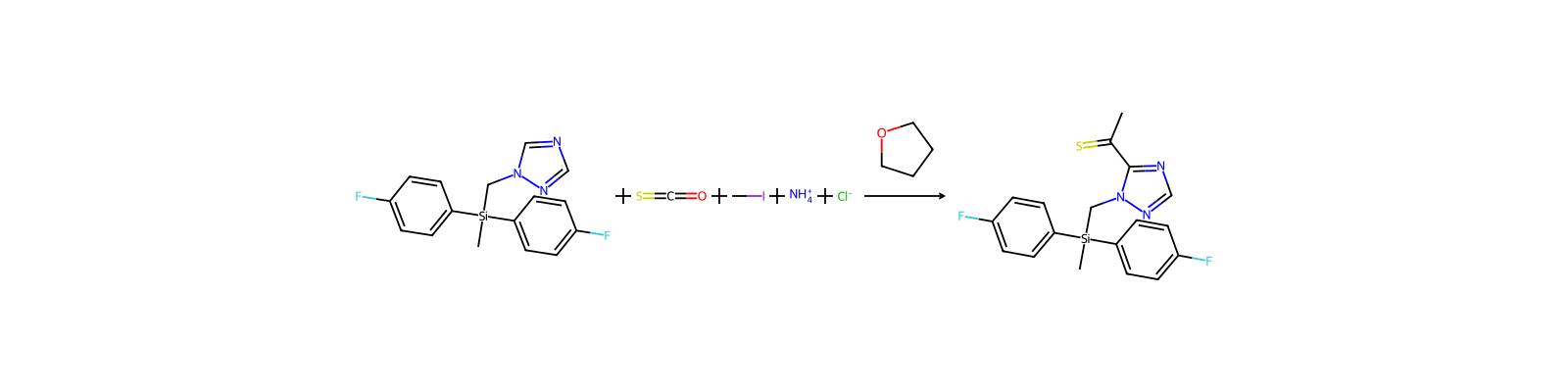
UsesCarbonyl sulfide (COS) is a colorless, odorless (when pure) relatively stable gas with a boiling point of -50°C. There are limited commercial uses of COS. It is produced only in small quantities and used for small-scale experimental purposes and as an intermediate in the synthesis of organic sulfur compounds, thiocarbamate herbicides, and alkyl carbonates. Pesticide manufacturers are believed to be the largest users of COS. Similar to CS2, research conducted by the Stored Grain Research Laboratory at the Australia’s Commonwealth Scientific and Industrial Research Organisation (CSIRO) has shown COS to be an effective soil and grain fumigant for controlling insects on crops such as wheat, barley, oats, and peas, although it is not currently approved for this commercial use. The use of COS as a fumigant for durable commodities and structures was patented worldwide in 1992 by CSIRO Australia. COS has the potential to replace methyl bromide, being phased out due to its ozone depletion properties, in several of its applications for durable commodities and also to be used as an alternative to phosphine when there is a significant problem with insect resistance.
Usescarbonyl sulfide is use as a fumigant for durable commodities and structures was patented worldwide by Australia in 1992. It is effective on a wide range of pests, including the common stored product species at reasonable concentrations (less than 50 gm-3) and exposure times (1-5 days) . However, the egg stage of several insects showed tolerance to the fumigant. The other problems associated with the use of carbonyl sulfide include its high tainting odour on the treated products and reduction in the germination of seeds. Hydrogen sulphide, an impurity, present in fumigant product supply was reported to be responsible for the off-odour problem. Selective removal of hydrogen sulphide using absorbents like tertiary amine may solve the tainting issues with this fumigant.
UsesGrain fumigant.
General DescriptionCARBONYL SULFIDE is a colorless, poisonous, flammable gas with a distinct sulfide odor. The gas is toxic and narcotic in low concentrations and presents a moderate fire hazard. Under prolonged exposure to fire or intense heat the container may rupture violently or rocket. CARBONYL SULFIDE is used in the synthesis of organic thio compounds.
Upstream & downstream products
Upstream raw materials
Downstream products
Additional notes
DefinitionChEBI: A one-carbon compound in which the carbon atom is attached to an oxygen and a sulfur atom via double bonds.
Related reactions
24 records





Linked notes
Loading…