HomeMCPWorkbenchSkills
HomeWorkbenchNotificationsMe
llms.txt · MCP GuidePrivacy Policy · Terms of Service · Supportv1.8.0
  1. Home
  2. /Compound

Tetrahydrothiophene

HCID 1127
New noteNew reactionRequest quotes
Print preview

Completing data — refresh the page later to see the latest
Basic informationOverviewNames & identifiersPropertiesSafety & regulationChemistry & industryRelated reactionsCompound notes
Substructure searchFind similar structures

Basic information

CAS
110-01-0
Standard SMILES
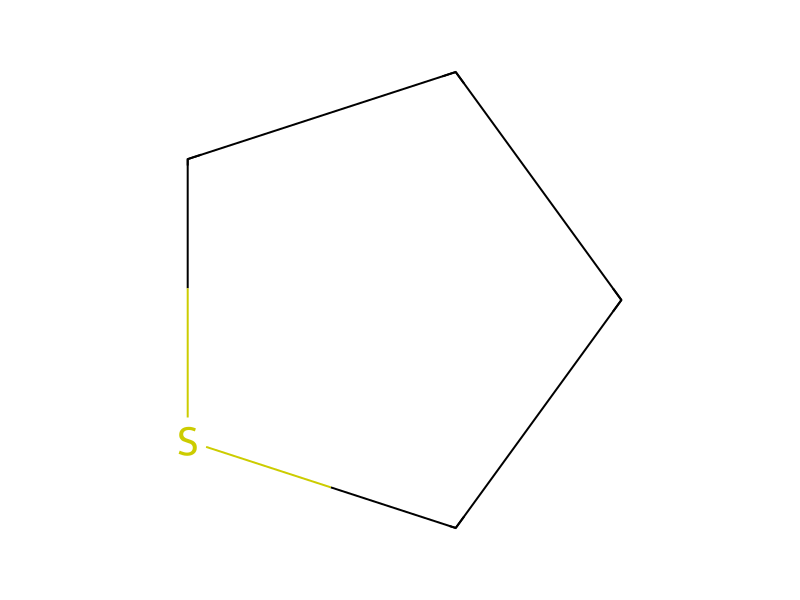
C1CCSC1
InChIKey
RAOIDOHSFRTOEL-UHFFFAOYSA-N
Molecular formula
C4H8S
Average molar mass
88.17 g/mol
Monoisotopic mass
88.03467126

Overview

Tetrahydrothiophene appears as a water-white liquid. About the same density as water and insoluble in water. Vapors heavier than air. Used as a solvent and to make other chemicals.

Names & identifiers

Preferred name
Tetrahydrothiophene
IUPAC
thiolane
English name
Tetrahydrothiophene
Molecular formula
C4H8S
Molecular weight
88.17

Names & synonyms

tetrahydrothiopheneThiolane110-01-0ThiophaneThiophene, tetrahydro-ThiacyclopentaneTetramethylene sulfideThilaneTetrahydrothiophenTetramethylenesulfideThiofanPennodorant 1013
Show more names
THTTETRAHYDROTHIOPHEN 99%(GC)THIOLANTetrahydrothiophene (THT)
TetrahydrothiofenPennodorant 1073DTXSID3047760744EHT13FMNSC-5272DTXCID8027743CHEBI:48458THT, thiophene

Database identifiers

CAS
110-01-0
PubChem CID
1127
DTXSID
DTXSID3047760
ChEMBL
CHEMBL1379
ChEBI
CHEBI:48458
UNII
744EHT13FM
EC Number
203-728-9
Nikkaji
J2.444I

Properties

Computed structural propertiesFilling in

XLogP
1.4
Topological polar surface area
25.3 Ų
Hydrogen bond donors
0
Hydrogen bond acceptors
1
Rotatable bonds
0
Heavy atoms
5
Formal charge
0
Complexity
22.8

Experimental & physicochemical properties

Chemical Classes · 2 items

Other Classes -> Thiophenes

Flammable agents - 3rd degree

SpringerMaterials PropertiesCoriolis coupling
LogP · 2 items

1.8 (estimated by method of Leo et al, 1971).

1.8

OdorStench.
Density · 2 items

0.9987 @ 20 °C/4 °C

Relative density (water = 1): 1.0

Color/FormWATER-WHITE LIQUID
Solubility · 2 items

INSOLUBLE IN WATER; SOL IN ALL PROPORTIONS IN ALCOHOL, ETHER, ACETONE, BENZENE, IN ORGANIC SOLVENTS

Solubility in water: none

Flash Point · 2 items

55 °F (12 °C)

12 °C

Boiling Point · 2 items

121.12 °C @ 760 MM HG

Safety & regulation

Safety information is for reference only and does not replace the supplier’s Safety Data Sheet (SDS), applicable regulations, or professional assessment.

GHS classification

GHS Classification · 6 items

Danger

H225: Highly Flammable liquid and vapor [Danger Flammable liquids]

P210, P233, P240, P241, P242, P243, P261, P264, P264+P265, P270, P271, P273, P280, P301+P317, P302+P352, P303+P361+P353, P304+P340, P305+P351+P338, P317, P321, P330, P332+P317, P337+P317, P362+P364, P370+P378, P403+P235, and P501 (click each P-code to see the statement)

This chemical does not meet GHS hazard criteria for 11.5% (36 of 314) of reports.

Danger

H225 (88.5%): Highly Flammable liquid and vapor [Danger Flammable liquids]

Hazard information

Regulatory Information · 6 items

Chemical: Thiophene, tetrahydro-

Commission Regulation (EC) No 1565/2000 (Repealed by Com. Implementing Reg. (EU) No 872/2012)

Thiophene, tetrahydro- is listed on the EPA's Chemical Data Reporting (CDR) system. Manufacturers and importers of Thiophene, tetrahydro- are required to report information about their production and use of this chemical to the EPA under the Toxic Substances Control Act (TSCA). (40 eCFR Part 711)

Status: Active Update: 29-11-2017 https://echa.europa.eu/registration-dossier/-/registered-dossier/2145

Thiophene, tetrahydro-: HSNO Approval: HSR001225 Approved with controls

The New Jersey Worker and Community Right to Know Act requires public and private employers to provide information about hazardous substances at their workplaces. (N.J.S.A. 34:5A-1 et. seq.)

DOT LabelFlammable Liquid
Fire Hazards · 3 items

Excerpt from ERG Guide 130 [Flammable Liquids (Water-Immiscible / Noxious)]:

· HIGHLY FLAMMABLE: Will be easily ignited by heat, sparks or flames.

Highly flammable. Heating will cause rise in pressure with risk of bursting. Gives off irritating or toxic fumes (or gases) in a fire. Vapour/air mixtures are explosive.

Chemistry & industry

Pharmacology

Metabolism/MetabolitesIdentified as a human metabolite of asparagus.

Uses & manufacturing

Uses · 6 items

Used as a solvent, chemical intermediate, and odorant for fuel gas and other gases and liquids; [HSDB]

SOLVENT; INTERMEDIATE; FUEL GAS ODORANT

A HERBICIDAL COMPOSITION BASED ON BIPYRIDYLIUM COMPD CONTAIN TETRAHYDROTHIOPHENE AS THE OLFACTORY ALERTING AGENT IN ORDER TO AVERT INADVERTENT POISONING

THIOLANE IS USED AS A GROWTH REGULATOR

Used in odorization operations of natural gas.

For more Uses (Complete) data for TETRAHYDROTHIOPHENE (8 total), please visit the HSDB record page.

U.S. Production · 2 items

2023: 75,000 - <500,000 lb

200,000 to 2,000,000 lb

Consumer UsesFragrance
Industry UsesFragrance
Methods of Manufacturing · 2 items

Vapor-phase reaction of tetrahydrofuran and hydrogen sulfide over a heteropolyacid-promoted metal oxide catalyst followed by separation and distillation of tetrahydrothiophene.

Thiophene is reduced to tetrahydrothiophene by sodium in alcohol or ammonia, or with palladium, cobalt, molybdenum or rhenium catalysts under carefully controlled conditions.

General Manufacturing Information · 3 items

Utilities

Thiophene, tetrahydro-: ACTIVE

A DISCUSSION IS GIVEN ON WASTEWATER FORMED IN NATURAL GAS UNDERGROUND STORAGE RESERVOIRS; ON AIR POLLUTION & WASTEWATERS; ON METHODS FOR TREATMENTS OF WASTEWATERS AND THE PREVENTION & CONTROL OF AIR POLLUTION IN THE ODORIZATION OF NATURAL GAS WITH TETRAHYDROTHIOPHENE.

Applications · 3 items

Related reactions

75 records
New reaction record
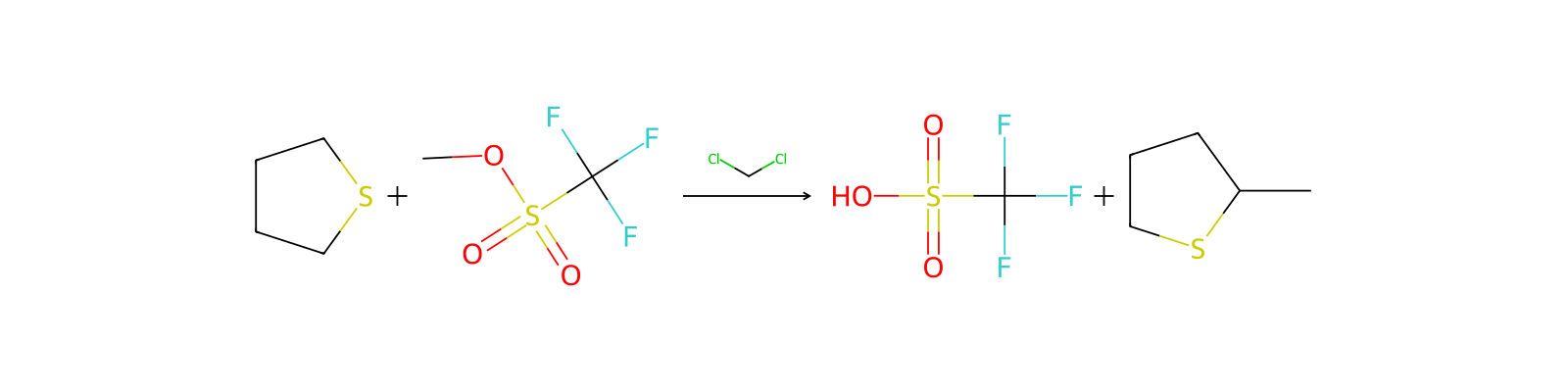
HRID 24964 reaction equation
HRID 24964As reactantuspto-grants-2005_02
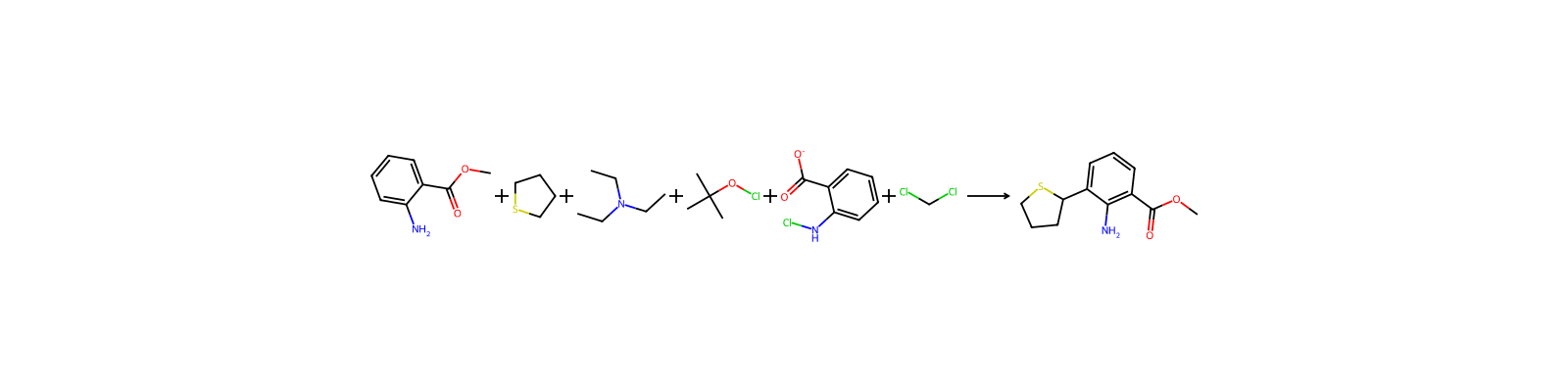
HRID 24968 reaction equation
HRID 24968As reactantuspto-grants-2005_02
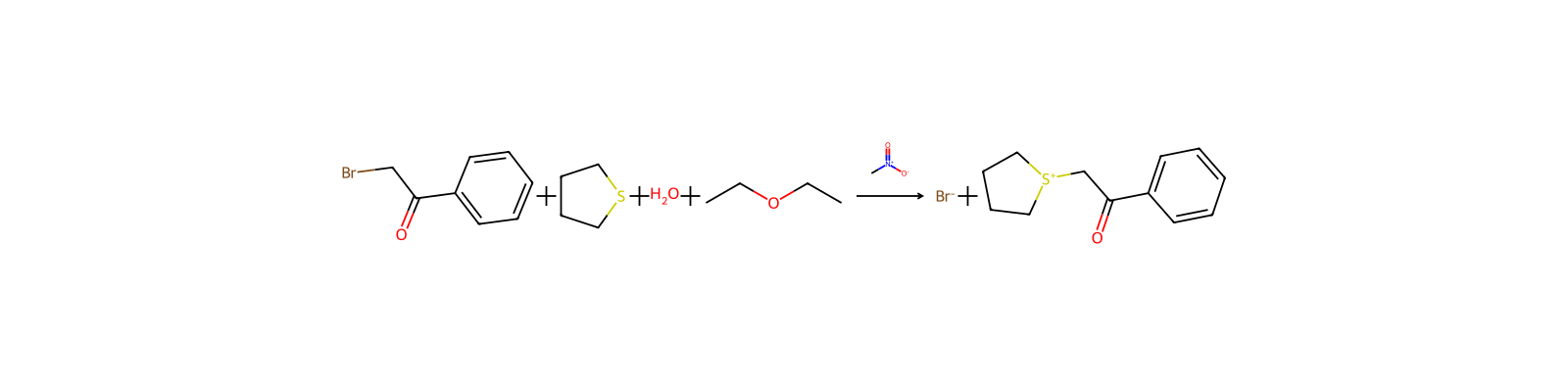
HRID 43294 reaction equation
HRID 43294As reactantuspto-grants-2013_09
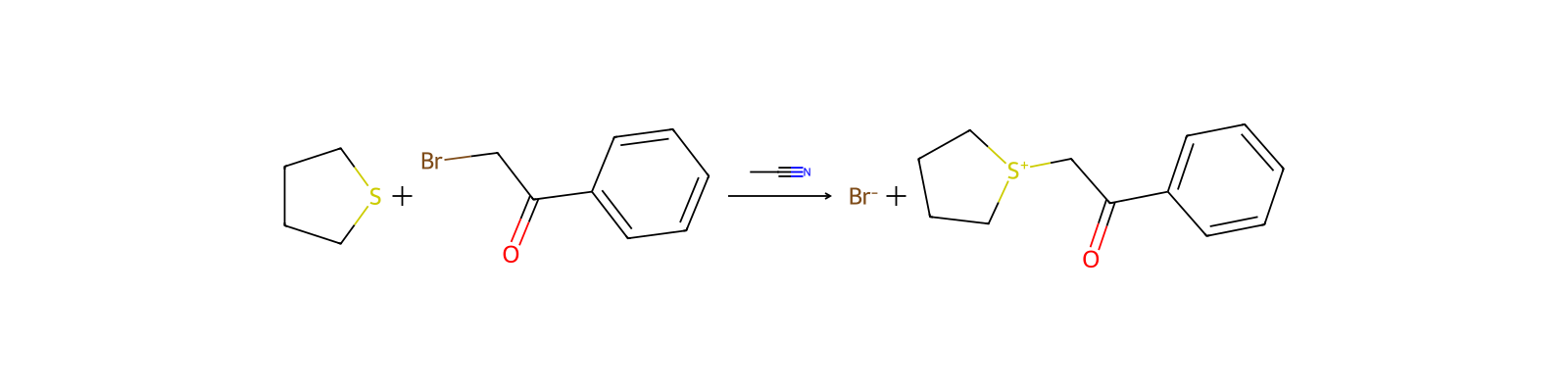
HRID 99195 reaction equation
HRID 99195As reactantTraining data from https://doi.org/10.1039/C8SC04228D (2/10)
HRID 138127 reaction equation
HRID 138127As reactantTraining data from https://doi.org/10.1039/C8SC04228D (9/10)
HRID 163357 reaction equation
HRID 163357As reactantTraining data from https://doi.org/10.1039/C8SC04228D (9/10)
HRID 168547 reaction equation
HRID 168547As reactantTraining data from https://doi.org/10.1039/C8SC04228D (9/10)
HRID 225403 reaction equation
HRID 225403As reactantuspto-grants-2009_07
Page 1 of 10

Compound notes

Loading…

On this pageBasic informationOverviewNames & identifiersPropertiesSafety & regulationChemistry & industryRelated reactionsCompound notes
More actions
New noteNew reactionRequest quotes

119-121 °C

Melting Point · 2 items

-96.16 °C

-96.2 °C

Vapor DensityRelative vapor density (air = 1): 3.05
Odor Threshold1 part per billion

Physicochemical properties

Melting point
-96 °C · -96 °C (lit.)
Boiling point
119 °C · 119 °C (lit.)
Density
1 g/mL · 1 g/mL at 25 °C (lit.)
vapor pressure
18 mm · 18 mm Hg ( 25 °C)
refractive index
20 · n20/D 1.504(lit.)
Flash point
55 °F · 55 °F
storage temp.
30 °C · Store below +30°C.
solubility
immiscible
form
liquid
Specific Gravity
1.002 · 1.002 (20/4℃)
color
Colorless to Almost colorless
Odor
Smells of rotting eggs
PH
7 · 7 (H2O, 20℃)
explosive limit
1.1 · 1.1-12.1%(V)
Odor Threshold
0.00062 ppm · 0.00062ppm
Odor Type
sulfurous
Water Solubility
immiscible
Specific Heat Capacity
1.05 J/ · Cp(gas): 1.05 J/(g·K), at 25℃
Merck
14 · 14,9218
BRN
102392 · 102392
Henry's Law Constant
2.2 · 2.2×10-3 mol/(m3Pa) at 25℃, Yaws et al. (2003)
Dielectric constant
8.61 · 8.6099999999999994
Stability
Highly flammable. Vapour-air mixtures explosive in some proportions; note low flash point and fairly wide explosion limit range. Heavier than air, so potentially explosive mixtures may travel considerable distances to source of ignition.
InChI
1S/C4H8S/c1-2-4-5-3-1/h1-4H2
InChIKey
RAOIDOHSFRTOEL-UHFFFAOYSA-N
SMILES
C1CCSC1
LogP
1.8 at · 1.8 at 20℃
CAS DataBase Reference
110 · 110-01-0(CAS DataBase Reference)
EWG's Food Scores
1 · 1-2
FDA UNII
744 EHT13FM · 744EHT13FM
NIST Chemistry Reference
Thiophene, tetrahydro-(110-01-0)
EPA Substance Registry System
Tetrahydrothiophene (110-01-0)
UNSPSC Code
12352100 · 12352100
NACRES
22 · NA.22
Symbol(GHS)
2 · GHS02,GHS07
Signal word
Danger
Hazard statements
302 · H302+H312+H332-H315-H319-H412-H225
Precautionary statements
501 · P501-P261-P273-P270-P240-P210-P233-P243-P241-P242-P271-P264-P280-P370+P378-P337+P313-P305+P351+P338-P362+P364-P303+P361+P353-P332+P313-P301+P312+P330-P304+P340+P312-P403+P235
PPE
Eyeshields, Faceshields, Gloves, type ABEK (EN14387) respirator filter
Hazard Codes
F,Xn
Risk Statements
11 · 11-20/21/22-36/38-52/53
Safety Statements
16 · 16-23-36/37-61
RIDADR
2412 · UN 2412
WGK Germany
2 · 2
RTECS
370000 · XN0370000
Autoignition Temperature
202 °C · 202 °C
TSCA
TSCA listed
HazardClass
3 · 3
PackingGroup
II
HS Code
29349990 · 29349990
Storage Class
3 · 3 - Flammable liquids
Hazard Classifications
4 DermalAcute · Acute Tox. 4 DermalAcute Tox. 4 InhalationAcute Tox. 4 OralAquatic Chronic 3Eye Irrit. 2Flam. Liq. 2Skin Irrit. 2
Hazardous Substances Data
110 · 110-01-0(Hazardous Substances Data)
Toxicity
50 by · LD50 by inhalation in mice: 26.7 mg/l (Carlucci)
REACH Registrations
Active
Limited Quantities
1 L · 1.0 L (0.3 gallon) (liquid)
Excepted Quantities
Max Inner Pack (30g or 30ml) and Max Outer Pack (500g or 500ml)
Fire PotentialFlammable liquid
Health Hazards · 2 items

Excerpt from ERG Guide 130 [Flammable Liquids (Water-Immiscible / Noxious)]:

· May cause toxic effects if inhaled or absorbed through skin.

Hazards SummaryNot an eye irritant; Workers complained of nausea and headaches; [HSDB]
DOT ID and Guide2412 130
Reactive GroupSulfides, Organic
EC ClassificationSymbol: F, Xn; R: 11-20/21/22-36/38-52/53; S: (2)-16-23-36/37-61
UN ClassificationUN Hazard Class: 3; UN Pack Group: II
TSCA RequirementsTSCA 1982 list of chemicals selected for review by ITC
Reactivity AlertsHighly Flammable

Safety & protection

Fire Fighting · 2 items

Excerpt from ERG Guide 130 [Flammable Liquids (Water-Immiscible / Noxious)]:

Use water spray, alcohol-resistant foam, powder, carbon dioxide. In case of fire: keep drums, etc., cool by spraying with water.

First Aid Measures · 4 items

Fresh air, rest.

Rinse and then wash skin with water and soap.

First rinse with plenty of water for several minutes (remove contact lenses if easily possible), then refer for medical attention.

Rinse mouth. Rest.

Accidental Release Measures · 2 items

· CALL 911. Then call emergency response telephone number on shipping paper. If shipping paper not available or no answer, refer to appropriate telephone number listed on the inside back cover.

· ELIMINATE all ignition sources (no smoking, flares, sparks or flames) from immediate area.

First Aid · 2 items

Excerpt from ERG Guide 130 [Flammable Liquids (Water-Immiscible / Noxious)]:

General First Aid:

Safe StorageFireproof. Separated from strong oxidants. Cool. Store in an area without drain or sewer access.
Exposure Control and Personal Protection · 2 items

· Wear positive pressure self-contained breathing apparatus (SCBA).

50.0 [ppm]

Nonfire Spill ResponseExcerpt from ERG Guide 130 [Flammable Liquids (Water-Immiscible / Noxious)]:
Disposal MethodsBurn in a chemical incinerator equipped with an afterburner and scrubber but exert care in igniting as this material is highly flammable.
Spillage Disposal · 1 item

Personal protection: filter respirator for organic gases and vapours adapted to the airborne concentration of the substance. Collect leaking liquid in sealable containers. Absorb remaining liquid in sand or inert absorbent. Then store and dispose of according to local regulations. Do NOT wash away into sewer.

Isolation and Evacuation · 2 items

Excerpt from ERG Guide 130 [Flammable Liquids (Water-Immiscible / Noxious)]:

Immediate precautionary measure

Eye PreventionWear safety spectacles.
Fire PreventionNO open flames, NO sparks and NO smoking. Closed system, ventilation, explosion-proof electrical equipment and lighting.

Toxicology

Environmental Fate · 2 items

Atmospheric: Expected to rapidly oxidize by hydroxyl radicals in the atmosphere.

Terrestrial: Little tendency to sorb to soil.

Exposure RoutesThe substance can be absorbed into the body by inhalation of its vapour and by ingestion.
Signs and SymptomsHeadache. Nausea. Dizziness. Palpitations.
Human Toxicity Excerpts · 2 items

Workers at a factory producing tetrahydrothiophene complained of headache, palpitations, giddiness, nausea or a general feeling of being unwell, after a short (unspecified) exposure.

...APPEARS TO BE SLIGHTLY LESS TOXIC THAN THIOPHENE. HOWEVER, LITTLE INFORMATION IS AVAILABLE.

Artificial Pollution SourcesPossible release from natural gas leaks due to its use as an odorant.
Environmental BiodegradationMicrobial metabolism probably involves oxidation of the sulfur and the aliphatic carbons.
Environmental BioconcentrationBecause of its low boiling point and low octanol water partition coeficient it should not bioconcentrate.
Non-Human Toxicity Excerpts · 3 items

In studies conducted according to FHSA using the patch test technique on albino rabbit skin, the substance did not produce visible destruction or irreversible alterations in the tissue at the site of contact; not a skin irritant.

In studies conducted according to FHSA using the standard eye irritation test in albino rabbits, the noncorrosive substance did not induce local inflammatory reaction; not an eye irritant.

American Cyanamid (1982) tested tetrahydrothiophene in Salmonella Ames assay. The compound did not show mutagenicity to strains TA98, TA100, TA1535, and TA1537 at a concentration of 1000 ul/plate. Information on metabolic activation was not given. The compound was also non-mutagenic to strain WP-2 uvrA- of E. coli.

Toxicity DataLC50 (mice) = 27,000 mg/m3/2H
Non-Human Toxicity ValuesLD50 Rat oral 2,450 mg/kg
EPA Provisional Peer-Reviewed Toxicity Values · 4 items

Tetrahydrothiophene

PDF Document

Inadequate information to assess carcinogenic potential

2007

Regulatory information

TSCA RequirementsTSCA 1982 list of chemicals selected for review by ITC

Safety data

PPE
Eyeshields, Faceshields, Gloves, type ABEK (EN14387) respirator filter
wgk
2
tsca
TSCA listed
rtecs
XN0370000
ridadr
UN 2412
hs_code
29349990
Toxicity
LD50 by inhalation in mice: 26.7 mg/l (Carlucci)
risk_code
11-20/21/22-36/38-52/53
Signal word
Danger
Symbol(GHS)
GHS02,GHS07
hazard_code
F,Xn
safety_code
16-23-36/37-61
hazard_class
3
Storage Class
3 - Flammable liquids
packing_group
II
Hazard statements
H302+H312+H332-H315-H319-H412-H225
Limited Quantities
1.0 L (0.3 gallon) (liquid)
Excepted Quantities
Max Inner Pack (30g or 30ml) and Max Outer Pack (500g or 500ml)
REACH Registrations
Active
Hazard Classifications
Acute Tox. 4 DermalAcute Tox. 4 InhalationAcute Tox. 4 OralAquatic Chronic 3Eye Irrit. 2Flam. Liq. 2Skin Irrit. 2
Autoignition Temperature
202 °C
Precautionary statements
P501-P261-P273-P270-P240-P210-P233-P243-P241-P242-P271-P264-P280-P370+P378-P337+P313-P305+P351+P338-P362+P364-P303+P361+P353-P332+P313-P301+P312+P330-P304+P340+P312-P403+P235
Hazardous Substances Data
110-01-0(Hazardous Substances Data)

UsesTetrahydrothiophene is a solvent and a fuel gas odorant used in fire safety stench warning systems in underground mines. Tetrahydrothiophene was also used as an organocatalyst for the reaction between enynediones and benzoic acid to afford highly substituted furfuryl alcohol benzoates.

UsesTetrahydrothiophene is used as pharmaceutical and agrochemical intermediates.

General DescriptionA water-white liquid. About the same density as water and insoluble in water. Flash point near 20°F. Vapors heavier than air. Used as a solvent and to make other chemicals.

Preparation methods

PreparationTetrahydrothiophene is prepared by the reaction of hydrogen sulfide and furan in the vapor phase at 400°C. This vapor-phase reaction is catalyzed by alumina(Al2O3) and other heterogenous acid catalysts.

Upstream & downstream products

Upstream raw materials

TetrahydrofuranThiophene(SIV) (9CI)

Downstream products

2,3-Dihydrothiophene4-chlorobutane-1-sulphonyl chloride5-Chloroorthanilic acidS,S-Tetramethylenesulphoximide1,4-Diamino-5-nitroanthraquinone4-(methylamino)-3-nitrophenyl phenyl ketone

Additional notes

DefinitionChEBI: Tetrahydrothiophene is a saturated organic heteromonocyclic parent and a member of tetrahydrothiophenes.