HomeMCPSkillsWorkbenchOpenChem
HomeWorkbenchNotificationsMe
llms.txt · skill.md · MCP GuidePrivacy Policy · Terms of Service · Supportv1.8.5
  1. Home
  2. /Compound

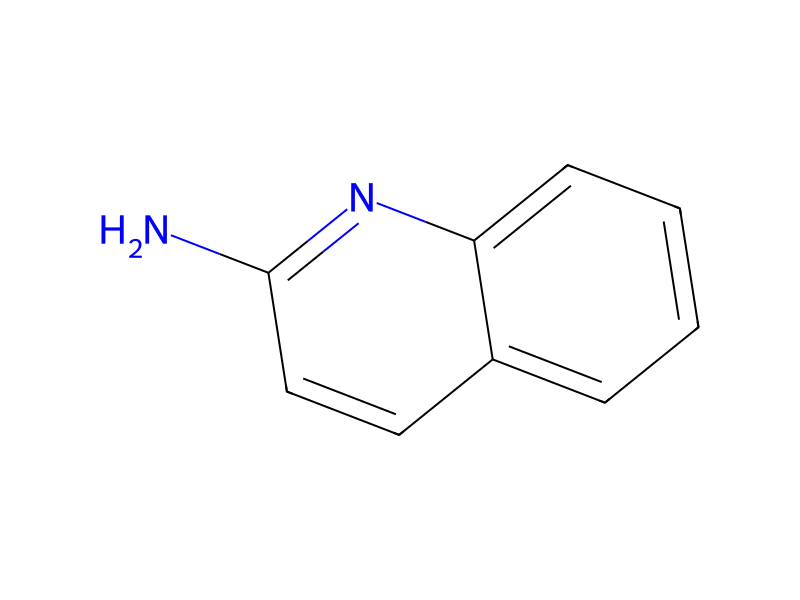
2-Aminoquinoline

HCID 11379
New reaction
Print
Basic informationOverviewNames & identifiersPropertiesSafety & regulationChemistry & industryRelated reactionsCompound notes
Substructure searchFind similar structures

Basic information

CAS
31135-62-3
Standard SMILES
Nc1ccc2ccccc2n1
InChIKey
GCMNJUJAKQGROZ-UHFFFAOYSA-N
Molecular formula
C9H8N2
Average molar mass
144.17 g/mol
Monoisotopic mass
144.06874826

Overview

1,2-Dihydroquinolin-2-imine is an aminoquinoline.

Names & identifiers

Preferred name
2-Aminoquinoline
IUPAC
quinolin-2-amine
English name
2-Aminoquinoline
Molecular formula
C9H8N2
Molecular weight
144.17

Names & synonyms

2-AMINOQUINOLINEquinolin-2-amine580-22-32-QuinolinamineQuinoline, 2-amino-2-amino-quinoline2-QuinolinylamineCCRIS 1677EINECS 209-458-8GR9M8HW75ZNSC 57739NSC 58387
Show more names
AminoquinolineaminquinolQUINAZOLINE2-AminoquinoLα-quinolylamine2-amino-quinolin
BRN 0113163NSC-57739NSC-58387DTXSID20603815-22-10-00220 (Beilstein Handbook Reference)1,2-DIHYDRO-2-IMINO-QUINOLINERefChem:465215DTXCID5042297

Database identifiers

CAS
31135-62-3、580-22-3
PubChem CID
11379
DTXSID
DTXSID2060381
ChEMBL
CHEMBL61236
ChEBI
CHEBI:184668
UNII
GR9M8HW75Z
EC Number
209-458-8
Nikkaji
J54.277F

Properties

Computed structural properties

XLogP
1.9
Topological polar surface area
38.9 Ų
Hydrogen bond donors
1
Hydrogen bond acceptors
2
Rotatable bonds
0
Heavy atoms
11
Formal charge
0
Complexity
136

Experimental & physicochemical properties

LogP · 2 items

1.87

1.87

Melting Point131.5 - 132.5 °C
Physical DescriptionSolid

Physicochemical properties

Melting point
126 · 126-131 °C
Boiling point
312.78 °C · 312.78°C (estimate)
Density
6 g/cm3 · 6 g/cm3
refractive index
1.708 · 1.7080 (estimate)
storage temp.
Keep in dark place,Inert atmosphere,Room temperature
solubility
soluble in Chloroform,Methanol
form
powder to crystal
pka
3.43 · 3.43(at 20℃)
color
White to Light yellow to Green
Water Solubility
soluble

Safety & regulation

Safety information is for reference only and does not replace the supplier’s Safety Data Sheet (SDS), applicable regulations, or professional assessment.

GHS classification

GHS Classification · 4 items

Danger

H302 (95.3%): Harmful if swallowed [Warning Acute toxicity, oral]

P261, P264, P264+P265, P270, P271, P280, P301+P317, P302+P352, P304+P340, P305+P354+P338, P317, P319, P321, P330, P332+P317, P362+P364, P403+P233, P405, and P501 (click each P-code to see the statement)

Aggregated GHS information provided per 43 reports by companies from 6 notifications to the ECHA C&L Inventory. Each notification may be associated with multiple companies.

Hazard information

Hazard Classes and CategoriesAcute Tox. 4 (95.3%)

Safety data

wgk
3
tsca
TSCA listed
rtecs
VA9621800
ridadr
2811
hs_code
2933990099
Toxicity
mma-sat 500 nmol/plate ABCHA6 42,861,78
risk_code
36/37/38-20/21/22-41-37/38-22
Signal word
Danger
Symbol(GHS)
GHS05,GHS07
hazard_code
Xi,Xn
hazard_note
Harmful/Irritant
safety_code
26-36/37/39-22-36/39
hazard_class
IRRITANT, AIR SENSITIVE, IRRITANT-HARMFUL
Storage Class
11 - Combustible Solids

Chemistry & industry

Pharmacology

Cellular LocationsCytoplasm

Uses & manufacturing

General Manufacturing Information2-Quinolinamine: INACTIVE

Applications

Uses2-Aminoquinoline is a useful research chemical.

Upstream & downstream products

Upstream raw materials

Diethyl cyanomethylphosphonateSodium hydrideP-Toluenesulfonic anhydrideBenzotrifluorideQuinolineEthanol3-Chloroperoxybenzoic acidTrifluoroacetic acidSodium borohydrideSodium bisulfiteStannous chlorideEthyl acetateDichloromethane2-Nitrobenzaldehyde

Related reactions

97 records
New reaction record
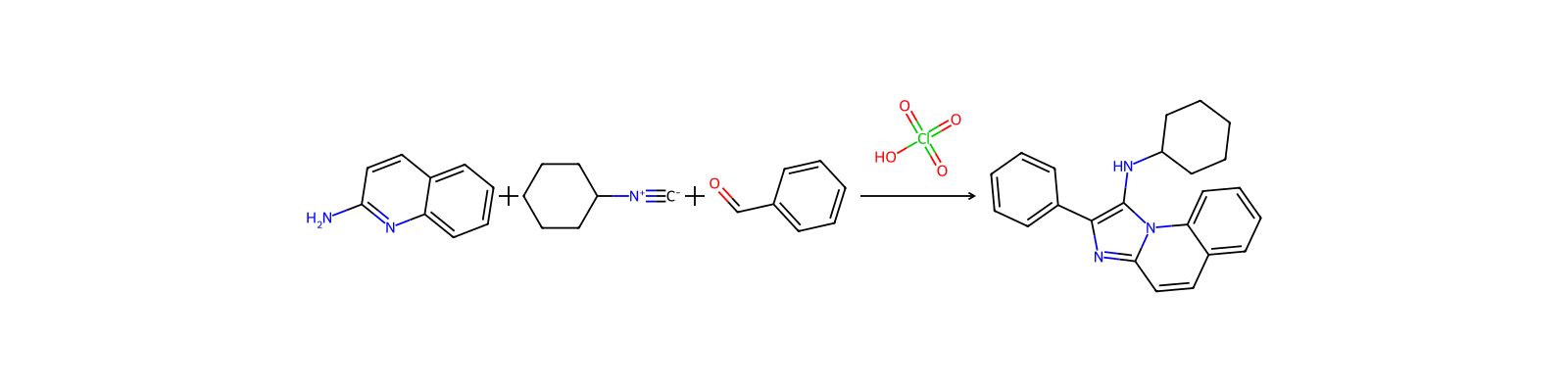
HRID 7511As reactant
HRID 22801As reactant
HRID 120478As reactant
HRID 121085As reactant
HRID 189100As reactant
HRID 191088As reactant
HRID 195142As reactant
HRID 294170As reactant
PreviousPage 1 of 13

Compound notes

On this pageBasic informationOverviewNames & identifiersPropertiesSafety & regulationChemistry & industryRelated reactionsCompound notes
InChI
1S/C9H8N2/c10-9-6-5-7-3-1-2-4-8(7)11-9/h1-6H,(H2,10,11)
InChIKey
GCMNJUJAKQGROZ-UHFFFAOYSA-N
SMILES
Nc1ccc2ccccc2n1
CAS DataBase Reference
580 · 580-22-3(CAS DataBase Reference)
EWG's Food Scores
1 · 1
FDA UNII
9 M8HW75Z · GR9M8HW75Z
NIST Chemistry Reference
2 · 2-Quinolinamine(580-22-3)
EPA Substance Registry System
2 · 2-Quinolinamine (580-22-3)
UNSPSC Code
12352100 · 12352100
NACRES
22 · NA.22
Symbol(GHS)
5 · GHS05,GHS07
Signal word
Danger
Hazard statements
302 · H302-H315-H318-H335-H319
Precautionary statements
264 · P264-P302+P352+P332+P313+P362+P364-P305+P351+P338+P337+P313-P261-P280-P305+P351+P338
target organs
Respiratory system
Hazard Codes
Xi,Xn
Risk Statements
36 · 36/37/38-20/21/22-41-37/38-22
Safety Statements
26 · 26-36/37/39-22-36/39
RIDADR
2811 · 2811
WGK Germany
3 · 3
RTECS
9621800 · VA9621800
Hazard Note
Harmful/Irritant
TSCA
TSCA listed
HazardClass
IRRITANT, AIR SENSITIVE, IRRITANT-HARMFUL
HS Code
2933990099 · 2933990099
Storage Class
11 · 11 - Combustible Solids
Hazard Classifications
4 OralEye · Acute Tox. 4 OralEye Dam. 1Skin Irrit. 2STOT SE 3
Toxicity
500 nmol/plate · mma-sat 500 nmol/plate ABCHA6 42,861,78
target organs
Respiratory system
Hazard statements
H302-H315-H318-H335-H319
Hazard Classifications
Acute Tox. 4 OralEye Dam. 1Skin Irrit. 2STOT SE 3
Precautionary statements
P264-P302+P352+P332+P313+P362+P364-P305+P351+P338+P337+P313-P261-P280-P305+P351+P338
tert-Butylamine
1-Butanol
1,2-Dimethoxyethane

Additional notes

DefinitionChEBI: 1,2-Dihydroquinolin-2-imine is an aminoquinoline.