

Basic information
- Standard SMILES
Clc1ccncc1- InChIKey
PVMNPAUTCMBOMO-UHFFFAOYSA-N- Molecular formula
- C5H4ClN
- Average molar mass
- 113.54 g/mol
- Monoisotopic mass
- 113.0032268
Names & identifiers
- Preferred name
- 4-Chloropyridine
- IUPAC
- 4-chloropyridine
- English name
- 4-chloropyridine
- Molecular formula
- C5H4ClN
- Molecular weight
- 113.54
Names & synonyms
4-CHLOROPYRIDINE626-61-9DTXSID0052671RefChem:522062DTXCID608484210-956-2Pyridine, 4-chloro-4-chloro-pyridineMFCD00044570CHEMBL5290039EINECS 210-956-2BRN 0105875
Show more names
gamma-ChloropyridineTrazodone Impurity 314-chloropyridine ISO 9001:2015 REACH
p-Chloropyridine4-chloro pyridine4- ChloropyridineTrazodone Impurity 20SCHEMBL6842X97LKY9QS75-20-05-00410 (Beilstein Handbook Reference)SCHEMBL207645
Database identifiers
- CAS
626-61-9- PubChem CID
- 12288
- DTXSID
DTXSID0052671- ChEMBL
CHEMBL5290039- UNII
- X97LKY9QS7
- EC Number
- 210-956-2
- Nikkaji
- J32.650J
Properties
Computed structural properties
- XLogP
- 1.3
- Topological polar surface area
- 12.9 Ų
- Hydrogen bond donors
- 0
- Hydrogen bond acceptors
- 1
- Rotatable bonds
- 0
- Heavy atoms
- 7
- Formal charge
- 0
- Complexity
- 50
Experimental & physicochemical properties
LogPlog Kow = 1.28
Density1.2000 g/cu cm at 25 °C
Color/FormLiquid
Solubility
Slightly soluble in water
Miscible with ethanol
Boiling Point151 °C
Melting Point-43.5 °C
Dissociation ConstantspKa = 3.84 (conjugate acid)
Physicochemical properties
- Melting point
- -43.5 °C · -43.5°C
- Boiling point
- 147 ℃ · 147℃
- Density
- 1.2 · 1.200
- refractive index
- 1.5304 · 1.5304 (estimate)
- Flash point
- 53 ℃ · 53℃
- pka
- 3.18 · 3.18±0.10(Predicted)
- EWG's Food Scores
- 1 · 1
- Hazardous Substances Data
- 626 · 626-61-9(Hazardous Substances Data)
Safety & regulation
Safety & protection
Disposal Methods
SRP: Recycle any unused portion of the material for its approved use or return it to the manufacturer or supplier. Ultimate disposal of the chemical must consider: the material's impact on air quality; potential migration in air, soil or water; effects on animal, aquatic and plant life; and conformance with environmental and public health regulations. If it is possible or reasonable use an alternative chemical product with less inherent propensity for occupational harm/injury/toxicity or environmental contamination.
Toxicology
Interactions
Cobalt(II) chloride (CoCl2), non-mutagenic by itself, has been tested for mutagenic activity in the presence of 4-substituted pyridines in the test strains of Salmonella typhimurium. CoCl2 was found to be mutagenic in strains TA1537 and TA2637, when combined with pyridine, methyl isonicotinate, 4-methyl-pyridine, 4-ethylpyridine, 4-chloropyridine or 4-bromopyridine. Mixtures of CoCl2 and isonicotinic acid, 4-cyanopyridine, 4-aminopyridine, or 4-dimethylaminopyridine exhibited no mutagenicity. Judging from the spectral observations, such combined mutagenicity may be due to the formation of moderate to weak complexes between these compounds and the Co(II) cation.
Environmental Fate
TERRESTRIAL FATE: Based on a classification scheme(1), an estimated Koc value of 120(SRC), determined from a structure estimation method(2), indicates that 4-chloropyridine is expected to have high mobility in soil(SRC). Volatilization of 4-chloropyridine from moist soil surfaces is expected to be an important fate process(SRC) given an estimated Henry's Law constant of 5.2X10⁻⁶ atm-cu m/mole(SRC), developed using a fragment constant estimation method(2). 4-Chloropyridine is expected to volatilize from dry soil surfaces(SRC) based upon an estimated vapor pressure of 4.5 mm Hg at 25 °C(SRC), determined from a fragment constant method(2). 4-Chloropyridine volatilized <1% from soil incubated at 28 °C for 64 days(3). 4-Chloropyridine biodegraded approximately 67%(4) and 85%(3) in 64-day aerobic soil biodegradation studies.
AQUATIC FATE: Based on a classification scheme(1), an estimated Koc value of 120(SRC), determined from a structure estimation method(2), indicates that 4-chloropyridine is not expected to adsorb to suspended solids and sediment(SRC). Volatilization from water surfaces is expected(3) based upon an estimated Henry's Law constant of 5.2X10⁻⁶ atm-cu m/mole(SRC), developed using a fragment constant estimation method(2). Using this Henry's Law constant and an estimation method(3), volatilization half-lives for a model river and model lake are 7.8 and 60 days, respectively(SRC). 4-Chloropyridine is not expected to undergo hydrolysis in the environment due to the lack of functional groups that hydrolyze under environmental conditions(3). According to a classification scheme(4), an estimated BCF of 3(SRC), from its log Kow of 1.28(5) and a regression-derived equation(2), suggests the potential for bioconcentration in aquatic organisms is low. 4-Chloropyridine, incubated for one year anaerobically in an aquifer slurry, biodegraded approximately 73%(6).
ATMOSPHERIC FATE: According to a model of gas/particle partitioning of semivolatile organic compounds in the atmosphere(1), 4-chloropyridine, which has an estimated vapor pressure of 4.5 mm Hg at 25 °C(SRC), determined from a fragment constant method(2), is expected to exist solely as a vapor in the ambient atmosphere. Vapor-phase 4-chloropyridine is degraded in the atmosphere by reaction with photochemically-produced hydroxyl radicals(SRC); the half-life for this reaction in air is estimated to be 62 days(SRC), calculated from its rate constant of 2.6X10⁻¹³ cu cm/molecule-sec at 25 °C(SRC) that was derived using a structure estimation method(2). 4-Chloropyridine does not contain chromophores that absorb at wavelengths >290 nm(3) and, therefore, is not expected to be susceptible to direct photolysis by sunlight(SRC).
Toxicity Summary
IDENTIFICATION AND USE: 4-Chloropyridine is a liquid. HUMAN STUDIES: There are no data available. ANIMAL STUDIES: There are no data available. ECOTOXICITY STUDIES: 4-Chloropyridine was administered at 316 mg/kg as single oral dose to adult male Coturnix quail (Coturnix coturnix). It did not reduce the fertility of eggs produced by female mates by more than 50%.
Ecotoxicity Excerpts
/BIRDS and MAMMALS/ Seventy-one chemicals /(including 4-chloropyridine)/ were administered as single oral doses at about 50% of the estimated LD50 to adult male Coturnix quail (Coturnix coturnix). /The dose used for 4-chloropyridine was 316 mg/kg/. None reduced the fertility of eggs produced by female mates by more than 50%. Of six additional chemicals similarly administered to female quail at 24 to 56% of the estimated LD50, only one, P,P-bis(1-aziridinyl)-N-phenylphosphinic amide, reduced expected egg fertility by more than 50%.
Soil Adsorption/Mobility
Using a structure estimation method based on molecular connectivity indices(1), the Koc of 4-chloropyridine can be estimated to be 120(SRC). According to a classification scheme(2), this estimated Koc value suggests that 4-chloropyridine is expected to have high mobility in soil(SRC).
Artificial Pollution Sources4-Chloropyridine's production and use as a laboratory chemical and in the synthesis of other substances(1) may result in its release to the environment through various waste streams(SRC).
Environmental Biodegradation
AEROBIC: 4-Chloropyridine biodegraded approximately 67% in a 64-day aerobic soil biodegradation study. Halogens at the para-position of the pyridine ring are more susceptible to displacement than at other positions and convert readily to hydroxypyridines. Therefore, the biodegradation of 4-chloropyridine was attributed to hydroxylation(1). 4-Chloropyridine was biodegraded 85% in soil incubated at 28 °C for 64 days(2).
ANAEROBIC: 4-Chloropyridine, incubated for one year anaerobically in an aquifer slurry, biodegraded approximately 73%(1).
PURE CULTURE: Complete degradation of 4-chloropyridine was >62 days but <96 days using enrichment cultures isolated from garden soil, incubated aerobically(1). Incubated anaerobically complete degradation of 4-chloropyridine was >96 days(1).
Environmental Bioconcentration
An estimated BCF of 3 was calculated in fish for 4-chloropyridine(SRC), using a log Kow of 1.28(1) and a regression-derived equation(2). According to a classification scheme(3), this BCF suggests the potential for bioconcentration in aquatic organisms is low(SRC).
Volatilization from Water/Soil
The Henry's Law constant for 4-chloropyridine is estimated as 5.2X10⁻⁶ atm-cu m/mole(SRC) using a fragment constant estimation method(1). This Henry's Law constant indicates that 4-chloropyridine is expected to volatilize from water surfaces(2). Based on this Henry's Law constant, the volatilization half-life from a model river (1 m deep, flowing 1 m/sec, wind velocity of 3 m/sec)(2) is estimated as 7.8 days(SRC). The volatilization half-life from a model lake (1 m deep, flowing 0.05 m/sec, wind velocity of 0.5 m/sec)(2) is estimated as 60 days(SRC). 4-Chloropyridine's Henry's Law constant indicates that volatilization from moist soil surfaces may occur(SRC). 4-Chloropyridine is expected to volatilize from dry soil surfaces(SRC) based upon an estimated vapor pressure of 4.5 mm Hg(SRC), determined from a fragment constant method(1). 4-Chloropyridine volatilized <1% from soil incubated at 28 °C for 64 days(3).
Environmental Abiotic Degradation
The rate constant for the vapor-phase reaction of 4-chloropyridine with photochemically-produced hydroxyl radicals has been estimated as 2.6X10⁻¹³ cu cm/molecule-sec at 25 °C(SRC) using a structure estimation method(1). This corresponds to an atmospheric half-life of about 62 days at an atmospheric concentration of 5X10+5 hydroxyl radicals per cu cm(1). 4-Chloropyridine is not expected to undergo hydrolysis in the environment due to the lack of functional groups that hydrolyze under environmental conditions(2). 4-Chloropyridine does not contain chromophores that absorb at wavelengths >290 nm(2) and, therefore, is not expected to be susceptible to direct photolysis by sunlight(SRC). The rate constant for the reaction of hydroxyl radicals in aqueous solutions at pH 9 is 3.1X10+9 L/mol-sec(3); this corresponds to an aquatic half-life of 260 days at an aquatic concentration of 1X10-17 hydroxyl radicals per liter(4).
Probable Routes of Human Exposure
Occupational exposure to 4-chloropyridine may occur through inhalation and dermal contact with this compound at workplaces where 4-chloropyridine is produced or used. Monitoring and use data indicate that the general population is not likely to be exposed to 4-chloropyridine. (SRC)
Environmental Fate/Exposure Summary
4-Chloropyridine's production and use as a laboratory chemical and in the synthesis of other substances may result in its release to the environment through various waste streams. If released to air, a estimated vapor pressure of 4.5 mm Hg at 25 °C indicates 4-chloropyridine will exist solely as a vapor in the atmosphere. Vapor-phase 4-chloropyridine will be degraded in the atmosphere by reaction with photochemically-produced hydroxyl radicals; the half-life for this reaction in air is estimated to be 62 days. 4-Chloropyridine does not contain chromophores that absorb at wavelengths >290 nm and, therefore, is not expected to be susceptible to direct photolysis by sunlight. If released to soil, 4-chloropyridine is expected to have high mobility based upon an estimated Koc of 120. Volatilization from moist soil surfaces is expected to be an important fate process based upon an estimated Henry's Law constant of 5.2X10⁻⁶ atm-cu m/mole. 4-Chloropyridine may volatilize from dry soil surfaces based upon its estimated vapor pressure. 4-Chloropyridine volatilized <1% from soil incubated at 28 °C for 64 days. 4-Chloropyridine biodegraded approximately 67 and 85% in 64-day aerobic soil biodegradation studies. If released into water, 4-chloropyridine is not expected to adsorb to suspended solids and sediment based upon the estimated Koc. 4-Chloropyridine, incubated for one year anaerobically in an aquifer slurry, was biodegraded approximately 73%. Volatilization from water surfaces is expected based upon this compound's estimated Henry's Law constant. Estimated volatilization half-lives for a model river and model lake are 7.8 and 60 days, respectively. An estimated BCF of 3 suggests the potential for bioconcentration in aquatic organisms is low. Hydrolysis is not expected to be an important environmental fate process since this compound lacks functional groups that hydrolyze under environmental conditions (pH 5 to 9). Occupational exposure to 4-chloropyridine may occur through
Safety data
- Hazardous Substances Data
- 626-61-9(Hazardous Substances Data)
Chemistry & industry
Uses & manufacturing
Uses
Reaction of 4-chloropyridine with mercaptoacetic acid gives pyridylmercaptoacetic acid, which is a precursor for cephalosporin antibiotics (e.g., cephapirin sodium salt).
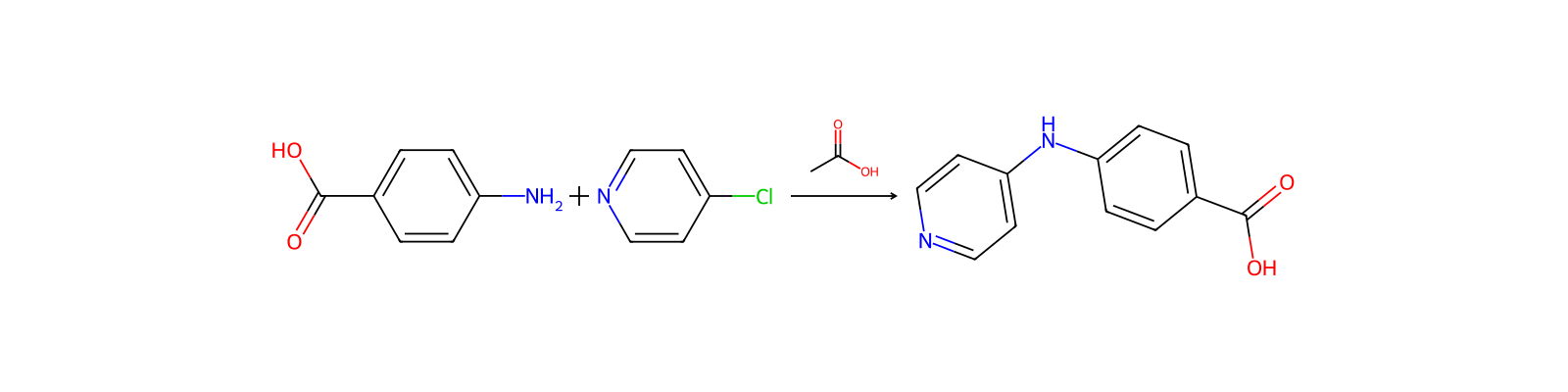
The 2- and 4-chloropyridines react with various nucleophiles to give alkyl ether, alkyl thioether, and alkylamine derivatives.
Methods of ManufacturingThe preparation of 2- and 4- chloropyridines from pyridinols is achieved by the use of halogenating reagents such as phosphoryl chloride.
Applications
Uses4-Chloropyridine is an inhibitor of nicotinamide N-methyltransferase (NNMT). It can act as a substrate for NNMT and, during its catalytic reaction, enhances the electrophilicity of the C4 position by methylating the nitrogen atom of the pyridine ring. This promotes an aromatic nucleophilic substitution reaction with the non-catalytic cysteine (C159) in NNMT, ultimately leading to the suicide inhibition of NNMT's activity. 4-Chloropyridine holds potential for the development of NNMT activity-based probes [1].
Upstream & downstream products
Upstream raw materials
Downstream products
Suppliers40 total
上海麦克林生化科技股份有限公司021-50706066 15221275939 · [email protected]
江苏艾康生物医药研发有限公司025-66061636 19370895928 · [email protected]
Dayang Chem (Hangzhou) Co.,Ltd.+86-0571-88938639 17705817739 · [email protected]
山东利腾生物科技有限公司+86-18663721413 +86-15552573001 · [email protected]
上海迈瑞尔生化科技有限公司4006356688 18621169109 · [email protected]
上海瀚鸿科技股份有限公司021-54306202 13764082696 · [email protected]
湖北广奥生物科技有限公司027-02702759223056 18162699093 · [email protected]
南京爱珂医药科技有限公司025-58395930 · [email protected]
TargetMol 中国(陶术生物)400-821-0310 15002144251 · [email protected]
Shanghai Hanhong Scientific Co., Ltd.+undefined17612118332 · [email protected]
深圳振强药物研发有限公司0755-66853366 13670046396 · [email protected]
赛纳斯特化学(欢迎点击联系)021-60343070
上海将来实业股份有限公司400-0066400 13621662912 · [email protected]
唐山环合科技有限公司022-13615473007 13615473007 · [email protected]
HANGZHOU LEAP CHEM CO., LTD.+86-571-87711850 +86-15355479329 · [email protected]
湖北川合化工有限公司187-7130-7593 18672969259 · [email protected]
深圳卓越生物医药科技有限公司0755-26050679 18318671572 · [email protected]
陕西缔都医药化工有限公司029-029-81120477 17792793610 · [email protected]
上海昂提生物科技有限公司13764913901 · [email protected]
南京博米尔生物科技有限公司025-83453382-8005 · [email protected]
上海修时生物医药有限公司15002184385 15021598081 15002184385 · [email protected]
金锦乐(湖南)化学有限公司18001959627(微信同号) 18001959627 · [email protected]
杭州洁汉化工有限公司+86-571-86217390; +8618058761490 · [email protected]
Capot Chemical Co.,Ltd.+86-(0)57185586718 +86-13336195806 · [email protected]
福州福康医药科技有限公司18150835816
济南利恒生物科技有限公司0531-18763987518 18763987518 · [email protected]
卓萃新材料科技(上海)有限公司021-52836897 13917661608 · [email protected]
湖北摩科化学有限公司18627753421; 18627756402 · [email protected]
Hefei Hirisun Pharmatech Co., Ltd+8615056975894 · [email protected]
ANHUI WITOP BIOTECH CO., LTD+8618071025641 · [email protected]
XIAMEN AMITY INDUSTRY AND TRADE CO., LTD.+8618950047208 · [email protected]
郑州艾克姆化工有限公司13303867194 · [email protected]
中山市聚科美生物科技有限公司13642727863
重庆卡兰医药有限公司[email protected]
上海相辉医药科技有限公司13611835272 13611835272 · [email protected]
上海择睿生物科技有限公司021-54580889 18321124657 · [email protected]
上海泰坦企业发展有限公司16621224781 · [email protected]
Hefei TNJ Chemical Industry Co.,Ltd.+86-0551-65418671 +86-189 4982 3763 · [email protected]
山东明德生物技术有限公司15553348166 · [email protected]
Dideu Industries Group Limited+8617392712697 · [email protected]
Related reactions
219 records




Linked notes
Loading…