
4-Nitrophenyl Acetate

Basic information
- CAS
830-03-5- Standard SMILES
CC(=O)Oc1ccc([N+](=O)[O-])cc1- InChIKey
QAUUDNIGJSLPSX-UHFFFAOYSA-N- Molecular formula
- C8H7NO4
- Average molar mass
- 181.15 g/mol
- Monoisotopic mass
- 181.0375077
Overview
4-nitrophenyl acetate is a phenyl acetate resulting from the formal condensation of the hydroxy group of 4-nitrophenol with the carboxy group of acetic acid. It is a member of phenyl acetates and a C-nitro compound. It is functionally related to a 4-nitrophenol.
Names & identifiers
- Preferred name
- 4-Nitrophenyl Acetate
- IUPAC
- (4-nitrophenyl) acetate
- English name
- 4-Nitrophenyl acetate
- Molecular formula
- C8H7NO4
- Molecular weight
- 181.15
Names & synonyms
4-Nitrophenyl acetate830-03-5p-Acetoxynitrobenzenep-Nitrophenol acetateP-NITROPHENYL ACETATEAcetic acid, 4-nitrophenyl esterAcetic acid p-nitrophenyl esterAcetic acid, p-nitrophenyl esterpara-nitrophenyl acetateNSC-2633I902J0QH9SDTXSID2061191
Show more names
4-Nitropheyl acetateNSC 2633p-nitrophenyl4-Nitrophenylacetatp-Acetoxynitrobenzenp-nitrophenolacetateLecithin Impurity 14p-Nitrobenzeneacetate
CHEBI:82635RefChem:100096DTXCID0048341212-593-5(4-nitrophenyl) acetateAcetic acid 4-nitrophenyl esterp-Nitrophenyl acetate (VAN)MFCD00007326
Database identifiers
- CAS
830-03-5- PubChem CID
- 13243
- DTXSID
DTXSID2061191- ChEMBL
CHEMBL40988
Properties
Computed structural properties
- XLogP
- 1.5
- Topological polar surface area
- 72.1 Ų
- Hydrogen bond donors
- 0
- Hydrogen bond acceptors
- 4
- Rotatable bonds
- 2
- Heavy atoms
- 13
- Formal charge
- 0
- Complexity
- 203
Experimental & physicochemical properties
Chemical ClassesNitrogen Compounds -> Other Aromatics (Nitrogen)
SpringerMaterials Properties13C nuclear magnetic resonance spectrum
LogP1.5
Vapor Pressure0.00186 [mmHg]
Physical DescriptionWhite crystalline solid; [Alfa Aesar MSDS]
Physicochemical properties
- Melting point
- 75 · 75-77 °C (lit.)
- Boiling point
- 314.24 °C · 314.24°C (rough estimate)
- Density
- 1.4283 · 1.4283 (rough estimate)
- vapor pressure
- 1.28 Pa · 1.28Pa at 20℃
- refractive index
- 1.5468 · 1.5468 (estimate)
- storage temp.
- -20 °C · -20°C
- solubility
- 0.53 g/l · 0.53g/l
Safety & regulation
Safety information is for reference only and does not replace the supplier’s Safety Data Sheet (SDS), applicable regulations, or professional assessment.
GHS classification
GHS Classification
Danger
H272 (100%): May intensify fire; oxidizer [Danger Oxidizing liquids; Oxidizing solids]
P210, P220, P261, P264+P265, P272, P280, P302+P352, P305+P354+P338, P317, P321, P333+P317, P362+P364, P370+P378, and P501 (click each P-code to see the statement)
Aggregated GHS information provided per 3 reports by companies from 2 notifications to the ECHA C&L Inventory. Each notification may be associated with multiple companies.
Hazard information
Regulatory Information
Chemical: Acetic acid, 4-nitrophenyl ester
Status: Active Update: 12-04-2016 https://echa.europa.eu/registration-dossier/-/registered-dossier/17205
Acetic acid, 4-nitrophenyl ester: Does not have an individual approval but may be used under an appropriate group standard
Hazards SummaryIntravenous LD50 (mouse) = 180 mg/kg; [RTECS] May cause irritation; [Alfa Aesar MSDS] See Phenyl acetate. See Nitrobenzene.
Hazard Classes and CategoriesOx. Sol. 3 (100%)
Safety data
- wgk
- 3
- tsca
- TSCA listed
- rtecs
- AJ1150000
- hs_code
- 29153900
- Toxicity
- LD50 ivn-mus: 180 mg/kg CSLNX* NX#00217
- risk_code
- 11-34
- Signal word
- Danger
- Symbol(GHS)
- GHS03,GHS05,GHS07
Chemistry & industry
Uses & manufacturing
General Manufacturing InformationAcetic acid, 4-nitrophenyl ester: ACTIVE
Applications
Uses4-Nitrophenyl Acetate have been used as a substrate to study for the enzymatic activity of Carbonic Anhydrase III isolated from bovine skeletal muscle.
Uses4-Nitrophenyl acetate is used with iodoacetic acid for reductive cleavage of methionine-containing peptides. It is also used as a substrate that has been used in assays for esterase and lipase activity. Inorganic complexes have been evaluated for their methanolysis or hydrolysis activity using p-nitrophenyl acetate.
Upstream & downstream products
Downstream products
Additional notes
DefinitionChEBI: An acetate ester resulting from the formal condensation of the hydroxy group of 4-nitrophenol with the carboxy group of acetic acid.
Related reactions
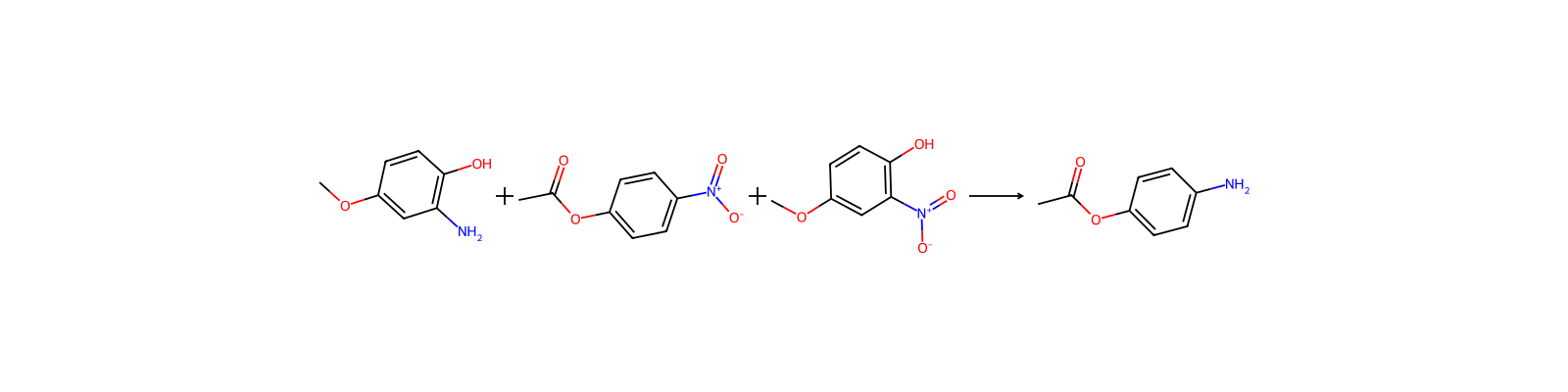
18 records


Compound notes
Loading…